
An endorsement in a contested primary rarely means what the word implies — full-throated agreement — and the brief, visibly reluctant blessing Michigan Senator Haley Stevens gave Abdul El-Sayed on CNN is a textbook case of how “support” and “agreement” have become separable in modern intraparty politics.
Key Points
- On CNN on October 25, 2026, Stevens said she was “on the Democratic ticket” with El-Sayed but would not say she agreed “with everything that’s gone on,” and declined to invoke his name directly.
- Her specific complaint traced to a debate moment in which El-Sayed was asked whether Israel or Iran posed the greater threat to the United States and called the question “ridiculous” rather than naming one.
- El-Sayed’s fuller public record shows a more developed position than a simple refusal to criticize Iran: he has called Iran’s regime dangerous and condemned its conduct while arguing that Israel’s lobbying for war does not make Americans safer.
- The episode sits inside a larger pattern — documented in political-science research — in which primary endorsements function as strategic, often deliberately ambiguous signals rather than full policy alignments.
- Outside spending, especially tens of millions from AIPAC’s United Democracy Project, shapes how any Israel-related disagreement between Democrats gets interpreted by voters and media alike.
What Stevens Actually Said, and Why It Mattered
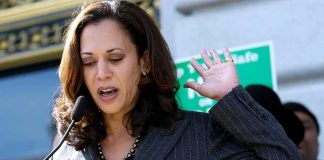
The exchange itself was brief but pointed. Asked directly about her relationship to El-Sayed, the Democratic Senate nominee in Michigan’s marquee 2026 race, Stevens offered the kind of answer campaign strategists call “technically true, deliberately incomplete”: she was on the same ticket, she said, but she “can’t say that I agree with everything that’s gone on”. CNN’s own framing described her as dodging the question outright, and Mediaite’s account — echoed by Yahoo’s “remarkably tepid” headline — noted she would not say his name, preferring the language of team membership to personal endorsement.
That reluctance crystallized around one specific complaint: El-Sayed’s handling of a debate question asking whether Israel or Iran constitutes the greater threat to American security. Stevens told CNN she didn’t “want to debate who’s the enemy of the United States — it’s very clear that Iran is,” implicitly criticizing El-Sayed for treating the comparison as a false choice. It is a narrow complaint about a single answer, not a comprehensive repudiation of his platform — a distinction that matters because much of the subsequent coverage compressed it into a broader verdict on his fitness.
The Debate That Set the Disagreement in Motion
The roots of this run back to the July 7, 2026 Michigan Senate primary debate, where Stevens staked out a position distinct from El-Sayed’s on both method and outcome. She told viewers “the difference between my opponent and myself on this issue is that I believe in a two-state solution,” adding that “Israel has a right to peacefully exist alongside the people of Palestine and in Gaza”. Notably, her position was not reflexively pro-Israel-government: in the same debate she said Prime Minister Benjamin Netanyahu “has not made us safer, has not brought us closer to peace, and he’s endangered Jews here in America and around the world” — a criticism that complicates any reading of her CNN remarks as simple alignment with an uncritical Israel posture.
El-Sayed’s Record Complicates the “Equivocal” Framing
Here is where the available evidence pushes back hardest against treating Stevens’s critique as self-evidently correct. El-Sayed’s own public statements, across multiple interviews in October 2026, do not read as a candidate ducking the Iran question so much as one rejecting its premise. He has said plainly that Iran is “a dangerous threat” and that “there’s no question about that,” while arguing separately that Israel’s lobbying for American military involvement “does not make you any safer”. He has condemned the Iranian regime’s conduct in explicit terms — “they’ve engaged in horrific acts, there’s no question about that” — while also defending the 2015 nuclear agreement and arguing the United States should not have withdrawn from it. A public letter backing his candidacy likewise describes him as having condemned antisemitism, acknowledged the horror of October 7, and applied the same human-rights standard across countries rather than exempting any one ally. None of this is the record of a candidate without a position; it is the record of one holding two propositions simultaneously — Iran is dangerous, and uncritical deference to Israeli military preferences is also risky — that Stevens’s framing treats as incompatible.
Why Endorsements Like This Are Common, Not Scandalous
Political scientists who study intraparty endorsement behavior have found that endorsers routinely act as pragmatists managing risk rather than ideologues demanding full alignment — a pattern documented across 6,761 Democratic primary endorsements in 2020. Related research distinguishes strategic ambiguity, which signals a range of acceptable positions to a divided coalition, from vagueness, which simply withholds commitment. Stevens’s CNN answer reads as a textbook instance of the former: close enough to endorsement to preserve party unity, distant enough to avoid personal ownership of a contested foreign-policy answer. That she has not campaigned alongside El-Sayed since backing him only reinforces how much of this relationship is being conducted through television soundbites rather than joint appearances.
Haley Stevens Gives Tepid Endorsement of Abdul El-Sayed on CNN — Calls Out His Israel-Iran Comments https://t.co/S1rihW0KxM
— Mediaite (@Mediaite) October 25, 2026
The Money in the Background
No honest account of this dispute can ignore the financial current running beneath it. AIPAC’s super PAC arm, the United Democracy Project, has become the largest outside spender in the 2026 midterms, funneling roughly $54 million into congressional races nationally, much of it aimed at Democratic primaries where candidates critical of Israeli policy are running. That spending does not determine whether Stevens’s criticism of El-Sayed’s answer is substantively fair, but it does shape the environment in which any such criticism lands — voters and commentators alike are primed to read Israel-related disagreements among Democrats through a financing lens, regardless of the underlying policy merits.
What This Means Going Forward
The durable lesson here outlasts this particular Senate race: when a party’s own candidates disagree sharply on how to characterize Israel and Iran, “endorsement” becomes less a statement of agreement than a tactical act of coalition maintenance. Readers encountering similarly tepid endorsements in future cycles should treat them the same way — as data about internal party fracture lines, not as verdicts on either candidate’s underlying foreign-policy coherence. El-Sayed’s record suggests a candidate wrestling publicly with a genuinely hard question that admits no clean binary answer; Stevens’s record suggests a candidate trying to hold together a coalition that does not agree on how that question should be answered. Both things can be true at once, and the tension between them is likely to define Democratic primary politics on Middle East policy for years beyond this single race.
Sources:
mediaite.com, yahoo.com, us.cnn.com, nbcnews.com, foxnews.com, timesofindia.indiatimes.com, efile.fara.gov, cpp.edu, journals.sagepub.com