
When ceremonial symbols meet mass entertainment, tiny gestures carry oversized meaning; that is why a few seconds of LeBron James moving during the national anthem became a national flashpoint and drew a forceful rebuke from President Trump.
At a Glance
- Video from the NBA season opener in New York showed LeBron James moving—mimicking a golf swing and basketball motions—while the anthem played; the clip triggered intense debate over intent and decorum.
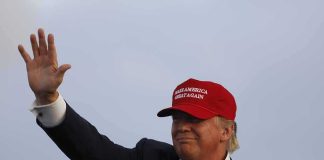
- President Trump publicly condemned the conduct on Truth Social and at a campaign rally, calling James a “TOTAL DISGRACE” and demanding an apology to those who served and died under the flag.
- The events fit a decade-long pattern in which anthem moments become proxies for larger fights over patriotism, athlete speech, and race—divides that research shows are durable and highly polarized.
- The disagreement centers on interpretation: whether movement during the anthem is inherently disrespectful or simply routine pregame motion absent protest intent.
What happened and why it mattered
During the October 2026 NBA season opener at Madison Square Garden, cameras captured LeBron James in visible motion while the Star-Spangled Banner played—appearing to rehearse a golf swing and mimic basketball movements. Major outlets that reviewed the clip described the movements plainly but stopped short of attributing motive, since James did not frame them as protest in real time. Two days later, President Trump amplified the incident, writing on Truth Social that James “disrespects our Country,” labeling him a “TOTAL DISGRACE,” and urging an apology to military dead and others who “died for the American flag.” He repeated the criticism at a Sioux City rally, calling it a “big scandal kind of a story.”
Those actions took the moment from a courtside curiosity to a national argument. The reason is less about basketball than about the anthem’s social function. In American life, the anthem serves as a ceremonial pledge and a powerful cue for collective identity; visible deviation—kneeling, leaving, fidgeting, or, here, rehearsing motions—invites judgment. For some audiences, decorum is the test; for others, personal autonomy and free expression control. The same footage can be read as disrespect or as nonchalance; the stakes arise from what the anthem represents, not from the biomechanics of a warmup.
The footage, the criticism, and the limits of inference
The core facts are straightforward: the clip exists; James moved; Trump condemned it. The more difficult question—what James intended—is not resolved by the record. Reports described the actions (a golf swing and basketball motions) but did not identify them as a declared protest. Nor did they cite an NBA disciplinary ruling or a formal protocol breach. That puts the dispute squarely in the realm of interpretation: a visible act during a high-ritual moment judged against an unwritten expectation—stand still, face the flag, remove hats, maintain stillness—that many Americans learn in school and at civic events, but which is not identical to an enforceable league rule.
James’s brief postgame posture offered little elaboration; local coverage captured a dismissive quip framing the blowup as a “slow news day.” The restrained response deprived the story of a counter-narrative, which in turn let Trump’s moral framing dominate the conversation: that movement during the anthem equals disrespect to the nation and the fallen. In public disputes over symbols, the side that articulates a clear norm often defines the terms of debate, even if the underlying behavior admits multiple readings.
How this fits a longer arc of sports, speech, and symbolism
Anthem controversies did not begin with this clip; they recur because the rite compresses identity, military sacrifice, and racial justice into a two-minute national stage. Since 2016, athlete conduct during the anthem has been a recurring proxy for broader arguments about patriotism and protest. Survey research consistently shows that reactions to anthem behavior are strongly structured by race, partisanship, religiosity, and “sports nationalism,” not by the ceremony in isolation. One large national survey (N = 3,993) found growing support for athletes’ right to protest during the anthem, even as substantial opposition persists—evidence of polarization rather than consensus.
That polarization creates political incentive. Presidents and candidates invoke anthem norms to mobilize supporters who see the rite as sacrosanct. High-profile athletes, meanwhile, have used the same moment to spotlight injustice or, as critics contend, to import politics into sport. The James episode carried additional charge because Trump and James have sparred for years—about politics, public persona, and comparative greatness debates. In a Fox News exchange around the same period, Trump suggested James “maybe” is a racist, then added he likes “people that like me” while praising Michael Jordan, comments critics point to when assessing motive.
What counts as “respect”: protocol, custom, and perception
There is no single American statute dictating a professional athlete’s exact bodily comportment during the anthem; the relevant touchstone is custom. Customs, however, differ by venue and era. Teams sometimes complete final warmups close to anthem time; arena production cues can compress the window between introductions, anthem, and tip. The unwritten code prized by many fans—feet planted, hands still—collides with pregame routines tuned to performance. That gap breeds friction. In James’s case, the movements were visible and easily cast as indifference; defenders point out that motion alone is not protest, just as stillness alone is not patriotism.
The interpretive gulf matters because norms operate by consent. A norm that a critical mass of participants and observers reject loses force. The empirical literature suggests that audience responses to athlete speech not only diverge across demographics but can reshape athlete favorability—sometimes negatively—regardless of an individual’s direct participation in protest, a halo effect of the larger controversy. That dynamic explains both why a president would pick this fight and why a player might refuse to dignify it with a detailed explanation: each side calculates downstream costs and benefits across constituencies that will not be persuaded by additional detail.
LeBron James, 41 and in a record 24th NBA season, was accused by President Donald Trump on Thursday of disrespecting the United States during the national anthem before his first game for the Philadelphia 76ers.
Video from Madison Square Garden on Tuesday showed James appearing… pic.twitter.com/EI3baZ65pr
— Ifeanyi (@IamIfeanyio) October 22, 2026
What this episode teaches going forward
Three practical lessons emerge. First, visibility is destiny: in a televised ritual, seconds of ambiguous conduct can crowd out hours of subsequent excellence. Athletes and teams who want to avoid symbolic crossfire can sequence warmups and anthem timing to minimize misinterpretation—without conceding speech rights. Second, clarity beats implication: if conduct is expressive, say so and own the purpose; if it is routine, explain the timing and mechanics once, cleanly, and move on. Silence lets opponents write the caption. Third, institutions should distinguish between ceremonial aspiration and enforceable policy. When leagues rely on etiquette rather than rule, they leave players—and fans—negotiating expectations in public.
The James clip will not be the last anthem dispute, because the anthem is not merely music; it is a mirror. People see what they bring to it—devotion, grievance, memory, pride. In that sense, the reaction to the footage tells us more about the country than about a single pregame routine. But in the age of viral video and presidential megaphones, the margin for misread symbolism is slim. Those who step onto that stage—athletes and politicians alike—do so knowing that meaning will be assigned, with or without them.
Sources:
facebook.com, bbc.com, sports.yahoo.com, nytimes.com, france24.com, ynetnews.com