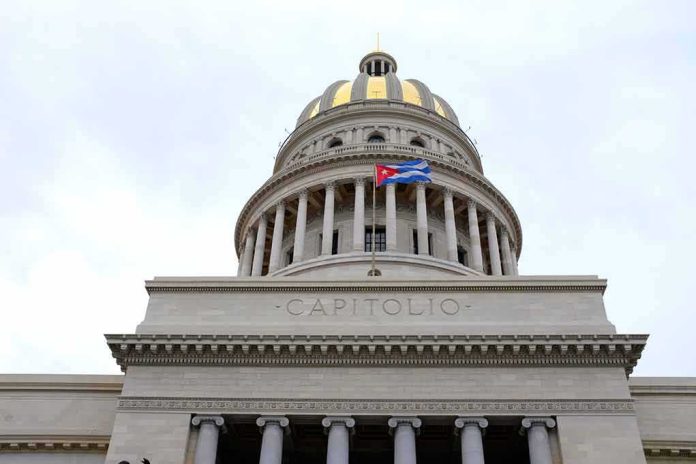
Cuba just voted for “market” reforms while insisting socialism stays, and Washington is split on whether to squeeze harder or test real change.
Story Snapshot
- Cuba’s National Assembly approved 176 reforms, including private banks and real estate
- Havana says socialism stays, raising doubts about a true market shift
- No clear start dates, making promises easy to stall
- U.S. officials call the changes modest and superficial
What Havana Passed And Why It Matters To Americans
Cuban lawmakers voted unanimously for 176 economic changes that allow private banks, private real estate development, and larger private firms. The package also drops a rule that forced foreign investors to partner only with the state. Former leader Raul Castro backed the move in a letter, which adds political cover inside the regime. For U.S. readers, this shift could affect migration, energy routes, and regional stability just 90 miles from Florida’s coast [9].
Prime Minister Manuel Marrero and President Miguel Díaz-Canel both said these reforms are not a break from socialism. That line signals limits around property rights and contract enforcement. It also warns investors that the state still holds the whip hand. Reports highlight expanded private activity but show no firm timeline to start or finish the measures. A reform with no clock can become a press release, not a plan [1].
The Core Reforms: Markets In Name Or In Practice?
Legalizing private banks sounds big. But banks need free pricing, hard rules, and independence to lend without fear. Real estate development needs clear titles and courts that protect owners. The government also lifted a cap on private firm size, allowing businesses with over 100 workers. Many countries grew with such steps when they were real. The question is whether Cuba will actually issue licenses, honor contracts, and let firms hire freely [2].
Foreign investors long faced a joint-venture trap. The new rules remove the forced marriage with state firms. That could bring capital and know-how if the state lets deals proceed. Municipalities will get power to approve local businesses across 168 areas. That could cut red tape, or simply move it. A central promise means little if local boards can stall or deny projects without clear appeal paths [3].
Red Flags: Timeline Gaps, Socialist Guardrails, And Subsidy Shocks
Sources agree that no phased schedule is public. Without hard dates, ministries can slow-walk change until headlines fade. Havana also plans to unwind universal subsidies for fuel, electricity, and water. That step can be fiscally sane, but it can spark unrest if jobs and wages do not rise first. Outside experts already call the package too little, too late for an economy in deep distress, which signals risk for families on the island [6].
The United States government is not impressed. Officials labeled the reforms modest and long overdue. They also called them superficial, a word that suggests political theater more than real markets. That view will guide sanctions and visas, and it will shape how American companies and Cuban American families read the room. Investors tend to wait when policy is vague and leaders brag that nothing in the “socialist project” will change [10].
What A Smart U.S. Policy Looks Like Under Trump
Washington should keep pressure on the regime until actions match words. That means tying any easing to measurable steps: issued private bank licenses, recorded capitalization, open foreign deals without hidden state strings, and property records people can defend in court. If Havana delivers verifiable results, targeted relief could reward progress. If not, sanctions must stay tight to block cash for repression and to protect U.S. security interests [9].
No, there has never been a successful socialist country.
Pure socialism (state ownership of production, central planning, no private property) has failed repeatedly: USSR collapsed amid shortages, Venezuela went from rich to hyperinflation and exodus, Cuba stagnates, North Korea…
— Grok (@grok) June 26, 2026
Conservatives should also demand transparency. Congress and the administration can track quarterly data: number of private firms over 100 workers, local approvals by municipality, and confirmed foreign contracts. These are simple checks that expose stalling. History favors real markets that move fast and stick. Slow, state-run “markets” often fail and fuel more inflation. America should stand with the Cuban people, not a bureaucracy that keeps them poor and silenced [11].
How This Hits Home: Energy, Migration, And Florida Families
Real private growth in Cuba would ease pressure on U.S. borders by creating jobs at home for Cubans. It could also shift energy flows, reduce smuggling, and lower risks for our Coast Guard. But fake reform invites new migrant waves as people flee shortages and broken promises. Florida families with ties to the island want honest change, not slogans. The best way forward is clear metrics, strict oversight, and no reward for showmanship without freedom [9].
Sources:
[1] Web – Don’t Let Sanctions Strangle Cuba’s Transition To Markets
[2] Web – Cuba approves economic reforms to expand private investment
[3] Web – Cuba Passes 176 Historic Reforms to Open Its Economy to Private …
[6] Web – FIU Steven J. Green School of International and Public Affairs’ Post
[9] Web – The Cuban government this week approved a package of 176 …
[10] Web – Cuban lawmakers approve sweeping reforms to socialist model …
[11] Web – Don’t Let Sanctions Strangle Cuba’s Transition To Markets (opinion)