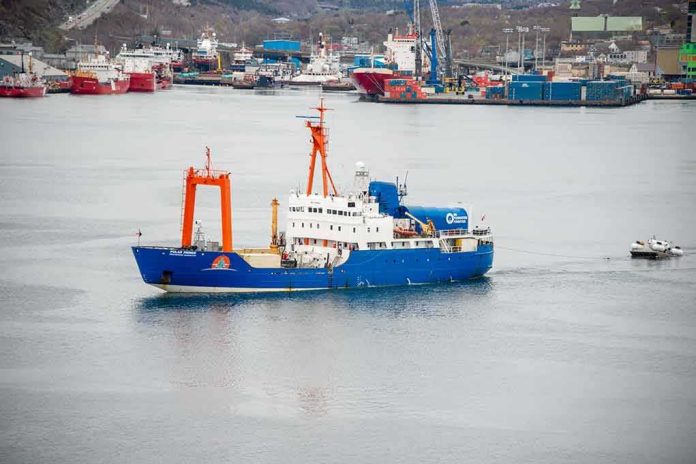
When a state loses an investor–state arbitration and refuses to pay, the battlefield shifts from the hearing room to every port, courthouse, and bank account where its assets touch commerce; Norway’s seizure of the Russian vessel Professor Molchanov in Svalbard is a textbook example of how creditors convert paper awards into leverage in the real world.
The Short Version
- A Hague-seated tribunal ordered Russia to compensate Naftogaz for Crimea-era asset seizures; the principal award is about $4.22 billion, plus interest and costs.
- Norway’s authorities detained the Russian state-owned vessel Professor Molchanov in Svalbard under a district court order sought by Naftogaz.
- Moscow denounced the detention as “piracy” and a violation of the Svalbard Treaty; its embassy pledged legal appeals.
- The episode illustrates the hard part of sovereign awards: finding attachable, commercially used state property that fits within immunity exceptions.
What Norway actually did, and why it matters
Norwegian officials detained the Russian vessel Professor Molchanov in Barentsburg, Svalbard, acting under an order of the Nord-Troms/Senja district court sought by Ukraine’s Naftogaz. The move is part of Naftogaz’s multi-jurisdiction campaign to enforce a 2023 arbitral award against the Russian Federation for the seizure of Crimean energy assets following the 2014 annexation. The underlying award—roughly $4.22 billion in damages, with interest accruing from 2014—has not been paid, prompting Naftogaz to identify Russian state property abroad that can be arrested to secure or satisfy the debt.
Arresting a vessel is a familiar tool in judgment enforcement because ships are mobile, valuable, and—crucially—often engaged in commercial use. Reports describe the Professor Molchanov as a state-owned research vessel that also runs expedition cruises around Svalbard, a dual profile that matters for sovereign-immunity analysis. The court’s order bars the ship from departing pending further proceedings, giving the creditor a foothold in Norway’s legal system while Russia challenges the action.
The award’s legal backbone
The enforcement push rests on a final award issued in April 2023 by a tribunal sitting under the auspices of the Permanent Court of Arbitration in The Hague. The tribunal found Russia internationally responsible for expropriating Naftogaz’s Crimean assets, including Chornomornaftogaz and related fields and infrastructure, and ordered compensation. Public reporting pegs the principal amount at approximately $4.22 billion, with interest lifting the total closer to $5 billion—figures consistent across industry and legal summaries.
In investor–state practice, prevailing creditors generally seek recognition or exequatur of the award in target jurisdictions; once recognized, they move to identify and restrain specific assets. That process is iterative rather than linear: creditors test theories of commercial use and ownership across multiple courts until they find attachable property that survives appeal. Norway now joins that map of enforcement fora.
Sovereign immunity and the narrow path to attachment
The arrest highlights a core constraint: state property is presumptively immune from execution, with narrow exceptions for assets “used for” commercial activity. Legal systems distinguish between immunity from jurisdiction (being sued) and immunity from execution (having property seized). Even where a state has waived jurisdictional immunity—often by agreeing to arbitrate—execution immunity remains a separate and higher bar. The creditor must show, asset by asset, that the property is dedicated to commerce, not sovereign functions like diplomatic or military service.
Comparative practice reinforces the point. Courts and commentators across the United States, France, Sweden, and other jurisdictions confirm that an arbitration clause or award does not open the door to wholesale seizures; consent to arbitration can narrow immunity, but execution typically turns on the specific asset’s use and on any explicit waiver of immunity from execution. Where courts find commercial use—such as revenue-generating services or state-run business ventures—attachment becomes plausible. Where the use is sovereign, it does not.
The Svalbard angle and Moscow’s objections
Russia’s response was swift and political. Officials labeled the move “piracy,” denounced it as a violation of international law, and invoked the 1920 Svalbard Treaty, which affirms Norway’s sovereignty over the archipelago while granting certain equal-rights provisions to other parties. Moscow also said it would appeal in Norwegian courts. These positions are statements of policy and intent; they do not, on their own, displace a duly issued Norwegian court order grounded in domestic execution law and the commercial-activity exception. The venue’s sensitivity—Svalbard hosts Russia’s longstanding presence at Barentsburg—amplifies the rhetoric but does not resolve the legal question the court framed: is this particular state asset attachable in Norway?
On the facts as reported, the decisive legal hinge will be the vessel’s use. A state-owned hull running cruise expeditions and carrying paying passengers looks commercial; a platform engaged in core sovereign functions would not. Norwegian procedural law and any applicable immunity statute will guide that line-drawing, informed by international practice. Russia’s planned appeal will likely stress ownership by a federal agency and research functions; Naftogaz will emphasize revenue operations and mixed-use commerce in Svalbard’s waters.
How we got here: from Crimea to cross-border execution
The sequence is familiar to practitioners. A state action—here, the takeover of energy assets after Crimea’s annexation—triggers investment disputes under applicable treaties or contracts. A tribunal issues a large award. The debtor state resists payment, disputing jurisdiction, merits, or quantum, or invoking public policy. The creditor then launches a global enforcement campaign, targeting bank accounts, receivables, cargoes, aircraft, and vessels tied to state-owned entities—wherever local law and the asset’s commercial profile permit. Success depends less on the eloquence of the award and more on forensic asset tracing and the creditor’s stamina across years of litigation.
Naftogaz’s strategy tracks that playbook: convert recognition orders into arrests of discrete, commercially used state property; litigate immunity and ownership; settle or sell to satisfy the judgment if courts ultimately allow execution. Each arrest ratchets pressure on the debtor to negotiate rather than risk further operational disruption.
What to watch next
Three questions will determine the case’s trajectory in Norway. First, the asset-use inquiry: is Professor Molchanov principally or sufficiently “used for” commercial activity to fall within Norway’s execution exception? Second, the ownership and control chain: does the vessel belong to the Russian state proper, a separate agency, or a state-owned enterprise—and does that distinction matter under Norwegian law? Third, any treaty-based defenses: does Russia successfully ground a Svalbard-specific constraint that narrows Norway’s otherwise applicable execution powers? Each issue carries settled doctrine but fact-intensive application.
Beyond Norway, the vista is broader. Creditors in sovereign cases win not by a single spectacular seizure but through cumulative friction—arrests that disrupt itineraries, freeze receivables, and complicate financing. If Naftogaz can demonstrate a sustained capacity to pierce execution immunity where assets are run as businesses, Russia’s calculus may shift from categorical refusal toward negotiation on interest, payment horizons, or offsets. If, instead, courts repeatedly classify targeted property as sovereign-use or insulated by treaty, enforcement stalls and the award remains largely symbolic.
SOURCES | TWO FLAGS: THE SEIZURE OF THE PROFESSOR MOLCHANOV
Governor of Svalbard, "Russian ship seized in Svalbard," 2 Sept: https://t.co/KYqtCUBFwiEuronews, Quirino Mealha, 3 Sept: https://t.co/Vf2EFY6zTq
TASS, "Norway seizes Russian vessel Professor Molchanov in Svalbard," 2…
— Read The Flags (@ReadTheFlags) September 3, 2026
Bottom line
Norway’s court-ordered arrest of Professor Molchanov is not an outlier but a case study in the only leverage that ultimately matters in sovereign enforcement: attachable, commercially used state property within a rule-of-law jurisdiction. The law draws a bright line between sovereign functions and commerce. If the vessel stands on the commercial side of that line, Naftogaz’s pressure campaign gains a meaningful precedent in the Arctic; if not, the award remains ink on paper, and the search for assets continues elsewhere.
Sources:
thegatewaypundit.com, united24media.com, euronews.com, abcnews.com, rt.com, diplomacyandlaw.com, dailyjus.com, brusselstimes.com, naftogaz.com, tass.com, aa.com.tr, eadaily.com, link.springer.com, gowlingwlg.com