Washington has not abandoned the military option against Iran — it has simply bet that sanctions, a naval blockade, and the threat of renewed strikes can do the same work as bombs, at a fraction of the cost and risk, a bet with a historical track record that is good but nowhere near a sure thing.
Key Points
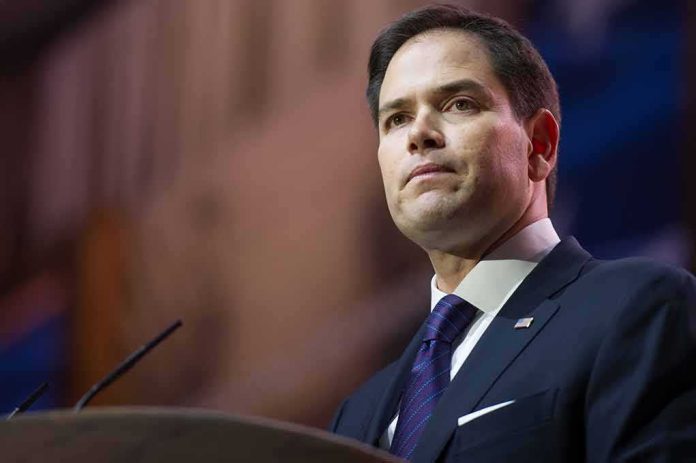
- Secretary of State Marco Rubio told G7 counterparts in Paris on November 10, 2026, that the US economic campaign against Iran is working well enough that “there is no need for major combat operations”.
- President Trump separately declared the war “militarily effectively over,” while keeping a naval blockade in the Strait of Hormuz and the option to strike again on the table.
- Iranian officials and analysts dispute that sanctions alone will change Tehran’s negotiating posture, arguing economic pain has not historically produced capitulation.
- Academic research on sanctions broadly backs that skepticism: large-sample studies put success rates for imposed sanctions around 30 to 37 percent.
- Policy analysts who favor continued pressure still argue Washington needs credible readiness to strike, not economic coercion alone, to prevent Iran from quietly reconstituting its military capacity.
What Rubio Actually Said, and Why the Phrasing Matters
Speaking at the G7 foreign ministers’ summit in Paris, Rubio was specific and on the record: “The economic campaign against Iran is so devastating that right now there is no need for major combat operations,” and President Trump had concluded the US was “achieving the same objective by economic means”. That is a narrower claim than it sounds. Rubio did not say the conflict was resolved, did not say sanctions had forced a deal, and did not rule out future strikes. He said the current balance of sanctions, naval interdiction, and diplomatic pressure was judged sufficient for now — a conditional, reversible assessment, not a declaration of victory.
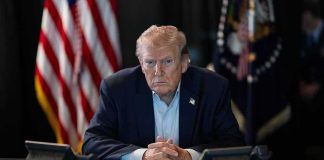
Trump’s own language, delivered separately at a snap White House press conference, reinforced the same ambiguity. He called the war “militarily effectively over” while in the same breath confirming the US Navy would keep escorting ships through Hormuz and that forces would “become engaged again if that’s necessary”. This is the vocabulary of coercive diplomacy, not armistice: capabilities stay cocked, pressure stays on, and the explicit military campaign goes quiet. It is a pause with a trigger, not a withdrawal.
The Mechanics of Substituting Sanctions for Strikes
The logic the administration is selling rests on three instruments working in combination: financial sanctions that cut Iran off from dollar-clearing banks and oil revenue, a naval blockade that physically restricts tanker traffic through the Strait of Hormuz, and the standing threat that bombers and carrier groups remain within range. Treasury’s “Operation Economic Outcast” campaign, targeting intermediary banks used to move Iranian oil money, has driven the rial down sharply and pushed domestic inflation higher, by the administration’s own account. The theory is straightforward: if the regime cannot fund its military, proxies, and patronage networks, it will eventually trade concessions — likely tied to its nuclear program — for relief, without the US having to drop another bomb.
A Familiar Pattern: Pressure as a Substitute for War, Not a Guarantee of Peace
This is not a novel strategy, and it rarely resolves cleanly into either “war” or “peace.” Coercive diplomacy toward Iran has followed this script for decades: impose cost, hold military readiness in reserve, and wait for a negotiating opening. A June 2026 memorandum of understanding between Washington and Tehran was itself halting and ultimately abandoned, according to a Congressional Research Service review of the conflict, even though both sides periodically signaled openness to reviving it. The current pause follows that same rhythm — pressure, partial diplomatic contact, stalemate, repeat — rather than a decisive break from it. Judging whether the current phase is working requires asking not whether attacks have paused, but whether Iran’s underlying position and capability are actually changing.
Where the Skepticism Is Strongest: Tehran’s Read on Economic Pain
The specific, sourced pushback to the administration’s framing comes less from doubts about the ceasefire itself than from doubts about what sanctions can accomplish. Sasan Karimi, a former Iranian official who served under President Pezeshkian, put it bluntly: “No economic pressure will convince people here to make a deal”. A BBC-cited regional expert went further, arguing the latest round of strikes “did not really alter Iranian calculations on the war” and that pressure was unlikely to succeed because China, Russia, and other trading partners were not going to honor unilateral US sanctions. International Crisis Group analyst Hamidreza Azizi described Iran’s actual strategy as patience rather than surrender — making the standoff “sufficiently costly” for Washington that diplomacy, not capitulation, again looks preferable to Tehran. None of this disputes that major strikes have paused; it disputes that the pause reflects Iranian weakness rather than Iranian calculation.
What the Sanctions Literature Actually Shows
The academic record on economic coercion gives Tehran’s skeptics real grounding. Large-sample studies of twentieth-century sanctions episodes place success rates — by various definitions of “success” — in the 30 to 37 percent range, with the classic Hufbauer, Schott, and Elliott survey finding 34 percent overall and a steeper drop, to roughly 24 percent, for sanctions imposed after 1973. That is a meaningful but modest batting average, and it skews worse for cases where the sender is pursuing regime change or deep structural concessions rather than narrower policy shifts — precisely the territory Iran’s nuclear program occupies. Sanctions have reliably punished the Iranian economy; the research is far less confident they reliably produce the specific concession Washington wants.
US Pauses Iran Strikes but Keeps Hormuz Naval Blockade in Place
Washington has postponed military strikes against Iran following diplomatic appeals from Gulf governments. Trump is maintaining the naval blockade, while Tehran insists that sanctions relief before a wider agreement. pic.twitter.com/4gU47BIwKU— Dr Asif Shahid (@DrAsifShahid) November 10, 2026
The Case for Keeping the Military Option Visible
Analysts who favor continued pressure are not arguing for abandoning sanctions — they are arguing against treating them as sufficient on their own. A Washington Institute assessment warned that Tehran will use ceasefires, front-loaded sanctions waivers, and tit-for-tat skirmishes as cover to rebuild its fastest-recovering asymmetric capabilities — drones, missiles, proxy networks — unless Washington imposes hard, verifiable limits, and recommended US forces stay ready to strike high-value military nodes when proportionate. A parallel Washington Examiner analysis made the sharper political point: repeated strikes followed by quick returns to the negotiating table risk teaching Tehran to treat American force as an inconvenience rather than a threat, undercutting the deterrent value pressure is supposed to carry. Reporting on Iran’s remaining nuclear and missile infrastructure adds a technical caveat to any renewed-strike option regardless: destroying facilities would not necessarily erase the expertise or enriched material behind them.
What This Means Going Forward
Rubio’s statement should be read as a snapshot of current confidence, not a settled conclusion. The administration has real evidence for its position — a visibly battered Iranian currency, a functioning blockade, and a president willing to say the loud part quietly rather than escalate. But the specific, named pushback from Iranian officials and regional analysts is not noise; it reflects a consistent historical pattern in which sanctioned regimes absorb pain without changing core positions, particularly when sanctions are unilateral rather than multilaterally enforced. The honest assessment is that Washington has chosen the cheaper, lower-risk tool first, and reserved the costlier one as leverage — a sound sequencing, but one whose success depends on an Iranian capitulation that the evidence so far does not confirm is coming.
Sources:
townhall.com, boston25news.com, washingtoninstitute.org, cdn.iranintl.com, chathamhouse.org, bbc.com, globalsecurity.org, kmbc.com, thenationalnews.com, kielinstitut.de, academic.oup.com