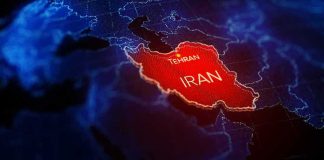
When a state lifts a self-imposed missile-range cap, it does not change physics overnight; it changes risk calculus. Iran’s decision to remove its 2,000-kilometer ceiling is best understood as a strategic policy shift that widens Tehran’s options and raises anxiety in capitals far beyond the Middle East, even though no verified flight beyond that range has been demonstrated to date.
The Short Version
- Iran’s Islamic Revolutionary Guard Corps (IRGC) publicly declared its 2,000-kilometer ballistic-missile range cap is no longer in effect; multiple outlets recorded the same named spokesman and venue.
- The announcement signals policy permission, not proof of an operational longer-range missile; no system, test, or telemetry was cited.
- Iran’s existing inventory reaches about 2,000 kilometers with credible accuracy, giving a technical base for future extension.
- Strategic ambiguity is the point: Tehran is altering deterrence dynamics now while leaving outsiders to guess how quickly hardware will follow.
What actually changed: from political ceiling to open-ended range ambition
The core fact is straightforward: an IRGC spokesman stated on the record that the previous range restriction no longer applies, language consistent across several contemporaneous reports that independently attributed the claim to the same Tehran press conference. The public messaging framed this as an operational shift—Tehran would “demonstrate these capabilities in practice”—rather than a mere rhetorical feint. The declaration matters because it removes a political constraint that Iranian officials themselves had described for years, typically characterizing the 2,000-kilometer figure as a deliberate policy choice rather than an engineering wall. That is the essence of the change: a green light for work that had been bounded by leadership fiat, not by physics.
At the same time, the announcement did not unveil a named missile, a flight test, or any technical data beyond broad assertions. Major wire services and regional outlets emphasized precisely this gap: Iran was not known to field a system exceeding 2,000 kilometers when the remarks were made. In other words, Tehran has signaled intent and permission, not completion. For readers sorting signal from noise, that distinction keeps the development in the policy domain until a flight beyond the old cap appears in trackable, verifiable data.
How Iranian missile range is built—and how it could be extended
Ballistic “range” is not a fixed property; it is an outcome of mass, propulsion, trajectory, and heat-shielding. Iran’s existing inventory—liquid-fuel families such as Shahab-3 and Khorramshahr and solid-fuel types such as Sejjil—cluster technically around the 2,000-kilometer class. Within that envelope, Tehran has traded raw reach for accuracy and survivability, fielding guidance improvements and mobile launchers that complicate preemption. Analysts have long assessed that some designs could plausibly exceed 2,000 kilometers with lighter warheads, altered trajectories, or incremental propulsion refinements; the earlier cap functioned as a stop-line on pursuing those trade-offs at scale. The IRGC’s aerospace cadre therefore has a credible platform for range growth without inventing an entirely new program from scratch.
Another relevant pathway is dual-use experience from Iran’s space-launch activity. U.S. officials have repeatedly argued that technologies proven in orbital launchers—staging, guidance, high-thrust propulsion—map to intercontinental ballistic missile design, even if adapting them into a reliable, militarized package is a separate engineering climb. That assertion does not prove an operational long-range missile exists; it does explain why removing the cap is taken seriously in Western planning circles. In essence, the technical ladder is visible, and the political hand has been lifted from the first rung.
Why Tehran imposed a cap—and why it is walking away now
Range caps in non-treaty states serve as signaling devices: they reassure some audiences while telegraphing priorities to others. Iran’s leadership publicly embraced the 2,000-kilometer figure in the mid-2010s, with senior IRGC and clerical figures presenting it as a strategic decision aligned to perceived threat geography—Israel, Gulf bases, and parts of the Levant—rather than a concession embedded in international law. Such a posture offered Tehran diplomatic narrative cover and constrained military appetites that favored longer reach. Walking away now likely reflects shifting threat assessments amid U.S.–Israeli–Iranian confrontation cycles and the desire to influence adversary targeting, missile defense investments, and alliance cohesion before events on the ground force Iran’s hand. In that sense, the announcement is a move in the deterrence game, not just a press line.
It also exploits ambiguity. By declaring the ceiling gone while withholding specifics, Tehran maximizes psychological and planning effects: decision-makers in Athens, Bucharest, Diego Garcia, or beyond must weigh the possibility—however unproven—that they are moving into a new risk band. That uncertainty alone can change military posture and political debate. Ambiguity is therefore a feature, not a bug, of the IRGC’s communication strategy.
What the counter-evidence really says
Skeptical reporting and technical guides are clear on two points: Iran’s fielded missiles top out at roughly 2,000 kilometers today, and no public demonstration has crossed the threshold since the announcement. The strongest version of the counter-case is not that Iran is bluffing about policy; it is that operational reality has not yet moved. Some analyses, while acknowledging the political nature of the former cap, add that a subset of systems could likely exceed it with payload and trajectory changes—evidence of latent potential, not deployed capability. That framing is consistent with the balance of facts on the table: policy changed first; hardware may follow, but proof awaits a trackable shot beyond 2,000 kilometers.
Occasional reports of long-distance attempts—such as a failed strike at Diego Garcia, roughly 4,000 kilometers from Iran—underscore the verification standard. They suggest aspiration and experimentation, but absent corroborated telemetry, debris, and cross-validated tracking, they do not constitute confirmation that a reliable system exists. For policymakers, the prudent reading is caution without panic: plan for plausible growth in range, but condition alarm on evidence.
🇮🇷🇺🇸 Iran has scrapped its missile-range limit and is threatening much harder strikes.
Its old 2,000-kilometer cap is gone, and the Revolutionary Guard is promising new weapons that could "astonish the entire world" if fighting starts again.
But Washington is trying to make… pic.twitter.com/yZKYahq1Sh
— Mario Nawfal (@MarioNawfal) November 9, 2026
Implications for deterrence, defense planning, and diplomacy
For regional militaries, the near-term effect is anticipatory: more attention to launch detection, dispersal drills, and hardening of bases already within 2,000 kilometers; more investment in upper-tier missile defense architectures where geography suggests future exposure. For Europe, the calculus is subtler. Even if Iranian systems remain at 2,000 kilometers in practice, the declared pursuit of longer reach will seep into NATO threat assessments, procurement debates, and alliance politics—particularly around layered missile defense and space-based tracking. Those are expensive, multi-year choices; Tehran’s announcement nudges them now, not when the first over-cap test arrives.
Diplomatically, the move complicates any attempt to bound Iran’s missile program absent a formal negotiation channel. A self-imposed range limit is easy to end; a codified, verifiable regime is not. If outside powers want to reestablish constraints, they will need to trade for them—sanctions relief, security assurances, or technology access—in a climate of mutual distrust. Lacking that, expect a familiar pattern: incremental Iranian testing and parades edged by denials and caveats, Western attributions and design analyses, and periodic crises where ambiguity is leveraged for effect. The test that crosses 2,000 kilometers with measurable data will be the inflection point from signaling to fact.
What would constitute decisive evidence of capability growth
Three markers would move this story from policy to performance. First, a tracked flight beyond 2,000 kilometers documented by independent sensors—space-based infrared, maritime radar, open-source orbital assets—corroborated by impact-zone evidence. Second, the debut of a named system with disclosed mass properties, propulsion details, and payload options consistent with the observed flight. Third, indications of series production or deployment—TEL movements, silo or tunnel modifications, or supply-chain signatures—visible in commercial imagery. Until then, the prudent interpretation is that Iran has opened the door and is signaling through it; what lies on the other side is still a question for engineers, not propagandists.
Sources:
foxnews.com, abcnews.com, kurdistan24.net, israelnationalnews.com, timesofisrael.com, riverineherald.com.au