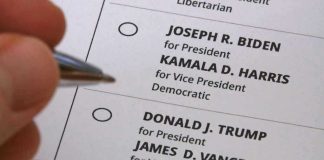

A federal appeals court’s refusal to let the Justice Department freeze roughly 20,000 California ballots is less a story about one lawsuit than a case study in what happens when a government list collides with an actual voter file: the list loses, and it usually loses badly.
Key Points
- The DOJ sued California and asked the Ninth Circuit to order election officials to set aside ballots tied to about 20,000 people it labeled “likely noncitizens,” pending citizenship verification.
- The Ninth Circuit declined to grant the request, ruling it lacked jurisdiction because the trial court had not yet issued a decision — sending the dispute back down rather than resolving it on the merits.
- A preliminary Los Angeles County review of a 200-name sample from the list found nearly 39% indicated a U.S. birthplace, more than half had canceled or inactive registrations, and 71.2% had no voting history at all.
- DOJ’s own attorney could not tell the court how the list was built, where the underlying data came from, or what role an unidentified third party played in flagging names.
- The episode fits a well-documented pattern in election administration: large-scale database matching reliably produces false positives, and a name on a list is several steps removed from an illegal vote.
What the Justice Department Actually Asked For
This was not a political statement dressed up as news — it was a formal legal demand. In a complaint filed October 15, 2026, the government asked a federal court to stop California from tabulating vote-by-mail ballots connected to more than 20,000 people the Justice Department, working with the Department of Homeland Security, had determined were likely noncitizens registered to vote. DOJ did not ask that these ballots be destroyed outright; it asked that they be segregated — set aside pending independent citizenship confirmation. The department backed the request with something concrete: it delivered a thumb drive containing roughly 20,000 names to Los Angeles County, rather than simply alleging a vague statistical risk.
That specificity is precisely what made the claim testable — and precisely what began to unravel it. Of the 20,000 names, only 7,035 reportedly carried Los Angeles County addresses at all, undercutting the scope of a request aimed heavily at that jurisdiction. The list itself was also a drastic narrowing from an original pool DOJ had floated at closer to 190,000, with no public accounting of how that filtering worked or what it left behind.
What the County’s Review Found
California did not simply dispute the list rhetorically; it tested it. Los Angeles County pulled a sample of 200 names and checked them against existing records. The results were stark: 38.9% of the records with usable birthplace information indicated the person was born in the United States — about as direct a rebuttal to “likely noncitizen” as a voter file can offer. More than half the sampled registrations were already canceled or inactive, and 71.2% had no voting history whatsoever. Mendocino County’s clerk-recorder reported a different but equally damaging problem: every single name the federal government sent for that county belonged to someone who lived elsewhere.
None of this proves the opposite extreme — that zero listed individuals were ineligible. California officials themselves were careful to say the sample did not independently establish that anyone on the list was a citizen or that none had voted illegally. But the burden in an emergency request to interrupt ballot counting runs the other way: the government asking a court to act before Election Day administration concludes has to show its evidence holds up, not merely that it might. A sample where four in ten records point toward U.S. birth and seven in ten show no voting activity at all does not clear that bar.
Why the Ninth Circuit Didn’t Bite
The appellate panel’s ruling was narrower than a verdict on the merits — it found it lacked jurisdiction because the district court had not yet ruled, and sent the matter back down rather than deciding who was right. But the hearing itself exposed the weak joints in DOJ’s case. Judges pressed the government’s attorney on where the list originated and how individuals were flagged, including the role of an unidentified third party in the matching process, and the attorney struggled to answer. That is not a minor procedural stumble. A request to interrupt ballot tabulation mid-election is extraordinary relief, and extraordinary relief demands a transparent, defensible methodology — not a list whose chain of custody even its own advocates could not fully explain.
The Pattern Behind the Headline
None of this is new terrain for election administrators, even if the scale and visibility were unusual. Voter files lack a single universal identifier, so matching them against citizenship or immigration records inevitably produces false positives — people incorrectly flagged as noncitizens because of shared names, transposed birthdates, or stale address data. The Government Accountability Office has warned specifically that improper matches can lead officials to wrongly remove eligible voters from the rolls. The National Academies has gone further, concluding that voter databases cannot simultaneously achieve perfect completeness and perfect accuracy given current data-quality constraints. Research compiled by the Brennan Center similarly finds that documented noncitizen voting, even under the most generous reading of past allegations, accounts for a vanishingly small share of ballots cast — a few thousandths of a percent in the jurisdictions studied. The gap between a database “hit” and a validated illegal vote is where most of these controversies live and die.
What Comes Next
The dispute returns to the district court, where the factual record DOJ never built before seeking emergency relief will presumably get its first real test — discovery into the list’s provenance, its matching criteria, and whether any of the flagged individuals actually cast ballots they were ineligible to cast. That is the right venue for it. Election administration runs on verifiable process, not on an unexplained list delivered on a thumb drive days before ballots are due. Whatever the eventual citizenship status of any individual name turns out to be, the public record built so far — a nearly 40% apparent false-positive rate on birthplace alone, inactive and duplicate registrations making up most of the sample, and a government lawyer unable to describe his own evidence’s origin — does not support disrupting an election already underway.
Past 4 hrs:
-Fmr FBI Dir Comey charged w/ transmission, conspiracy to transmit national defense info
-9th Circuit denies DOJ effort to separate 20k CA ballots
-Judge blocks tree removal at East Potomac
-Judge in AK: there were no legal challenges to Sullivan(s) on primary ballot— Gary Grumbach (@GaryGrumbach) October 27, 2026
Sources:
cbsnews.com, justice.gov, abc7news.com, sanluisobispo.com, nbclosangeles.com, npr.org, cdn.ca9.uscourts.gov, fortune.com, abcnews.com, electionlab.mit.edu, nationalacademies.org