A new report reveals a dramatic rise in violence against journalists, raising alarm over First Amendment threats.
Story Highlights
- Violence against journalists surged over 50% in 2024.
- Trump’s rhetoric cited as a catalyst for hostility towards media.
- Press freedom under unprecedented pressure ahead of elections.
- Police and civilian actions linked to increased assaults.
Journalists Face Increasing Threats
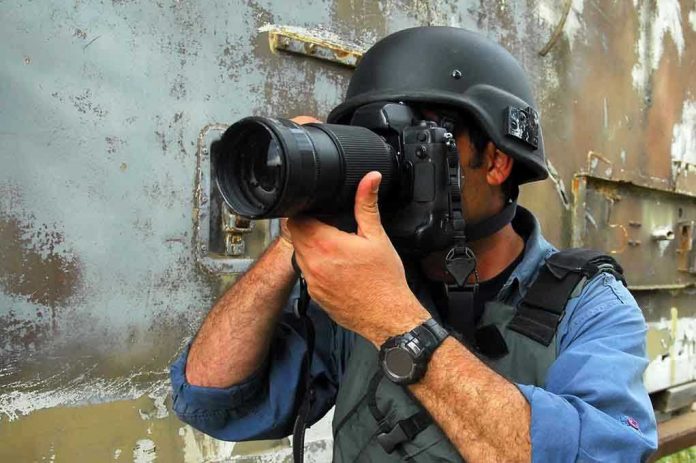
In September 2024, the Committee to Protect Journalists (CPJ) reported that assaults on journalists in the U.S. had risen by over 50% compared to the previous year, from 45 in 2023 to 68. This alarming trend is attributed to a hostile environment exacerbated by Donald Trump’s rhetoric, which labels media as “enemies of the people.” The U.S. Press Freedom Tracker highlights that journalists face heightened risks during protests and elections.
The report outlines a series of incidents contributing to this trend. Notable events include the 2020 Black Lives Matter protests, where police actions accounted for 273 assaults on journalists, and the January 6 Capitol riot, which saw 18 journalists attacked. These incidents reflect a broader pattern of hostility that has intensified under Trump’s influence, with his supporters and law enforcement agencies often at the forefront of these actions.
The Role of Rhetoric and Policing
Trump’s relentless attacks on the press have played a significant role in shaping public perception, encouraging both civilian and police aggression towards journalists. His frequent labeling of the media as “fake news” has emboldened supporters to engage in acts of violence, doxxing, and cyberattacks. The militarization of police forces further exacerbates the situation, as officers frequently use excessive force against media personnel during public demonstrations.
The CPJ report underscores the need for urgent action to protect press freedom in the United States. The escalating threats not only endanger individual journalists but also pose a serious risk to the democratic process by undermining the media’s ability to report freely and accurately. The report calls for accountability and reforms to ensure the safety and independence of journalists, particularly in the run-up to elections.
Long-term Implications for Democracy
The surge in violence against journalists has far-reaching consequences for American democracy. It risks eroding public trust in the media, which is already at an all-time low according to a 2023 Gallup poll. The consistent attacks on journalists can lead to self-censorship, where reporters may avoid covering controversial topics for fear of retribution. This undermines the media’s role as the “eyes and ears” of the public, especially during critical events such as protests and elections.
The economic impact is also significant, as media outlets face increased costs due to equipment seizures and legal battles. The broader effect is a weakened press, which, in turn, weakens democracy by limiting the flow of information and enabling authoritarian tactics to go unchecked. The international community watches closely, as the U.S. sets a precedent for press freedom globally.
Sources:
Timeline of government attacks on journalists in the United States
Trump verbally attacked media more than 100 times run election
US press freedom under unprecedented pressure, report finds
US press freedom under unprecedented pressure ahead of election
Trump’s war on press: 10 numbers from US president’s first 100 days