The “USA bailout for Abu Dhabi” claim collapses under basic fact-checking: the money in this story is flowing the other way—into America.
Quick Take
- No credible evidence supports a U.S. taxpayer “bailout” for Abu Dhabi; available reporting describes UAE investment commitments into the U.S.
- The White House says President Trump’s UAE trip produced $200+ billion in commercial deals and accelerated a previously announced $1.4 trillion UAE investment plan.
- Key announced projects span aviation, energy, AI, manufacturing, and advanced nuclear—areas central to jobs and long-term competitiveness.
- Supporters frame the agreements as “America First” economics; skeptics still want clarity on enforcement, timelines, and safeguards.
What the “Bailout” Rumor Gets Backwards
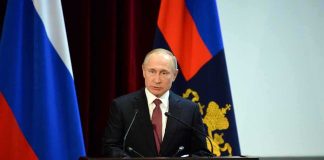
President Donald Trump’s 2025 visit to Abu Dhabi triggered online chatter suggesting the United States was preparing a “bailout” for Abu Dhabi. The available documentation points in the opposite direction. The White House described more than $200 billion in new U.S.-UAE commercial deals and said the agreements accelerate a previously announced $1.4 trillion UAE commitment to invest in the United States over a decade. None of the provided sources describe U.S. aid to the UAE.
The confusion matters because “bailout” implies taxpayer-backed rescue for a wealthy foreign government. The research presented here instead describes private-sector transactions and investment pledges—Boeing and GE aircraft-related deals, major U.S.-UAE energy projects, and technology partnerships. Conservative voters who are wary of globalist spending and foreign entanglements are right to scrutinize headlines, but in this case the underlying claim appears to be a reversal of who is paying whom.
What Was Announced: Deals, Investments, and Targeted Sectors
The White House fact sheet and related reporting describe a package built around jobs, exports, and industrial capacity. Examples cited in the research include large aviation agreements tied to U.S. manufacturing, energy collaboration involving major American producers, and initiatives in AI and advanced manufacturing. The mix is politically significant because it leans into bread-and-butter issues—employment, domestic output, and energy reliability—after years when many Americans blamed Washington for inflation, high costs, and policies that seemed to favor everything except U.S. workers.
Several items highlighted in the research touch politically sensitive debates at home. Energy cooperation and the broader “energy dominance” framing align with conservative arguments that affordable power is a prerequisite for growth and a check on inflation. Technology and semiconductor-related investment speaks to a different concern shared across party lines: dependence on geopolitical rivals in critical supply chains. Even many voters skeptical of “big money” influence can still see why leaders prioritize capital flows into U.S. factories over government-funded overseas commitments.
The Power Dynamics: Why the UAE Has Leverage—and Why the U.S. Still Holds the Cards
Abu Dhabi’s sovereign wealth ecosystem gives the UAE enormous capacity to invest abroad, and the research notes major funds and long-standing U.S. investment activity. That leverage is real: capital can chase opportunity and shape which projects get built. The U.S., however, controls what foreign investors ultimately want—market access, stable rule of law, top-tier technology partnerships, and a consumer economy that can scale products quickly. That is why the details of these agreements matter more than the slogans attached to them.
National security also sits just beneath the business headlines. The research describes a relationship that includes counterterrorism cooperation and the U.S. presence at key regional facilities. For the Trump administration, deeper economic integration can reinforce strategic alignment in an era defined by great-power competition. For critics of the “deep state,” the same reality raises a fair question: are the incentives and guardrails transparent enough that ordinary Americans can trust the arrangement won’t become another opaque, elite-managed project disconnected from voters?
What We Still Don’t Know: Implementation, Oversight, and Real-World Benefits
The biggest limitation in the available material is timeline and verification after the announcements. The research indicates that, as of the latest referenced updates, there were no major post-announcement developments documenting how fast projects are moving, how much capital has been deployed, or what enforcement mechanisms exist if timelines slip. That gap creates space for misinformation—especially when political opponents assume corruption and allies assume victory before results are measurable.
A practical takeaway for skeptical conservatives and disillusioned liberals is the same: watch the implementation. Track whether promised factories, energy projects, and AI initiatives actually create U.S. jobs, expand exports, and lower costs. If the story remains what the provided sources describe—foreign investment and commercial deals into America—then labeling it a “U.S. bailout” is inaccurate. If later reporting shows public guarantees or taxpayer exposure, that would be the point where the “bailout” concern becomes evidence-based.
Sources:
Trump, UAE leaders agree $200 billion new deals amid historic visit enhancing market access
UAE trillion dollar economic partnership
Thanks to President Trump, UAE Announces Significant Investments in U.S. Economy
2022 Investment Climate Statements: United Arab Emirates