
Iran’s sudden whiplash in the Strait of Hormuz—open one day, gunfire and “strict control” the next—is a reminder that America’s energy security can still be held hostage by a single maritime chokepoint.
Quick Take
- Iran reversed a brief reopening of the Strait of Hormuz, returning traffic to a near-standstill after vessels attempted to transit.
- Iranian forces opened fire on commercial ships, including at least two Indian-flagged merchant vessels, and a separate ship reported damage from an “unknown projectile” off Oman.
- The Trump administration is preparing new talks with Iran while keeping a naval blockade on Iranian shipping as leverage.
- The disruption is already fueling oil-price uncertainty, higher shipping risk premiums, and renewed questions about the durability of any ceasefire framework.
Gunfire at a Global Chokepoint Reignites Market Anxiety
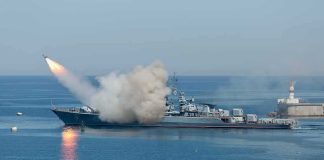
Iranian forces fired on multiple commercial vessels on April 19 as the Strait of Hormuz slid back into a near-complete standstill, according to maritime reporting cited by regional business coverage. At least two Indian-flagged merchant ships were struck, including the very large crude carrier Sanmar Herald. A container ship also reported damage from an “unknown projectile” off the coast of Oman, while UK Maritime Trade Operations said there were no fires reported from the incidents.
Shipping behavior changed quickly. After a short burst of traffic earlier in the day, transits largely halted again by evening, and owners began repositioning vessels back to prior holding areas—an industry signal that confidence in safe passage has evaporated. Because Hormuz funnels a major share of global seaborne oil and liquefied natural gas, even brief interruptions can ripple into fuel costs, insurance rates, and delivery schedules well beyond the Gulf region.
Reopen, Then Re-Close: The Timeline That Dented Diplomacy
Iran’s abrupt reversal is central to the latest escalation. On Friday evening, Iran’s foreign minister declared the strait fully open, which reportedly helped push oil prices down and triggered a rush of tankers trying to move through. President Donald Trump publicly confirmed the route was open but warned the U.S. would keep a blockade on Iranian shipping in place. By Saturday, Iran rejected that posture, and practical access tightened again.
Radio warnings then reinforced the new reality for mariners: Iranian forces described the strait as under “strict management and control,” a phrasing that matters because it tells ship captains and insurers that passage is not simply risky—it may be actively interdicted. The episode also illustrates how fragile diplomatic signals can be in a conflict zone: a headline about “reopening” can move markets within hours, while a follow-on crackdown can erase those gains just as fast.
Trump’s Two-Track Strategy: Talks, Plus Leverage at Sea
The Trump administration is preparing new talks with Iran aimed at ending the standoff, even as the U.S. maintains its naval restrictions on Iranian shipping. That combination reflects a classic leverage-and-negotiation model: diplomacy proceeds, but pressure remains in place to shape the terms. Iran, for its part, has framed continued restrictions as conditional—indicating “strict control” will persist unless the U.S. lifts its blockade of Iranian ports.
Former Deputy National Security Adviser Jon Finer has argued that even with the strait effectively closed and no clear sign of an imminent reopening, both sides still retain the ability to negotiate. That assessment fits what the public can see: military posturing is rising, but formal channels have not collapsed. What remains unclear in available reporting is what specific concessions either side is willing to make, or how quickly negotiators can separate shipping safety from broader political demands.
Why This Matters at Home: Prices, Supply Chains, and Trust in Government
For U.S. households, the Strait of Hormuz story is not just “foreign policy.” Disruptions can push up crude and refined product prices, complicate airline fuel costs, and raise the delivered cost of goods moving through global supply chains. Conservatives who already feel squeezed by inflation and high energy prices will see another warning light: when sea lanes are unstable, everyday costs can rise regardless of how carefully families budget.
Strait of Hormuz standstill hits hopes for US-Iran peace deal https://t.co/GhqFuyzaOe
— Business Post (@businessposthq) April 19, 2026
The episode also lands in a politically charged moment. Many Americans—right and left—believe Washington’s institutions often react slowly, communicate poorly, and prioritize optics over outcomes. In that environment, the practical test is straightforward: can the federal government keep trade routes open without stumbling into a wider conflict? With ceasefires described as fragile and enforcement contested, the public should watch for concrete benchmarks—verifiable transit volume, reduced incidents, and transparent terms—rather than promises that can be reversed overnight.
Sources:
Hormuz returns to standstill: maritime firm