The most dangerous part of Washington’s Taiwan decision is not the pause itself, but the mixed message it sends to both Beijing and Taipei about American resolve.
Story Snapshot
- Acting Navy Secretary Hung Cao says Taiwan arms sales are on hold while the United States manages munitions for the Iran war.
- Former president Donald Trump openly treats a multibillion-dollar Taiwan package as a negotiating chip with China, not a settled commitment.[4]
- Formal notifications for new Taiwan arms sales continue later in 2025, suggesting a pause, not a full retreat.[2][3]
- The gap between the “logistics” explanation and the “China leverage” narrative fuels uncertainty that adversaries can exploit.[1][5]
A pause on paper, a loud signal in practice
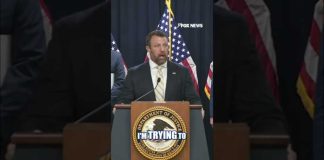
Acting Navy Secretary Hung Cao told senators that the United States is putting some Taiwan arms sales on “pause” to ensure enough munitions are available for operations against Iran, a conflict that has already strained interceptor stocks.[1][3] He insisted the United States has “plenty” of what it needs, but framed the delay as a prudent stockpile check before resuming foreign military sales. That phrasing sounds technical, but foreign capitals do not read it like a warehouse memo; they read it like a weather report on American staying power.
Trump, meanwhile, has been unusually blunt about the politics behind the deal. After meeting China’s leader Xi Jinping, he confirmed that a large Taiwan arms package had been authorized but said he had “not yet decided” whether to proceed and might use it as a “negotiating chip.”[1][4] He stressed he would decide “in the next few days,” keeping both Beijing and Taipei guessing. That is not how you talk about a treaty ally; it is how you talk about a poker hand you may or may not play.
Logistics explanation versus leverage narrative
Supporters of the pause argue that a country fighting a major conflict has a duty to ensure its own forces are fully supplied before shipping advanced munitions abroad. They point to reports that Iran operations consumed a large share of certain interceptors, pushing planners to slow transfers until production catches up.[3] From that vantage point, the pause looks like common sense: do not hollow out your magazines to make a symbolic point, especially when you can deliver the same weapons later without risking readiness.
Critics hear something very different. They see a White House that repeatedly reassures the world there is “no change” in policy toward Taiwan, while the president openly floats delaying arms as a concession Beijing would welcome.[1][4][5] Policy forums warned that China would treat any freeze in sales as a diplomatic win, and analysts speculated about a defined pause “through September,” which sounds less like logistics and more like calendar-driven bargaining.[5] When a president calls vital weapons a “chip,” it undercuts every carefully lawyered talking point about unshakable commitments.
Did the United States really walk away from Taiwan?
Despite the drama, the hard record shows the broader Taiwan pipeline continued. Taiwan’s own foreign ministry announced that the United States formally notified Congress of an arms sale of roughly three hundred thirty million dollars in November 2025, explicitly describing it as proof that Washington “continues to honor its security commitments to Taiwan.”[2] Independent tracking of notifications lists multiple Taiwan packages in 2025, including those late-year deals, reinforcing the picture of an ongoing, if bumpy, supply relationship.[3]
Osinttechnical: Acting Secretary of the Navy Hung Cao tells the Senate that the US has paused arms deliveries to Taiwan because of the Iran war.
"It's just right now we are doing a pause in order to make sure we have the munitions we need for Epic Fury." https://t.co/SPYRiHMw2p
— NΞMICO (@NemicoNetwork) May 22, 2026
That continuity matters. It suggests the “pause” did not equal abandonment; it was a delay on specific items, not a shuttered pipeline. From a conservative, security-first perspective, this aligns with a familiar idea: protect your own warfighters first, but keep your word to key partners over time. The trouble is that deterrence does not operate on spreadsheets and timelines. It operates on perception. If allies and enemies think you blinked, then for deterrence purposes, you blinked.
How mixed signals feed risk with both China and Taiwan
Beijing has long labeled American arms sales to Taiwan a “trigger for confrontation,” and Chinese leaders pressed that line directly with Trump.[1][5] When Washington slows a flagship package right after such warnings, Chinese propaganda does not bother with nuance; it calls the move proof that pressure works. That is the danger of leaving the justification opaque. Without a clear, documented logistics case from the Pentagon, the loudest interpretation becomes the default: China demanded; America hesitated.
Taiwanese leaders face the opposite problem. They hear Washington say “no change” while watching delivery dates slip and presidential language wobble. Analysts already worry that delays in key systems, from air defenses to long-range missiles, create windows of vulnerability that invite miscalculation.[3] When a president will not clearly say whether the United States would fight for Taiwan and keeps its weapons in limbo on Air Force One, confidence erodes. A cautious, democratic ally begins to wonder whether it must either rearm faster on its own or accommodate China’s rise.
The lesson: clarity beats cleverness in great-power crises
Supporters of Trump’s approach argue that keeping Beijing and Taipei off balance creates leverage, squeezing concessions without firing a shot.[4][5] That logic fits business negotiations, but it becomes dangerous when the subject is war and peace. A pause that looks clever in Washington can look like retreat in Taipei and like vindication in Beijing. Conservatives who value peace through strength should demand something better: hard-nosed logistics decisions paired with unmistakable strategic messaging.
The evidence so far points to a hybrid story. The Iran war clearly stressed certain American stockpiles, and delaying exports to protect combat readiness is defensible.[1][3] The continuing flow of new notifications to Taiwan underscores that the United States did not flip its long-standing commitments upside down.[2][3] Yet the administration diluted that solid ground by talking about Taiwan’s survival in the language of bargaining chips. In a world where one misread signal can spark catastrophe, that is a luxury Washington can no longer afford.
Sources:
[1] YouTube – TAIWAN DUMPED? Trump Freezing Arms Deal on …
[2] Web – US government officially notifies Taiwan of latest arms sale
[3] Web – US Arms Sales to Taiwan – Forum on the Arms Trade
[4] YouTube – Trump calls Taiwan arms sales ‘a negotiating chip’
[5] Web – Media Briefing: Making Sense of the Trump-Xi Summit