Donald Trump’s promise to “drive out the forces of lawlessness and crime” is not just campaign rhetoric; it is the spine of a much broader doctrine that welds street crime at home to a shadow war with Iran abroad.
Story Snapshot
- Trump fuses domestic crime, border security, and Iran policy into one law-and-order narrative.
- The White House brands Iran a continuing “unusual and extraordinary” threat to American security.[1]
- Military strikes and tariffs are sold as the external version of “tough on crime.”[1][3]
- Critics warn that dramatic claims of “obliterating” Iran’s nuclear capability outpace hard evidence.[3][5]
How Trump Turns “Lawlessness” Into a Unifying Political Enemy
Trump’s law-and-order pitch starts with a simple move: redefine “crime” so it does not stop at the city line. The White House fact sheet on Iran describes that regime’s nuclear push, missile development, and support for terrorist proxies as a “continuing unusual and extraordinary threat” requiring a “sustained and intensified response” to protect Americans and allies.[1] The vocabulary could just as easily describe a gang crisis in Chicago. The strategy is to condition voters to see Tehran and violent offenders on Main Street as chapters of the same story.
The 2018 decision to abandon the Iran nuclear deal fits cleanly into this narrative. The archived statement declares that the agreement “enriched the Iranian regime,” let it preserve nuclear research, and “at best” delayed a weapons pathway.[2] That framing casts the deal as the diplomatic version of a revolving-door courthouse: too lenient, too trusting, and blind to repeat offenders. To a law-and-order audience, ripping it up becomes the foreign-policy equivalent of firing a soft-on-crime prosecutor.
From City Streets to Persian Gulf: “Drive Them Out” as a Security Blueprint
The Iran fact sheet goes further, listing specific groups that Tehran must stop backing: Hezbollah, Hamas, the Taliban, and al Qaeda, along with threats to shipping lanes in the Persian Gulf and Red Sea.[2] That reads like a federal gang indictment written at the level of states instead of neighborhoods. Trump’s message to voters is straightforward: just as you want police to reclaim a dangerous block, you should want Washington to reclaim vital sea lanes and deny safe harbor to terror networks that target Americans abroad.[1][2]
Economic pressure slots neatly into this worldview. The 2026 White House document describes a system of additional tariffs on countries that continue buying Iranian goods and services, weaponizing trade to isolate the regime.[1] That design mirrors tough sentencing enhancements: associate with a criminal enterprise and you share the pain. Supporters argue this approach rewards countries that choose lawful behavior and punishes those that keep funding a designated bad actor. Critics counter that tariffs can morph into open-ended punishment with fuzzy metrics for success.
Operation Epic Fury and the Promise of “Obliterating” the Threat
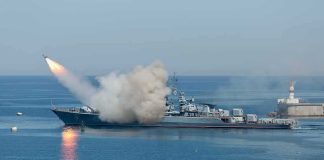
Trump pushes the same hard-edged logic when he talks about military force. In a White House appearance, he boasted, “We obliterated their nuclear potential,” and hailed Operation Epic Fury as one of the greatest military operations in United States history.[3] He also claimed Iranian leaders agreed they would “never have a nuclear weapon.”[3] Those lines are crafted to sound like a police chief announcing that the cartel’s labs are gone and the kingpins have sworn off the trade. For a public hungry for clarity, that is powerful.
The difficulty comes when reassurance outruns verification. The administration has not paired those sweeping declarations with publicly available inspection data or independent technical assessments showing Iran’s nuclear capacity truly “obliterated.”[3] From a conservative, rule-of-law perspective, that gap matters. Law-and-order politics is supposed to rest on evidence, not just confidence. If you would not accept “trust us, crime is down” from a mayor who refuses to release the numbers, you should be equally cautious about unchecked claims of total victory over a hostile regime.
Critics, Comedy, and the Risk of Overplaying the Tough Guy Hand
Opponents seize on that gap. A Daily Show segment paints Trump’s Iran posture as a jumble of chest-thumping, shifting stories, and unsupported boasts, highlighting that Iranian officials publicly denied some of the concessions Trump said they made and questioned whether key waterways were really reopened on American terms.[5] The picture is of a leader declaring the case closed while crucial details remain disputed. For skeptics, that looks less like “driving out lawlessness” and more like declaring a neighborhood safe while the sirens are still wailing.
Yet the critics face their own evidentiary problem. The publicly available rebuttals hammer Trump’s rhetoric and inconsistency but do not display inspection reports, satellite analysis, or intelligence estimates proving that his military strikes failed to degrade Iran’s capabilities.[3][5] They argue that diplomacy worked better before withdrawal, but they do not produce a new signed instrument showing Iran is now durably restrained.[2][5] In practice, both sides ask the public to fill in the missing data with trust—exactly what a skeptical, security-minded citizen should resist.
What “Driving Out Lawlessness” Really Demands From Voters
The deeper question for Americans is not whether they like Trump’s tone; it is whether they accept a model of security that treats foreign policy and policing as a single continuum of crackdowns, raids, and tariffs. The law-and-order instinct can be healthy when it insists on consequences for real threats, whether in a dark alley or a nuclear facility. It becomes dangerous when slogans like “obliterated” and “total victory” replace transparent proof and measurable benchmarks for safety.[1][3]
Citizens who value both strength and constitutional order should demand the same things in Tehran policy that they demand from their local police chief: clear goals, publicly defensible evidence, and a willingness to adjust tactics when reality does not match the press release. Driving out the forces of lawlessness and crime, at home or abroad, will always require force. It also requires something rarer in politics: the humility to show the receipts.
Sources:
[1] Web – Fact Sheet: President Donald J. Trump Addresses Threats to the …
[2] Web – President Donald J. Trump is Ending United States Participation in …
[3] YouTube – Trump on Iran: ‘We obliterated their nuclear potential’