A World Cup song about joy and unity is quietly exposing how global culture, corporate branding, and online chaos now collide in real time.
Story Snapshot
- Shakira and Burna Boy have teamed up on “Dai Dai,” promoted as the official anthem of the 2026 FIFA World Cup.
- Sports media and music outlets rushed to crown the track before most fans ever saw a formal tournament announcement.
- Fan uploads, AI-style clips, and lyric videos now compete with official content for authority and attention.
- The battle over who owns meaning in a global anthem mirrors the broader fight over who controls culture itself.
Shakira Returns To The World Cup Stage With A New Global Partner
Shakira did not stumble into this moment; she built it over two decades of turning soccer tournaments into global pop events. When the sports outlet ESPN reported that she had unveiled a preview of “Dai Dai” and identified it as the official anthem for the 2026 FIFA World Cup, the story landed on fertile ground that she herself helped cultivate with “Waka Waka” in 2010.[1] Add Nigerian star Burna Boy, and you have a deliberate fusion of Latin pop, Afrobeat, and global branding that practically guarantees stadium-singalong status.
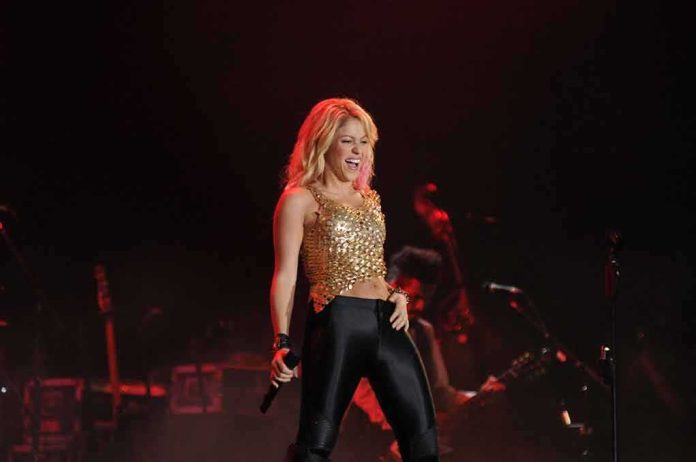
The teaser clip described in that same report shows Shakira in Rio de Janeiro’s Maracanã Stadium, dancing with a full troupe, which does not happen by accident.[1] Stadium access, choreographed production, and coordinated digital rollout signal that this is not a casual single tossed onto a playlist. It is a flagship product in a billion-dollar event machine, designed to feel organic and celebratory while serving a very planned purpose: tie emotion to a tournament logo before the first whistle blows.
Why World Cup Anthems Matter More Than Most People Admit
World Cup songs do more than soundtrack goal highlights; they compress national pride, commercial ambition, and cultural aspiration into three and a half minutes. “Dai Dai” lands at a moment when the tournament expands across the United States, Canada, and Mexico, and that geography matters. A Colombian icon and a Nigerian “African Giant” anchoring the anthem embodies the idea that soccer’s center of gravity sits firmly in the Global South, even as stadiums rise in North American cities. The music says what the politics often dodge: this is a southern, youthful, multi-ethnic world.
For many fans, especially those who remember “Waka Waka,” Shakira represents a kind of unofficial continuity of the modern World Cup myth.[1] Burna Boy’s presence adds not just rhythm but narrative: Africa is no longer just “represented” in lyrics; it is a creative engine with global pull. That message aligns well with common-sense conservative instincts that respect earned success. Both artists climbed from local scenes into global prominence, without inheriting royal titles or bureaucratic posts. A World Cup anthem built on that kind of merit signals that at least part of the global order still rewards hustle, talent, and risk.
The New Confusion: Official Song In A Sea Of “Official” Uploads
Fans trying to hear “Dai Dai” for the first time do not open a neat folder labeled “authentic.” They wade through a swamp of lyric videos, reposted clips, and “AI fan inspired” edits, many of which loudly declare themselves the official 2026 anthem.[2] Some uploads mis-spell the title, others extend the track with invented verses, and a few tack on World Cup logos with all the subtlety of a street vendor copying designer handbags. The repetition of “official anthem” in video titles creates the illusion of certainty, even when the underlying sources trace back to the same handful of reports.[2]
This confusion is not just a nerdy metadata problem. It shows how authority now gets outsourced to algorithms and influencers. When a sports brand like FIFA rolls out a song primarily through promotional channels instead of clear, document-rich announcements, fans are forced to infer the truth from vibes: Is ESPN calling it the official anthem? Are verified accounts sharing the same language? Did Shakira post the artwork? The chain of trust becomes indirect, and any motivated imitator can piggyback on that signal, which makes cultural auditing harder for anyone who cares about clarity and ownership.[1][2]
Media Hype, Corporate Branding, And The Conservative Skeptic’s Dilemma
American conservatives often look at global entertainment spectacles with justified suspicion: Who is paying for this, what are they selling, and what values ride along with the fireworks? “Dai Dai” encapsulates that tension. On one hand, the song celebrates hard work, perseverance, and shared joy—values that line up cleanly with family, faith in effort, and the dignity of competition. On the other, everything about its rollout is designed by committees of marketers, sponsors, and rights holders who view fans primarily as segments and targets.
📣 New Podcast! "Shakira & Burna Boy Shout Out Soccer Icons in Official 2026 FIFA World Cup Song ‘Dai Dai’" on @Spreaker https://t.co/rsZy7BLinb
— Music News Radio (@____groove) May 15, 2026
That does not make the song fake; it makes the framing calculated. The risk is not that Shakira or Burna Boy suddenly turned into propagandists. The risk is that audiences stop noticing where the line runs between spontaneous celebration and manufactured consensus. When every platform shouts “This is the official anthem!” but the underlying documentation remains thin or hard to find, the habit of verification erodes. People begin to accept that if enough big accounts repeat it, it must be true—a dangerous lesson to internalize far beyond music.[1][2]
How Fans Can Enjoy The Song Without Surrendering Their Judgment
The smart move is not to boycott joy; it is to enjoy it with your eyes open. You can sing along to “Dai Dai,” appreciate Shakira’s choreography and Burna Boy’s vocal grit, and still ask basic questions: Who is credited? Who profits? Where is the official tournament announcement? You can recognize that ESPN’s reporting carries more weight than a random lyric channel, while still understanding that both live in the same attention economy that rewards speed over precision.[1][2][3]
For older fans who feel steamrolled by online noise, this anthem offers a manageable test case. Try treating “Dai Dai” like you would a political claim or a financial pitch. Look for primary sources, not just retweets. Notice when language shifts from description to hype. Demand that big organizations respect your intelligence as much as your wallet. If enough people do that with something as seemingly trivial as a World Cup song, it becomes easier to do it when the stakes involve elections, rights, or national sovereignty.
Shakira and Burna Boy release official 2026 FIFA World Cup Anthem, 'Dai Dai' https://t.co/5Wkoj5SeRa
— CTV News Winnipeg (@ctvwinnipeg) May 15, 2026
Sources:
[1] Web – Shakira unveils teaser of official World Cup anthem with …
[2] YouTube – Shakira & Burna Boy – FIFA World Cup 2026 Anthem ⚽🔥
[3] Web – Shakira and Burna Boy Collaborate on Official 2026 FIFA …