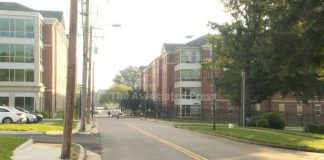
A campus-wide alert naming “rape and strangulation” inside UC Santa Barbara housing landed with a jolt—and a void: a serious allegation, a fast warning, and no suspect in sight.
Story Snapshot
- University police issued a Timely Warning hours after the report, citing rape and strangulation in campus housing [3][5].
- The report reached police around midnight, roughly an hour after the alleged incident time [2][5].
- As of midweek, police had released no suspect information; the investigation remains open [1][2][4][5].
- Local coverage shows minor time discrepancies, underscoring early-report uncertainty [2][4][5].
What Police Said, When They Said It, And Why It Matters
University of California, Santa Barbara police received a report around midnight describing a rape and strangulation inside campus housing on May 9, with the incident allegedly occurring at approximately 11:00 p.m. [2][5]. The department issued a Timely Warning at 12:39 p.m. the next day, using explicit language that matched the report’s gravity and triggering the federal campus-safety notification framework [3][5]. The speed and specificity of that alert signaled two priorities: inform potential witnesses quickly and deter further harm through heightened vigilance [3][5].
Local outlets amplified the alert with consistent core facts and a few early-report wrinkles. Multiple reports referenced the late-night timing and the on-campus housing location [1][3][4]. The Daily Nexus framed the event as occurring “on Saturday night,” with one version citing “approximately 10:00 p.m.” while university messaging and other coverage centered on “approximately 11:00 p.m.” [2][4][5]. That kind of variance is common in live investigations where victim interviews, medical care, and initial recall unfold under stress [2][4][5].
Presumption Of Innocence And The Demand For Transparency
No suspect had been publicly identified, arrested, or charged several days after the report, and police stated that no suspect information was available for release [1][2][4][5]. That reality sits at the intersection of two bedrock principles: protect the community and uphold the presumption of innocence. American conservative values and common sense align on this point. Institutions must not smear unnamed individuals or try cases by rumor; investigators must vet claims, corroborate details, and build evidence without political pressure or social-media adjudication [2][5].
The absence of public suspect details does not negate the seriousness of the allegation; it emphasizes investigative discipline. Early disclosures often risk compromising lineups, contaminating witness memory, or tipping off a potential offender. Universities also juggle federal obligations to warn while safeguarding due process for all parties. The Timely Warning’s language reflected that needle-threading: direct about the reported crime, silent on identity, and clear about the ongoing nature of the case [3][5].
Why The Timeline Tension Persists In Campus Cases
Campus safety communications operate on a sharp timeline, and that sometimes magnifies inconsistencies in early facts. The report-to-alert window at UC Santa Barbara spanned roughly twelve hours, swift by institutional standards and likely intended to capture weekend witnesses and preserve digital evidence like building-entry logs or camera footage [3][5]. Minor discrepancies in incident time across coverage reflect the provisional state of knowledge, not necessarily a flaw in the process [2][4][5].
An urgent request has been made after a reported rape at a UC Santa Barbara owned off campus student housing building. An attorney speaks out for the family of the student involved asking for UC Police to bring in the Sheriff's Department resources. https://t.co/1MLdrIt47R pic.twitter.com/kawHNu85CN
— John Palminteri (@JohnPalminteri) May 15, 2026
Community concern rose quickly, from parents to students reading push alerts in residence halls. The responsible response blends vigilance with restraint. Students should document anything unusual they saw around the stated hours and relay it to police, but they should also avoid online speculation that assigns blame without facts. Justice requires facts. Safety requires speed. The healthiest campus culture insists on both—rapid warnings when danger may exist and rigorous proof before naming and shaming an alleged offender [2][3][5].
Sources:
[1] Web – Sexual Assault Reported Inside UCSB Campus Housing
[2] Web – UCSB community reacts after reported rape in campus …
[3] Web – UCSB Issues Timely Warning After Reported Rape, …
[4] Web – Rape and strangulation reported in campus housing
[5] Web – This message includes descriptions of sexual violence …