The latest overnight U.S. strikes pushed deeper into Iran’s territory, sharpening both the fight over the Strait of Hormuz and growing fears that Washington is drifting into a war of choice run from afar by people who never pay the price themselves.
Story Snapshot
- The U.S. military says new strikes inside Iran aim to protect commercial shipping and civilian mariners in the Strait of Hormuz.
- Officials admit they are also trying to “degrade” Iran’s wider military power and pressure Tehran in nuclear and ceasefire talks.
- Iran calls the attacks violations of its sovereignty and hits U.S. bases and Gulf partners in return, pulling the region closer to wider war.
- Americans across the political spectrum see another distant conflict while their own economy, borders, and freedoms feel ignored at home.
What the U.S. Says These Strikes Are Really About
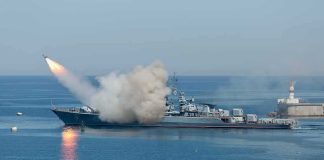
U.S. Central Command, which runs American military operations in the Middle East, says the latest strikes inside Iran are about protecting ships and sailors in the Strait of Hormuz. Its statements describe targets like air defense sites, coastal radar, drone and missile storage, communication networks, and small boats near the key waterway. Officials say Iran has used drones and rockets against tankers and cargo ships, and that hitting these sites will “degrade” its ability to attack commercial shipping.
President Trump and Pentagon leaders also link the strikes to wider goals, not just single ship attacks. They argue that strong military pressure is needed to force Iran back toward ceasefire deals and nuclear limits. In past operations, including the 2025 “Operation Midnight Hammer” on nuclear sites, U.S. briefers said the aim was to destroy or weaken Iran’s nuclear program and compel talks. That same mix of defense and coercion now shapes the campaign around Hormuz.
How Deep the Strikes Reach Inside Iran – And Iran’s Pushback
These are not small warning shots; the U.S. military reports hitting dozens to more than 100 targets in single nights, and over 300 in just three nights of strikes this month. Recent waves have focused on Iran’s coastline, including Qeshm Island, port areas, and other sites that mix military facilities with nearby civilians. Reuters and other outlets say some missiles landed within tens of miles of major cities and far beyond the open sea.
Iran’s leaders answer by claiming self-defense and retaliation for U.S. attacks on their territory and infrastructure. They have fired back at U.S. bases in Jordan and at Gulf Arab partners, framing those moves as a response to American aggression near bridges, ports, and military sites. Casualty counts are still unclear, but reporters have listed deaths and injuries across several Iranian provinces after repeated nights of strikes. Each action and reaction builds a cycle that looks less like narrow self-defense and more like a slow, grinding war.
Why This Matters for Ordinary Americans, Not Just Generals
For many Americans watching from home, this pattern feels familiar and troubling. Washington again sends missiles and jets into another country while basic problems in the United States stay unsolved. People on the right see money and focus going to foreign “coercive diplomacy” while border security, inflation, and energy costs still hit their families. People on the left see a government using force abroad while cutting social support and letting inequality at home grow.
Both sides share a deeper worry: the sense that a small group of elites in Washington and the national security world are choosing long campaigns that most citizens never voted for. Central Command press releases and cable news clips talk about “degrading capabilities” and “freedom of navigation,” but they do not answer key questions. How long will this go on? What is the clear end goal? What is the plan if Iran or its allies hit back harder and drag U.S. troops, Gulf bases, and global oil markets into full crisis?
The Fog of War and the Growing Trust Gap
Information on the strikes is also skewed. Early details mostly come from U.S. military statements and friendly media, which focus on American aims and battle footage but not independent damage checks on the ground. Iran’s state media pushes its own story, often mixing real reports with propaganda and unverified claims. Without neutral satellite analysis, local hospital data, and full legal filings, citizens in both countries are stuck between two partial narratives.
TRUMP ORDERS EXPANDED IRAN STRIKES AFTER U.S. TROOPS KILLED IN JORDAN
President Trump ordered U-S CENTCOM to "open the gates of hell" upon Iran after two U-S service members were killed in Jordan.
Word from D-C is that tonight's attacks on Iran will be significantly more…— Worldwide News Network (@WorldwideNNX) July 19, 2026
That gap feeds the belief that the “deep state” on all sides is playing games with ordinary lives. Americans remember past wars sold as “necessary” that dragged on for years, cost trillions, and left veterans and families struggling back home. Now they see another campaign justified by phrases like “self-defense” and “protection of commerce” while the full legal and moral case remains cloudy. In a time when many feel the American Dream slipping away, another open-ended fight in the Gulf looks less like safety and more like proof that the system serves itself first.
Sources:
facebook.com, centcom.mil, reuters.com, nytimes.com, aljazeera.com, apnews.com, bbc.com, en.wikipedia.org, cbsnews.com, youtube.com