
The real story of Anthropic’s stock-market debut is not the size of the check Wall Street wrote — it is whether a company that just subjected itself to quarterly earnings calls can keep a voluntary, self-authored safety framework intact once shareholders start asking why growth isn’t faster.
Key Points
- Anthropic’s IPO and simultaneous private placement raised roughly $107.3 billion, among the largest capital events in corporate history, at an implied valuation near $1.5 trillion.
- The company is structured as a public benefit corporation with a Long-Term Benefit Trust meant to balance profit against safety, governed by a written Responsible Scaling Policy.
- That policy is explicitly voluntary — there is no regulator, court, or independent body with power to enforce it if commercial pressure collides with safety judgment.
- Former employees, governance researchers, and protesters outside Nasdaq have all raised the same underlying question: does public-benefit architecture actually constrain decisions, or does it mainly provide cover for them?
- The company’s own prospectus disclosed severe risks — including loss of control over AI systems — making this less a story of corporate spin and more one of unresolved institutional design.
The Record Debut, By the Numbers
Anthropic’s offering combined an $81.3 billion initial public offering with a separate $26 billion private placement, for a total raise of approximately $107.3 billion — enough to eclipse SpaceX’s previous record for the largest capital event tied to a single company’s debut. Shares priced at $83 and opened trading at $111.50, pushing the company’s implied valuation to roughly $1.5 trillion. For context, that is a market value comparable to firms that took decades to build industrial or software empires; Anthropic achieved it seven years after its 2021 founding, on the strength of enterprise AI revenue that grew ninefold in a single prior year, according to analysts tracking the company’s growth trajectory.
Numbers of this scale do more than generate headlines. They change incentives. A company holding $107 billion in fresh capital, and commitments reportedly approaching $900 billion in chip-purchase and data-center obligations to sustain its model development, has very different pressures bearing on it than a private research lab funded by patient venture capital. The question the IPO forces into the open is whether Anthropic’s safety commitments were built to survive exactly this kind of pressure — or whether they were designed for a smaller, quieter company that no longer exists.
A Corporation Built With a Governance Experiment Inside It
Anthropic is not an ordinary Delaware corporation. It is organized as a public benefit corporation, a structure that legally obligates directors to weigh a stated public mission — here, “the responsible development and maintenance of advanced AI for the long-term benefit of humanity” — alongside shareholder returns. Layered on top is the Long-Term Benefit Trust, a body of trustees with some role in board composition, intended to act as a counterweight to pure stockholder control. The company backs this with a written Responsible Scaling Policy, now in its third version, which it describes as a framework for identifying catastrophic risks and tying them to concrete go/no-go decisions on model development and deployment. Under the policy, risk findings route to a named Responsible Scaling Officer and ultimately to the CEO, with reports shared with the board and the Trust. This is, by the standards of the industry, an unusually elaborate governance apparatus. Most AI labs rely on internal review committees with far less public documentation. Anthropic has published the architecture, named the roles, and put its prospectus risk disclosures on the record — reportedly devoting dozens of pages to the possibility that people could lose meaningful control over AI systems or that such systems could act harmfully without human direction. That transparency is itself evidence the company is not pretending the technology is risk-free to the investors who just handed it $107 billion.
Where the Framework Still Depends on Trust, Not Proof
The architecture’s weakness is built into its own description: the Responsible Scaling Policy calls itself “a voluntary framework”. No regulator certifies it, no court can compel adherence to it, and no independent auditor has published a longitudinal record of how often it has actually delayed a product launch or forced a costly change in course. Anthropic’s own public materials assert that “the market will reward” safety-conscious development — a claim about incentive alignment, not a demonstrated outcome. Nothing in the public record establishes how much formal voting power the Long-Term Benefit Trust holds relative to ordinary shareholders, or what happens in the scenario that matters most: a board vote where safety caution and quarterly growth targets point in opposite directions.
Reporting on the governance structure has reached a similar conclusion from the outside. Coverage examining Anthropic’s public-benefit mechanisms found they give the company “wide leeway to decide how it is benefiting society” — discretion that cuts both ways, since it could reflect genuine judgment or simply self-serving flexibility. A former Anthropic employee, quoted anonymously, put the underlying tension more bluntly: the pace of frontier AI development is “untenable under normal market structures,” given mismatched incentives in an industry operating with “little to no oversight”. That is a notable admission — not from an adversary of the company, but from someone who worked inside it.
The Protests and the Broader Governance Critique
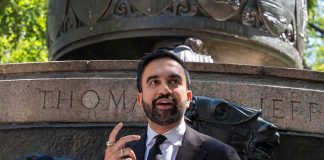
Demonstrators gathered outside Nasdaq’s Times Square headquarters on the day of the listing, raising concerns that ranged from data-center water and energy consumption to AI’s role in surveillance and military applications. Organizers with the Stop Funding Billionaires campaign argued that early investors stand to profit enormously from an AI boom while ordinary retirement savers absorb the downside if valuations later collapse. Multiple arrests were reported at the demonstrations. Some of the specific allegations raised at these protests — about particular military or surveillance deployments — are attributed claims from advocacy groups rather than independently verified facts, and should be read as such. But the structural critique underneath them tracks closely with the concerns raised by governance researchers and even Anthropic’s own risk disclosures: a voluntary safety framework, however well-documented, is still a promise rather than a guarantee.
🚨 WHO STAGED THE ANTHROPIC IPO “PROTEST” PRODUCTION?
🎥 WATCH THE BLOCKADE.14 GROUPS. One run-of-show.
As Anthropic executives gathered inside the Nasdaq MarketSite in Times Square to ring the opening bell on a historic $81 billion IPO, activists sat on the pavement outside,… pic.twitter.com/vVxdTeGasb
— Asra Nomani (@AsraNomani) November 19, 2026
What the Debut Actually Settles — and What It Doesn’t
The IPO settles the question of market appetite. Investors were willing to price a seven-year-old company at roughly $1.5 trillion, betting that Anthropic’s enterprise AI revenue growth continues and that its safety architecture is compatible with, rather than opposed to, rapid commercialization. It does not settle the harder question: whether a public-benefit structure answerable to public shareholders can hold its ground when a safety review recommends slowing down a product that Wall Street is expecting to accelerate. Anthropic has built more governance scaffolding around that question than any peer in the industry. Scaffolding, however, is tested by load — and the real test begins now that the company has quarterly earnings, public shareholders, and a $1.5 trillion valuation to defend.
Sources:
live.euronext.com, npr.org, semafor.com, bloomberg.com, en.ilsole24ore.com, anthropic.com, embed.businessinsider.com, dailyaibrief.com, kqed.org, techpolicy.press, thebusinessjournal.com