
Procter & Gamble is no longer testing whether a factory can run through the night without a single person on the floor — it has decided the economics work, and it is scaling the idea company-wide.
Key Points
- P&G executives told investors on November 19, 2026 that unattended operations are already running at more than 15 sites and will expand further in fiscal 2027.
- The program traces to a 2024 pilot at a Gillette plant in Berlin, where the overnight shift ran without technicians present.
- P&G ties the effort to a company-wide productivity plan targeting up to $10 billion in cumulative savings from fiscal 2027 through 2030, alongside a planned 20 to 30 percent reduction in its product-supply workforce.
- Independent robotics-and-employment research supports the productivity case but complicates the simple “robots replace workers” narrative — effects vary widely by industry, region, and how automation is deployed.
What P&G Announced, and Where It Came From
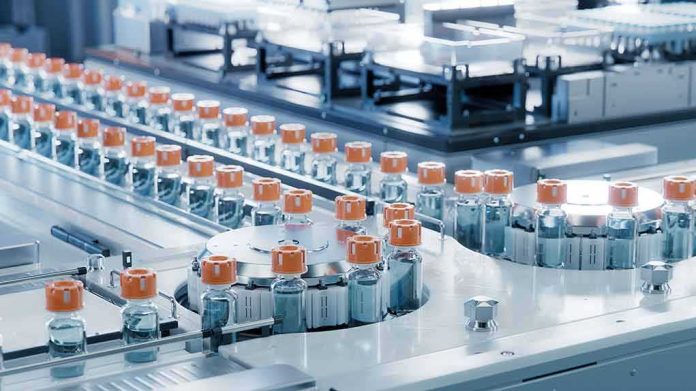
At its November 19, 2026 investor presentation, P&G disclosed that unattended manufacturing — factory lines running with no staff physically present, typically overnight — was already operating at more than 15 sites, with further expansion planned for fiscal 2027. Chief product supply officer Luc Reynaert described the program as a combination of robotics, automation, and digitization aimed at improving safety, quality, and reliability, with a stated goal of lifting manufacturing productivity by as much as 20 percent by 2030. This was not a sudden pivot. The company’s first unattended shift ran at a Gillette razor plant in Berlin in 2024, where the factory operated through a historically hard-to-staff overnight shift without technicians on site. What was a single pilot two years ago is now a stated, expanding operating model.
The financial scaffolding around the announcement is larger than the automation story alone. P&G’s broader productivity plan targets up to $10 billion in cumulative savings between fiscal 2027 and fiscal 2030, a figure that spans multiple cost levers, not unattended shifts in isolation. Tied to that plan is a separate, widely reported target: a 20 to 30 percent reduction in P&G’s product-supply workforce by 2030. The company has framed the two initiatives — unattended operations and workforce reduction — as connected elements of the same supply-chain modernization effort, which is why coverage of the automation announcement has consistently paired it with the headcount figure.
How Unattended Manufacturing Actually Works
“Unattended” does not mean a factory with no human involvement ever — it means specific shifts, most often overnight, where automated and robotic systems run production lines without staff physically present on the floor. Sensors, programmable logic controllers, and remote monitoring systems handle the functions a line operator or technician would otherwise perform: detecting jams, flagging defects, adjusting parameters, and triggering shutdowns when something goes wrong. P&G executives have said the arrangement can free employees from the least desirable shift — overnight — and redirect them toward more consumer-facing or less repetitive work during the day. The company has not, however, specified how many additional sites will adopt the model in fiscal 2027, which production lines are involved, or what share of total shift-hours will eventually run unattended. That operational detail remains undisclosed even as the expansion is confirmed.
P&G has also acknowledged, in the same investor-day disclosures, that unattended operations require leaner teams — language that sits alongside the redeployment framing without fully reconciling it. Whether a given plant ends up with the same headcount doing different work, or fewer total employees, is not something the public disclosures resolve. That ambiguity is precisely where the 20 to 30 percent product-supply workforce reduction target becomes relevant: it is the clearest available signal of where this is headed at scale, even if the company has not drawn a direct line from unattended shifts to specific layoff numbers.
What the Broader Evidence on Robots and Jobs Actually Shows
P&G’s bet sits inside a much larger body of economic research on industrial automation, and that research resists a tidy headline in either direction. A cross-country study covering 52 economies found that robot adoption raises total-factor productivity and, in some cases, real wages — but consistently lowers the employment share within manufacturing. European Union data tell a more muted story: at the aggregate industry level, robot adoption is not robustly associated with higher output or value added once industry, year, and country effects are controlled for, and the European Commission’s Joint Research Centre has gone further, concluding that robots remain a specialized technology with limited overall employment impact in Europe and are, if anything, positively associated with employment levels at adopting firms.
Plant-level evidence complicates the picture further. Firms that adopt industrial robots for the first time have been shown, in difference-in-difference analyses, to increase employment by roughly 6 to 9 percent relative to non-adopting competitors in the same industry — because lower unit costs can expand output and market share enough to offset the labor displaced by automation itself. Other research reaches starker conclusions: one widely cited econometric model estimates that each newly installed robot displaces roughly 1.6 manufacturing jobs, projecting up to 20 million displaced manufacturing jobs worldwide by 2030, while French firm-level data show robot adoption coinciding with higher value added alongside a shrinking share of production workers. The honest synthesis is that automation’s employment effect depends heavily on whether a firm uses it to expand output or simply to cut costs on flat or declining volume — and P&G’s own $10 billion savings framing suggests the latter is, at minimum, a significant part of its intent.
🚨 PROCTER & GAMBLE PLANS TO CUT UP TO 30% OF SUPPLY WORKFORCE AS ROBOTS TAKE OVER FACTORY SHIFTS
The company behind Tide, Pampers, Gillette and Bounty is accelerating automation, with more than 15 facilities already capable of operating shifts without human workers present.…
— MDBayNews (@MDBayNews) November 22, 2026
Why This Matters Beyond One Company
P&G is one of the world’s largest consumer-goods manufacturers, and its supply chain decisions tend to set a reference point for peers in packaged goods, food, and household products — industries built on high-volume, repetitive production runs that are structurally well suited to automation. Academic work on so-called lights-out manufacturing confirms the efficiency and quality gains P&G is claiming are plausible in principle, while flagging the same unresolved risks regulators and plant managers will have to manage: cybersecurity exposure in automated control systems, high upfront capital costs, and reduced adaptability when production requirements change quickly. None of that undercuts the core fact already in evidence: P&G has moved unattended manufacturing from a single Berlin pilot to an expanding, multi-site operating model, with a stated productivity target and a workforce reduction plan running on a parallel track toward 2030.
Sources:
nytimes.com, uslayoffradar.com, unbiasedheadlines.com, news.sulat.com, stockanalysis.com, link.springer.com, ijtech.eng.ui.ac.id