A former Central Intelligence Agency partner from Afghanistan now faces death‑penalty‑eligible charges for an alleged ambush that killed a National Guard soldier just blocks from the White House.
Story Snapshot
- Federal prosecutors added new charges against Rahmanullah Lakanwal that are eligible for the death penalty if he is convicted.
- A federal grand jury says he intentionally killed Army Specialist Sarah Beckstrom and tried to kill multiple service members in a D.C. ambush.
- Lakanwal, an Afghan national who once worked with the Central Intelligence Agency, allegedly drove from Washington state to D.C. with a stolen gun.
- He has pleaded not guilty, and the Department of Justice is still reviewing whether to formally seek a capital sentence.
Alleged White House Perimeter Ambush Targets National Guard
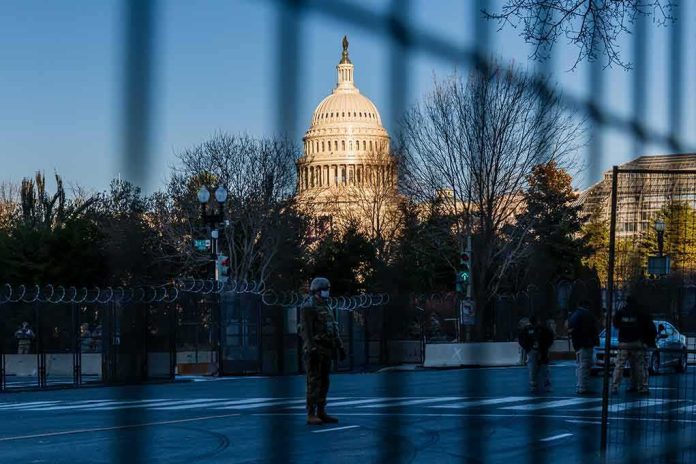
Federal court records say the attack happened on November 26, 2025, near the Farragut West subway station, only a few blocks from the White House. Two members of the West Virginia National Guard were on patrol as part of a law enforcement and military surge in the capital when they were shot in what officials call an ambush. Army Specialist Sarah Beckstrom was killed, and Air Force Staff Sergeant Andrew Wolfe was left in critical condition. Two other service members helped stop the shooter and were also allegedly targeted.
The suspect is Rahmanullah Lakanwal, a 29‑year‑old Afghan national who had previously received paramilitary training under contract with the Central Intelligence Agency in Afghanistan. Media and court summaries describe him as an “Afghan national” and a former Central Intelligence Agency partner, highlighting his immigration background and past work with U.S. intelligence. That fact has raised serious questions for many Americans about how someone vetted through wartime programs and allowed into the country could later be accused of turning his gun on U.S. troops at home.
New Federal Charges Open Door to Death Penalty
There is no death penalty under District of Columbia law, so initial local charges could not support capital punishment. Prosecutors first charged Lakanwal in D.C. Superior Court with first‑degree murder, assault with intent to kill, and illegal gun possession. He pleaded not guilty on those counts. Later, federal prosecutors filed separate gun charges for transporting a firearm in interstate commerce with intent to commit a serious offense and transporting a stolen firearm across state lines, tying the case into federal court where the death penalty is allowed in limited situations.
A superseding indictment in federal court has now expanded the case to 17 counts, including murder of a person assisting a federal officer, three counts of attempted murder of such personnel, discharge of a firearm causing death, and several counts of discharging a gun during a crime of violence. At least some of these charges are death‑penalty‑eligible under federal law if the defendant is found guilty. A federal grand jury also issued special findings stating that Lakanwal “intentionally killed” Specialist Beckstrom and tried to kill more than one person, which are key legal factors that allow prosecutors to seek a capital sentence.
Presumption of Innocence, But High Stakes for Justice
At his latest hearing in federal court, Lakanwal pleaded not guilty to all new charges. Under American law, he is presumed innocent until proven guilty beyond a reasonable doubt, and the indictment is only an accusation. His defense lawyers have reportedly pushed for more information about his past work with the Central Intelligence Agency and his mental health history, arguing that these records are important for a full defense. No trial date has been set yet, and the judge has scheduled further hearings to sort out evidence and next steps.
The Department of Justice has said its Capital Case Committee will review the file and decide whether to seek the death penalty. That internal review is part of a formal protocol that requires United States Attorneys to submit eligible cases to Washington and allows the Attorney General to make the final call on capital punishment. News outlets and social media posts have focused heavily on the “death‑penalty‑eligible” label, but officials stress that no final decision has been announced and that the review is still underway.
Security, Vetting, and What This Case Signals
For many conservative Americans, the case raises deep concerns about national security, border vetting, and how the federal government protects service members on U.S. soil. Reports say Lakanwal allegedly drove his Toyota Prius from Bellingham, Washington, to Washington, D.C., while carrying a stolen.357 Smith & Wesson revolver. Court documents claim he then used that gun to shoot Beckstrom and Wolfe in the back of the head, a detail that points to a planned, close‑range attack on uniformed troops. If proven, that kind of intentional targeting near the White House would be exactly the type of crime many believe should face the strongest possible punishment.
At the same time, the case shows how complex the federal death penalty process can be, especially when the defendant is a non‑citizen with past ties to U.S. agencies. The Justice Department must weigh evidence of intent, mental health, and prior service alongside the clear harm done to military personnel and the public demand for justice. Families of the victims, fellow Guard members, and many patriots across the country are watching closely to see whether the system delivers a firm, fair response to an alleged ambush on Americans who were standing watch over the nation’s capital.
Sources:
cbsnews.com, thehill.com, abc7ny.com, abcnews.com, facebook.com, wjla.com, youtube.com