The fight over Big Bend’s border wall is not merely about fence posts in remote desert; it is a collision between expedited national-security authority and the legal limits on bypassing environmental and cultural protections—and the Supreme Court is being asked to referee that collision on an emergency timeline.
The Short Version
- Justice Department sought emergency Supreme Court relief to lift a district court injunction blocking Department of Homeland Security construction in the Big Bend Sector.
- The government argues a large, waiver-enabled project is essential to close a 300-plus-mile gap it says cartels will exploit as other routes are hardened.
- A federal judge concluded DHS likely exceeded its authority with sweeping environmental-law waivers and kept the injunction in force pending litigation.
- Research on barrier effectiveness is mixed, and the record here lacks location-specific security evidence tying Big Bend construction to measurable gains.
What the government is asking the Supreme Court to do—and why it says it matters
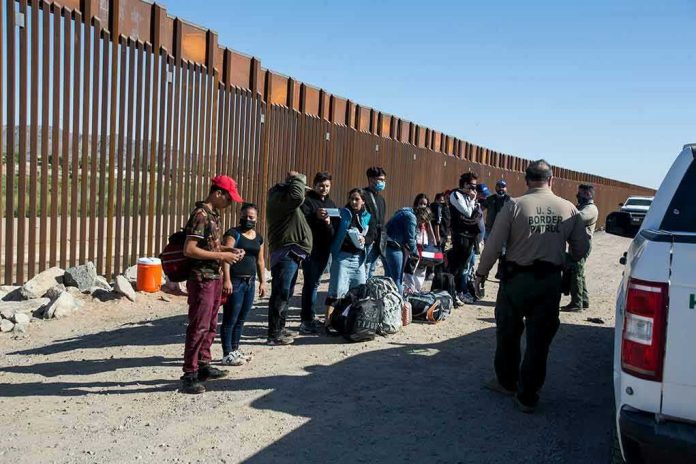
The Justice Department has invoked the Supreme Court’s emergency docket to lift a district court order that halted border-wall and related infrastructure construction across the Big Bend Sector—an expanse exceeding 500 miles and, by the administration’s accounting, roughly a quarter of the southern border. This is not a policy press release; it is a formal request for extraordinary relief to restart work while the underlying lawsuit proceeds. In its application, the government warns that leaving a large, unfortified span in West Texas would operate as a magnet for cartels and unauthorized crossings as enforcement tightens elsewhere, frustrating efforts “to stop the flow of illegal aliens and drugs” along the border. CBS and other outlets report Big Bend’s sheer scope—covering about 77 counties—underscoring why the administration frames the injunction as nationally significant rather than a parochial dispute.
The administration also grounds its position in statutory authority: DHS issued waivers intended to set aside environmental and related procedural laws to accelerate construction. That waiver tool has been a recurring mechanism for border projects for nearly two decades, and the government’s emergency filing rests on the view that those waivers are lawful exercises of congressionally delegated power—authority it says is necessary to respond at operational speed to shifting cross-border routes.
Why the project is currently blocked: the waivers, the court, and the standards
A federal district judge in El Paso issued a preliminary injunction, finding plaintiffs were likely to succeed on at least one claim that DHS exceeded its authority in issuing the Big Bend waivers. The court also credited allegations of irreparable harm tied to environmental, cultural, and access impacts if construction proceeded during litigation. When the administration asked that same court to pause the injunction, the judge declined—pushing DOJ to seek emergency intervention from the Supreme Court rather than wait for the usual appellate process. As several reports summarize, the injunction directly targets the use of three DHS waivers that cleared the path for accelerated construction across a planned stretch of roughly 175 miles within the sector.
At this posture, the Supreme Court is not deciding the merits of border barriers or immigration policy writ large. It is applying familiar emergency-stay factors: likelihood of success on the merits, irreparable harm, the balance of equities, and the public interest. The administration leans on asserted security harms from delay; opponents point to landscape-altering construction and statutory overreach. The district court’s adverse merits preview and its irreparable-harm finding give opponents a procedural advantage because emergency relief typically demands more than a close case.
The security case and its evidentiary gap
As a matter of operational theory, border hardening aims to raise the cost of illegal entry, redirect flows toward controlled chokepoints, and slow smuggling logistics. The government’s Big Bend rationale follows that playbook, emphasizing displacement effects if a “gap” remains while other sectors are fortified. Yet, in the reporting available, the administration’s argument is presented more as prediction than as a location-specific assessment: no disclosed interdiction data, sector intelligence products, or modeling tie Big Bend construction to quantifiable reductions in crossings or narcotics movement. In a rugged region with substantial natural barriers, that evidentiary specificity matters to claims of urgent, irreparable harm from delay. The sector’s geography—canyons, desert, remote river corridors—also raises engineering and maintenance questions that are unresolved in the current public record, from flood behavior to access roads and hydrology.
Across the broader literature, studies diverge on whether barriers reduce overall irregular migration or mostly re-route it. Some work finds fences cut crossings at targeted points; other research detects little net effect globally and even potential backfire dynamics by reducing circular migration or pushing riskier, longer routes. In short, barriers can be tactically effective yet strategically ambiguous—context, topography, and enforcement integration determine outcomes. Big Bend’s case would benefit from sector-level evidence—apprehension trends, seizure patterns, route intelligence—disaggregated from national averages.
The waiver fight: statutory design, limits, and the Big Bend challenge
DHS’s waiver authority—rooted in Section 102 of the immigration statutes—has long been controversial because it allows the department to set aside a wide array of environmental and cultural-resource laws to expedite border infrastructure. Prior uses have waived dozens of statutes at once, sharply curtailing ordinary review and litigation channels. Opponents in the Big Bend suit argue that DHS stretched this tool beyond congressional intent, effectively granting itself open-ended discretion to circumvent bedrock protections across a vast landscape. The district court’s preliminary view—that plaintiffs are likely to prevail on at least one claim—signals unease with how the agency deployed that authority here.
The public-interest prong thus runs in both directions. The administration casts delayed construction as a risk to border control; plaintiffs cast accelerated construction as an irreversible blow to sensitive ecosystems, Indigenous and historical resources, and public access to the Rio Grande corridor. On this record, the court credited the latter for now, halting ground disturbance until a fuller merits determination can be made. That is not a declaration that walls are illegal; it is a caution against using a sweeping waiver to pretermit process and protection without a clearly anchored statutory basis at this scale.
Trump asks US Supreme Court to allow Big Bend border wall construction https://t.co/SarhhqJvwt
— The Straits Times (@straits_times) October 21, 2026
What to watch next: legal posture, evidence, and practical consequences
Three developments will determine how—and how quickly—this dispute moves. First, the Supreme Court’s view of the stay factors: if the justices see a clear statutory pathway and concrete security harm from delay, a partial or full administrative stay is plausible; if they see a close merits question and credible irreparable environmental harm, they are likely to leave the injunction intact while the case matures. Second, the record: sworn declarations from sector leadership, route mapping, interdiction metrics, and engineering analyses specific to Big Bend would strengthen the claimed necessity of immediate construction, while detailed ecological and hydrological impacts would sharpen the countercase. Third, scope discipline: the government’s bid to resume work across hundreds of miles magnifies every legal and environmental objection; more targeted, evidence-backed segments could fare differently under the emergency standard.
The larger policy lesson is enduring. Physical barriers are tools, not strategies. Their value depends on where they are placed, how they integrate with patrols, sensors, and ports of entry, and whether the legal pathway chosen to build them can bear judicial scrutiny. In Big Bend, the government has asked the Supreme Court to privilege speed and operational judgment; a federal judge has, for now, required a fuller accounting of statutory authority and environmental cost. The outcome will shape not just one sector’s skyline, but the ground rules for how fast—and on what evidentiary showing—the executive branch can build at the border.
Sources:
cbsnews.com, news.bloomberglaw.com, bloomberg.com, washingtontimes.com, thehill.com, washingtonexaminer.com, wfmz.com, newsday.com, clearinghouse.net, newsweek.com