Polling and performance often diverge in politics, but they do not occupy the same evidentiary tier: crowd size is theater; high-quality surveys, while imperfect, are measurement. Understanding the current clash over Latino support for President Trump starts with that distinction — and with the specific poll his outburst was actually about.
At a Glance
- The 27% figure cited to Trump traces to an NBC News/Telemundo poll of 800 Latino registered voters, not a CNN survey.
- In that poll, only 27% of Latino voters approved of Trump’s job performance; 69% disapproved, and Democrats led by 24 points on congressional preference.
- Trump’s pushback leans on rally crowds and his 2024 gains with Latino voters, which were real but backward-looking and uneven across subgroups.
- Methodologically sound polls beat anecdotes: past gains do not negate present erosion documented by multiple outlets converging on similar numbers.
What Prompted the Clash — And What Poll Was Actually Cited
When a CNN correspondent pressed Trump about his standing with Latino voters, he rejected the premise and the outlet, pointing to “the crowds we’re drawing” as proof his support is strong. The number at issue — 27% approval among Latino voters — does not come from CNN’s own house polling; it is the topline from an NBC News/Telemundo national survey conducted in English and Spanish, September 21–28, among 800 Latino registered voters using mixed live phone and online modes. That poll also found Democrats leading Republicans among Latinos by 24 points in congressional preference. The institutional mismatch helps explain Trump’s attack line, but it does not discredit the underlying result. A poll’s validity rests on design, sampling, and weighting, not the network asking the question.
Critically, the same approval figure — 27% — has been independently relayed and contextualized by multiple outlets, including The Hill’s summary of the NBC/Telemundo survey and Newsweek’s crosstab reporting on Latino men, who registered 33% approval in that subgroup. When distinct organizations describe the same instrument and produce convergent conclusions, the evidentiary burden to dismiss the result with a crowd shot grows heavier.
How Polls Measure Subgroups — And Why Crowds Don’t
Latino voters are not a monolith; they differ by origin, region, language use, education, and generation. That heterogeneity is precisely why subgroup polling uses bilingual interviewing, mixed modes, and weighting frameworks to reflect the electorate’s composition. The NBC/Telemundo instrument, by design, sampled in both English and Spanish and blended online with live-caller interviews — an approach aimed at reducing nonresponse bias and language-mode artifacts. Subgroup samples of several hundred respondents, when properly weighted, routinely produce reliable directional insights, even if margins of error for slices within slices must be interpreted with care.
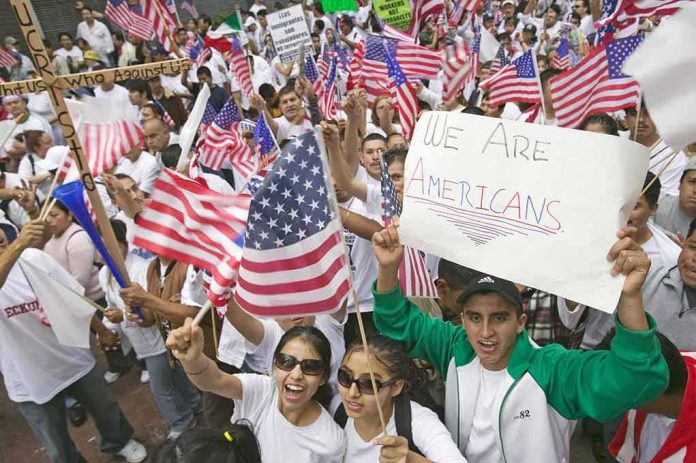
Rally attendance, by contrast, is self-selection writ large: the cost in time, travel, and identity signaling ensures the crowd will be disproportionately composed of the most enthusiastic supporters. It cannot adjudicate approval among the less engaged, the conflicted, or the opposed — the exact strata that swing midterms. As a proxy, crowds overstate intensity and understate breadth. They measure mobilization capacity, not cross-sectional approval.
The Throughline From 2016 To Now: Gains, Then Slippage
Trump’s rejoinder is not conjured from nothing. In 2024, Republicans made their strongest modern showing among Latino voters; CNN’s post-election analysis put Trump’s Latino share at roughly the mid-40s, with Latino men breaking his way for the first time and cutting the national Democratic margin with Latinos to single digits. Those are consequential historical facts. They changed party strategies, media narratives, and resource allocation. They also established a baseline expectation among Trump allies that subsequent polling showing erosion must be flawed or partisan.
The October 2026 picture, however, is not an isolated datapoint. CNN’s write-up of the NBC/Telemundo poll highlights the 27% overall approval and an anemic 20% approval on cost of living — the top-of-mind economic pressure that has defined the cycle for many working-class voters. A Texas Politics Project/University of Texas survey cited on-air shows a similar directional move: Latino voters in Texas shifted from an even split on Trump in October 2024 to majority unfavorable in late 2026. Independent coverage of the same NBC/Telemundo instrument echoes the 27/69 approval split and a broad Democratic advantage on congressional preference. The pattern is internally consistent across platforms.
Where the Real Disagreement Lies
The substantive disagreement is not over whether Trump made Latino gains in 2024 — he did — but over whether those gains persist in late 2026 amid inflation fatigue, immigration enforcement backlash, and second-term political entropy. On one side is a narrative rooted in momentum and identity: high-energy rallies, cultural affinity on some issues, and the durable memory of 2024’s map. On the other side is a data series showing present-tense disapproval and a reopened gap on priorities like cost of living and health care, where Democrats currently hold leads among Latino voters.
Experts treating this as a measurement question rather than a branding fight discount crowd aesthetics and ask three things: Are multiple reputable polls pointing the same direction? Is the mode and language coverage appropriate for the subgroup? Do contemporaneous issue ratings (economy, immigration, cost of living) align with the approval movement? In this case, the answer to all three is yes: convergence across outlets on the 27% approval figure, bilingual mixed-mode design, and issue-specific weakness — especially on cost of living — all point to real erosion.
What This Means For Campaign Strategy
Campaigns adapt to the electorate they have, not the electorate they prefer. If approval among Latino voters sits in the high-20s nationally, message testing must move beyond crowd-pleasing themes to pocketbook specificity: wages net of inflation, remittance costs, small-business credit, utility rates, and insurance premiums. Immigration framing matters, but so does tone; the same NBC/Telemundo data show a perception that enforcement has gone “too far,” which blunts gains among security-first voters and alienates others who might otherwise be open on entrepreneurship, education choice, or religious liberty.
For Democrats, the risk is complacency. A reopened lead in 2026 does not restore the pre-2020 status quo. The 2024 experience proved that Latino alignments can shift quickly when cultural salience and economic grievance align. Maintaining advantage requires defending on inflation and cost of living — the very domains where the 2026 snapshot confers their current edge.
How to Read the Next Poll Without Getting Spun
Three practical rules will keep the signal clear. First, follow instruments, not insults: identify the pollster, sample, dates, language, and mode before judging results. The NBC/Telemundo survey meets basic methodological standards and has been consistently summarized across outlets. Second, privilege trend over a single point: if subsequent bilingual national polls repeat a sub-30 approval for Trump among Latino voters, treat it as structural, not episodic. Third, separate mobilization from persuasion: a roaring rally can power turnout in strongholds; it cannot conjure approval where issue ratings have turned negative.
Sources:
thegatewaypundit.com, edition.cnn.com, cnn.com, mediaite.com, ssrs.com, newsweek.com