
Presidents bring politics wherever they go, but at Medinah the center of gravity stayed where it belonged: on the golf. President Trump took the mic briefly at the Presidents Cup finale, offered a few lines, and yielded the stage to the players and the first tee.
At a Glance
- President Trump delivered short, golf-focused remarks at Medinah Country Club during the Presidents Cup’s final day.
- PGA Tour commissioner Brian Rolapp introduced Trump; the president’s role tracked his designation as honorary chairman.
- Trump emphasized keeping it brief—“people want to see golf”—and asserted the United States was “doing great.”
- Crowd reaction was audibly mixed—cheers, USA chants, and some opposition—typical of high-salience sports appearances.
What Happened at Medinah
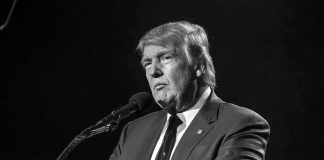
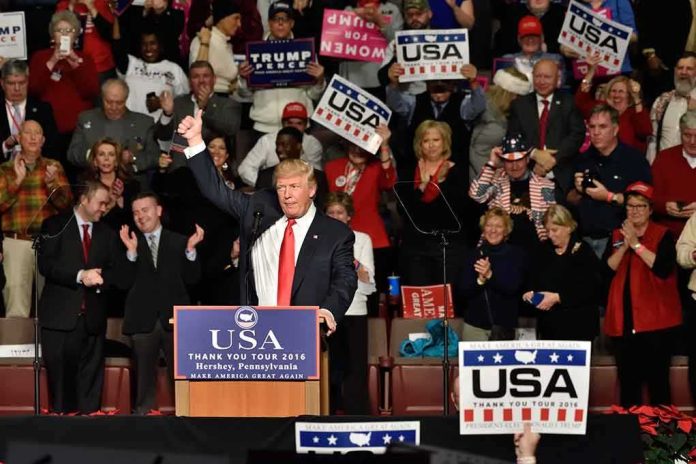
On Sunday of the 2026 Presidents Cup at Medinah Country Club outside Chicago, President Trump stepped to the first-tee stage, introduced by PGA Tour commissioner Brian Rolapp, and delivered concise remarks before play. Multiple outlets on the ground reported the same sequence: a short greeting, a nod to keeping the ceremony moving, a single-line boast about the country’s condition, and then a handoff back to the competition. The cadence matched Trump’s on-stage framing that fans came to watch golf, not hear a policy speech; his stated intent was to keep the moment brief and tournament-centered.
His presence aligned with a months-long public posture around the event. Trump had earlier announced he would serve as the Presidents Cup’s honorary chairman, citing a request from the PGA Tour’s new commissioner. Golfweek’s advance coverage documented that status, which helps explain the optics at the tee box—Rolapp’s introduction, the head of state on stage, and a ceremony designed to be brisk enough to preserve competitive rhythm before the matches commenced.
The Remarks Themselves: Short by Design
In an era when almost any live mic becomes a political canvas, the remarks were conspicuously restrained. Reporters cited two lines repeatedly because they told the story: “These people want to see golf. They don’t want to hear speeches,” and, “I’ll only say this: Our country is doing great, better than ever before.” The sound bites are revealing for what they omit—no extended riff on policy, no extended applause line—because brevity was the point. ABC7, the Chicago Tribune, the Associated Press wire carried by KSNT, and USA Today all converged on the same characterization: brief, ceremonial, golf-forward.
That minimalism fit the event’s constraints. The Presidents Cup first tee is not a rally; it is a narrow window between introductions and the first strike. Tournament operations prize timing and crowd management in those minutes. A head-of-state cameo must thread a needle—acknowledge the moment, protect competitive tempo, and avoid overshadowing the athletes. By those measures, the Medinah remarks were shaped to be quick and unobtrusive, and they were.
Crowd Reaction: Why Mixed Sound Is the Norm, Not the Exception
What the microphones picked up around the tee—cheers, USA chants, and dissent—tracked with the well-documented reality of large sporting crowds: simultaneous, layered emotional signals are common, and selective emphasis after the fact is easy. Some outlets described a warm welcome; others highlighted audible boos or a heckler and noted Trump’s jab that “fake news” would miscast the moment. The underlying fact pattern is simple and not contradictory: thousands of people made noise in different directions at once. Several reports described the mix, and none credibly claim a single, uniform response across the gallery.
Golf galleries complicate this further. They are physically dispersed, tiered in grandstands, and laced with microphones that favor certain angles. A chant rolling through one bank of seats can mask or be masked by disapproval elsewhere; producers decide which ambient channels lead a broadcast, and camera cuts can heighten a chosen narrative. That is why qualitative descriptors—loud cheer, mixed response, chants—show up across coverage, while nobody credibly assigns a percentage to applause or boos. The record supports a blended response; assigning it a single valence does not.
How It Fit the Week: Ceremony Amid a Tense Atmosphere
Medinah’s week featured more than shots and scorecards. Outside the ropes, demonstrators clashed; inside, players remarked on the crowd’s variable energy earlier in the competition, calling some sessions “kind of dead” and urging fans to elevate the volume. Those currents set context for Sunday: a finale with heightened attention, a presidential appearance guaranteed to spike decibels, and organizers intent on keeping the tee ceremony tight. Local and national accounts place Trump on site, walking the course, taking the quick turn at the mic, and moving on as play proceeded.
Against that backdrop, the decision to limit remarks reads as tournament pragmatism rather than hedging. The Presidents Cup is an exhibition with pride and television windows at stake; speeches live at the margins of that calculus. Views differ on whether any political figure should appear at such venues, but the operational test is straightforward: did the cameo disrupt competition or become the show? At Medinah, it did not.
Why This Matters Beyond One Tee Box
Moments like this recur because modern sports serve as national stages: vast, mic’d audiences; crisp ceremonies; high symbolic freight. When a sitting president steps onto a tee, two things happen at once. The office confers weight on the event, and the event’s norms constrain the officeholder. That tension—between politics’ appetite for message and sport’s need for flow—produces the kind of clipped, carefully bounded remarks heard at Medinah. It also explains the post hoc narrative skirmishes over crowd noise that inevitably follow, especially when a principal calls out the press in the moment and invites dueling clips afterward.
Read properly, the Medinah tape is not a referendum on national mood; it is a case study in how major sports properties manage political presence without ceding the stage. The commissioner’s brief introduction, the president’s shorter answer, the quick return to golf—each is a control surface. Expect future events to follow the same template: honor the office, keep it moving, and let the sport speak louder than the podium.
TRUMP SAYS U.S. IS “DOING GREAT”
President Trump delivered brief remarks after arriving at the Presidents Cup in Illinois, saying, “Our country is doing great, better than ever before.” #WashingtonEye pic.twitter.com/C8AM5jzztm
— Washington Eye (@washington_EY) September 27, 2026
Bottom Line
Trump appeared at the Presidents Cup as honorary chairman, was introduced by Commissioner Brian Rolapp, delivered a tight set of remarks centered on deference to the golf, and left the tee to the players. The crowd sounded like big crowds sound—varied, loud, and interpretable from many angles—and the tournament moved on schedule. For a political cameo inside a sporting ritual, that is the textbook version.
Sources:
youtube.com, abc7chicago.com, chicagotribune.com, irishstar.com, ksnt.com, usatoday.com, sports.yahoo.com, totalprosports.com, x.com