Iran’s hardball posture makes the most sense when you treat the Strait of Hormuz as a bargaining instrument, not a symbol: Tehran believes it can convert maritime disruption, time, and U.S. political urgency into concessions, and that is why the negotiations keep orbiting around leverage rather than trust.
Intro Header
- Iran’s central asset is not rhetoric; it is control over a chokepoint that matters to global energy flows and U.S. strategy.
- Reporting across Reuters, the New York Times, PBS, and others shows Tehran using that leverage to press for sanctions relief, security guarantees, and recognition of its position over the strait.
- The claim that Iran is specifically exploiting President Trump’s desire to exit the war is plausible and widely repeated, but it rests more on inference and anonymous-source reporting than on direct Iranian documentary proof.
- The deeper pattern is classic coercive diplomacy: the side that can impose higher costs often believes time is on its side, especially when the other side wants an off-ramp.
Why the Strait of Hormuz Is the Real Center of Gravity
The reporting is remarkably consistent on one point: the Strait of Hormuz is the lever that gives Iran bargaining power. Reuters described reopening the strait as the U.S. priority and Iran’s main point of leverage, while the New York Times reported that asserting control over the waterway has served as powerful leverage in negotiations with Washington. PBS and the Wall Street Journal framed the same dynamic in similar terms, emphasizing that Iran’s grip on the chokepoint is what makes its position matter beyond the immediate battlefield.
That matters because leverage in a crisis is not just about what one side can destroy; it is about what the other side cannot easily afford to lose. The strait is one of the world’s most consequential maritime corridors, and any credible threat to shipping there creates pressure that radiates outward into energy markets, allied politics, and domestic inflation concerns. In that environment, a country does not need to win militarily to improve its negotiating position. It only needs to make the alternative to compromise feel worse.
That is why the bargaining demands in the reporting are so specific. DW reported that Iran’s 10-point plan included lifting primary and secondary sanctions, releasing frozen assets, withdrawing U.S. military forces from the Middle East, halting attacks on Iran and its allies, and control over the strait. Al Jazeera similarly described the talks as tied to sanctions, security, and implementation questions rather than a single narrow dispute. Tehran is not simply posturing; it is trying to turn a battlefield advantage into a durable political arrangement.
Why President Trump Matters to Tehran’s Calculus
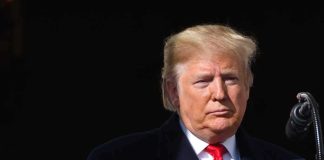
The strongest version of the framing is not that Iran cares only about Trump’s temperament, but that it believes President Trump is especially eager for an exit and therefore easier to pressure. Reuters reported that Tehran believes Trump will yield under pressure, and the Wall Street Journal quoted an Iran observer saying Tehran thinks it has Trump in a difficult position. The New York Times added that Iranian leaders appear comfortable with a limbo state between peace and full-fledged war, believing they can handle renewed conflict and that they have leverage over President Trump.
That is a credible interpretation of the public record, but it should be read as a judgment about Iranian strategy, not as a directly proven fact about Iranian internal motives. The evidence here is mostly inferential: journalists and analysts are reading Iranian behavior, rhetoric, and bargaining demands, then concluding that Tehran expects Trump to want a deal badly enough to pay for it. That is different from having an internal memo or named Iranian decision-maker explicitly say, in so many words, that they are stringing him out because he needs out of the war. The public reporting supports the inference; it does not close the case in documentary terms.
Still, the broader logic is hard to miss. Trump has repeatedly projected confidence that the war can end soon, while also signaling impatience with the costs of escalation and the need for a face-saving exit. That creates the classic asymmetry Tehran can exploit: if Washington wants the war to end more urgently than Tehran wants to surrender leverage, the table tilts toward the side that can wait. In crisis bargaining, urgency is a weakness when the other side can manufacture delay.
The Real Disagreement: Trump-Specific Pressure or Broader Strategic Leverage
This is where the counter-reading deserves serious weight. The public record does not show Iran’s position as merely a Trump gambit; it shows a broader strategy built on maritime control, sanctions relief, military restraint, and political recognition. Reuters characterized Iran’s play as widening its pressure campaign by turning trade routes, shipping lanes, and energy infrastructure into pressure points, with the goal of making accommodation cheaper than confrontation. The New York Times and Reuters both stressed control of the strait itself, which is a strategic objective whether the occupant of the Oval Office is Trump or anyone else.
That matters because the evidence supports two things at once. First, Tehran is plainly using leverage. Second, the source base does not prove that Trump’s personal political vulnerability is the only, or even the principal, motive. Side B is strongest where it reminds us that Iran’s demands include sanctions relief, force withdrawal, and recognition of sovereignty over maritime access. Those are enduring objectives, not ad hoc responses to one president’s style. The leverage model is better supported than the Trump-only model.
The same point shows up in the way negotiations are described. Reuters reported a ceasefire extension and a framework involving shipping through Hormuz and some sanctions relief, while the New York Times reported plans to collect payment for transiting ships. That is transactional bargaining. It looks less like a simple attempt to manipulate one politician than a bid to institutionalize gains: if Tehran can make its control over passage feel normal, monetized, and recognized, it does not merely win a pause. It improves the terms of the next crisis too.
"New demand in response to Iran call for compensation
Trump says Iran must pay for people killed in attacks, protests
Iran had said Oman deal on strait was near.U.S. President Donald Trump on Monday responded to Iran's conditions for a peace deal with his own demands that…
— Zoraida Sánchez (@Pettunia14) August 10, 2026
What This Says About Coercive Diplomacy
The deeper pattern here is familiar to students of crisis diplomacy. Chokepoints create leverage because they let one actor impose costs without necessarily crossing the threshold into full war. Reuters, PBS, and the Oxford policy analysis all fit Iran’s situation into that template: control the pressure point, make the opponent absorb the economic pain, and then trade relief for concessions. Iran’s playbook is not exotic. It is classical coercion, updated for a globalized energy system.
That is also why the public debate keeps sounding narrower than the underlying strategy. Commentators focus on whether Trump wants out because his personal preference is visible, politically legible, and easy to dramatize. But the more durable story is about structure: geography, sanctions, shipping, allied pressure, and the time value of patience. The side that can afford limbo usually gets to define the menu of outcomes. Iran appears to believe that limbo is better than surrender, and that belief is the engine behind the hardball.
There is one final consequence worth underlining. If Iran succeeds in tying any settlement to control over transit, payment, or formal recognition of its leverage, it will have converted a temporary wartime advantage into a standing feature of the regional order. That is why the stakes are larger than one negotiation cycle. A deal that merely pauses fighting is one thing; a deal that legitimizes Iran’s leverage over the strait is another. The first ends a crisis. The second teaches every future negotiator the price of passage.
Sources:
19fortyfive.com, pbs.org, wsj.com, nytimes.com, youtube.com, newarab.com, biz.chosun.com, reuters.com, thecradle.co, studies.aljazeera.net