

A river of Frank’s RedHot turned an Ohio interstate into a sticky heatwave hazard, and the response shows why even food can trigger a full hazmat playbook.
Story Snapshot
- Truck leaked about 40,000 pounds of Frank’s RedHot on Interstate 71 in Ohio
- Fire crews traced a fluid trail to a truck stop and launched hazmat protocols
- Cleanup drew environmental officials and slowed traffic during extreme heat
- Reports conflict on some details, but the core spill facts stand
A hot sauce spill that acted like a chemical emergency
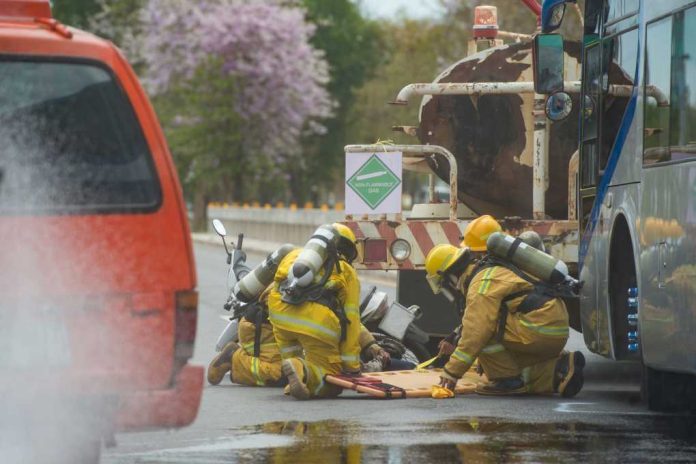
Firefighters and drivers on Interstate 71 saw a strange red trail on the road near Columbus around late afternoon. Responders treated it like a chemical spill while they figured out what it was. Multiple reports say a semi was hauling about 40,000 pounds of Frank’s RedHot sauce, and part of that load leaked onto the highway and into a truck stop area. Crews closed lanes, set up containment, and worked the scene as if it were corrosive until they confirmed it was sauce.
First responders followed standard guidance for unknown fluids on a roadway. They isolated the area, protected traffic, and notified the right agencies. Social video and posts framed it as a “weird news” moment, but the steps taken match what transportation rules expect when the material is not yet known. That caution matters in summer heat. Any slick liquid on hot pavement can raise crash risk and can irritate skin or eyes if splashed.
Tracing the mess to the source
A local firefighter account described crews following the red trail along Interstate 71 to a Pilot truck stop, where they found the leaking semi. The post emphasized the trailer carried hot sauce, not industrial chemicals, which explained the smell and the color on the asphalt. Another social update said the United States Environmental Protection Agency and firefighters worked the cleanup north of Columbus, reflecting how multi-agency calls unfold when the material is unclear at first. Drivers reported vehicle splatter and potential damage from the acidic liquid.
Reports agree on the product and the amount, but some details conflict. One page referenced a different location, creating noise around the exact spot. The Ohio-based reports and images carried more consistent markers, including Interstate 71 and a truck stop connection. The core facts remain solid: a semi leaked a large load of Frank’s RedHot, lanes slowed, and hazmat procedures kicked in until crews confirmed the cargo was food-grade, not an industrial hazard.
Why food can still trigger hazmat rules
High-acid foods like hot sauce can look and smell alarming when spread across lanes. The acid can sting eyes and cut skin, and the slick can send cars sliding. Response leaders do not get to assume harmlessness. Federal incident guidance tells teams to treat any unknown spill as hazardous until proven otherwise. That means restrict access, document, and report significant road releases within set timelines. This event fits that pattern, despite the memes and jokes around “spicy roads.”
Common sense supports the early caution here. The heatwave added risk for fumes and for workers in heavy gear. The road needed absorbents, sweeper trucks, and disposal steps that match roadway protocols. Critics might say the response was heavy for a condiment, but that misses the point. Crews cannot gamble with families driving 70 miles per hour. They must assume worst case until labels, manifests, or safe tests say different.
What we still need to know
Open questions remain. No public record listed the carrier’s name, the exact cleanup cost, or any fines tied to the leak. No detailed incident report has been posted by a fire district or the United States Environmental Protection Agency for independent review. Those records would show the timeline, the exact quantity that reached drains or soil, and the disposal chain. The lack of those documents invites confusion, which social media then fills with error and hype.
Until agencies release paperwork, drivers get a few clear takeaways. First, an odd fluid trail on a highway is not a joke to passersby. Call it in and move on. Second, food cargo can still cause harm at scale, even if it is safe on your plate. Third, summer heat raises every risk on the scene. Crews did the right thing. They slowed traffic, treated it as hazardous, and kept people safe while they solved the mystery of the red road.
Sources:
reddit.com, businessnews975fm.iheart.com, facebook.com, instagram.com, nifc.gov