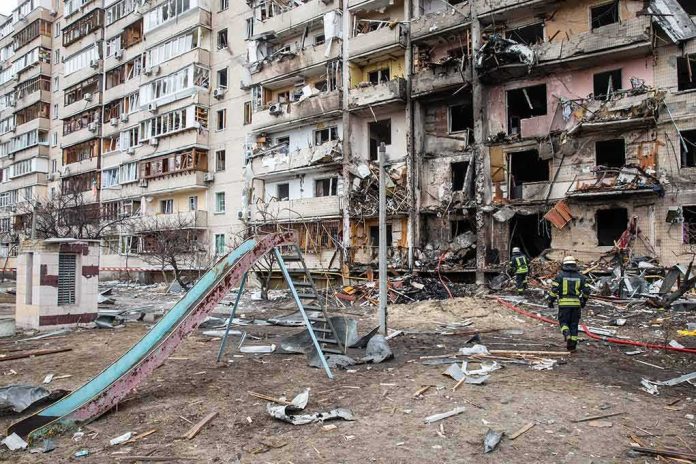
The Zaporizhzhia pool strike matters because it shows, with brutal clarity, how the war reaches into ordinary civilian life: a recreational space, not a military site, was hit; people were inside; and injuries followed. Ukrainian officials said a Russian drone breached the roof of an indoor fitness center in central Zaporizhzhia and fell into the pool area during the July 2 attack, leaving four people injured, including one man hospitalized in moderate condition.
Intro Header
- A Russian drone struck an indoor swimming pool complex in central Zaporizhzhia, not a military target.
- Officials said people were in the pool at the moment of impact, and four were injured.
- The strike fits a wider pattern of Russian drone attacks on civilian infrastructure in Ukrainian rear areas.
- Zaporizhzhia has been hit repeatedly, making this incident part of a broader pressure campaign rather than an isolated event.
What Happened at the Pool
According to the Zaporizhzhia regional military administration, the drone pierced the roof of the fitness center and dropped into the pool while swimmers were inside. Footage released by regional head Ivan Fedorov showed the impact and the damage at the building, including the roof breach and the pool area below. Reporting based on his statement said four people were injured, and one man was hospitalized in moderate condition. Other reporting initially mentioned a higher injury count across the city, but the pool strike itself was the clearest localized incident: a direct hit on a civilian leisure facility in the middle of a populated area.
The important point is not just that the building was damaged; it is that the strike turned a place of routine domestic life into an immediate hazard. A pool complex is especially revealing as a target because it is neither dual-use infrastructure nor a battlefield asset. Its purpose is ordinary recreation, which is precisely why the attack resonated so strongly in Ukrainian reporting and in the footage circulated by local officials.
Why This Strike Fits a Larger Russian Drone Pattern
This incident sits inside a documented pattern of Russian drone warfare that repeatedly reaches beyond the front line and into civilian spaces. The UN Human Rights Office said Russian attacks in Ukraine have continued to produce high civilian casualties, including from long-range missile and drone strikes far from the immediate battlefield. The UN Commission of Inquiry later concluded that Russian short-range drone attacks in parts of southern and southeastern Ukraine were widespread and systematic, and that similar attacks targeted civilians and civilian objects in multiple provinces.
That pattern matters because it explains the logic of the campaign. These strikes are not merely collateral damage from clumsy targeting; they are part of a method that blurs the line between military and civilian space, forcing people in cities such as Zaporizhzhia to treat everyday places as potential strike sites. The Institute for the Study of War has argued that Russian FPV drone attacks against civilian targets are intended to make civilian life untenable and instill fear. Whether one uses the language of intimidation, pressure, or attrition, the strategic effect is the same: civilians become the medium through which force is projected.
Why Zaporizhzhia Is So Vulnerable
Zaporizhzhia has been among the Ukrainian cities most exposed to sustained Russian strikes because of geography and war’s attritional logic. It lies within reach of drones and guided munitions launched from Russian-held or contested areas, yet it is far enough from the front to remain a functioning urban center rather than a fortified military zone. That combination makes it vulnerable to precisely the kind of attacks seen at the pool: short-duration, high-visibility strikes against places where civilians gather, work, or seek respite.
The city has also absorbed repeated attacks on homes, roads, commercial buildings, and other public spaces in recent months, which reinforces the sense that the civilian rear is no longer meaningfully insulated from the war. In that setting, a swimming pool strike is not an anomaly. It is a particularly vivid example of a broader method: hitting the places that make urban life feel normal, safe, and continuous, then leaving local authorities to manage the physical damage and the psychological residue.
A Russian drone struck the indoor pool at a Zaporizhzhia fitness center, tearing a massive hole in the roof while people were swimming inside. The regional administration released dramatic security footage of the strike, confirming at least four to seven civilians were injured…
— Leinona Aoki (@LeinonaA69) July 2, 2026
The Evidence and the Limits of What Is Known
The core facts of the strike are well supported by official Ukrainian reporting and by contemporaneous video evidence released by regional authorities. That makes the basic event straightforward: a Russian drone struck a civilian sports complex in Zaporizhzhia, the roof was breached, people were present, and injuries resulted. What remains less clear from public reporting is the exact technical path of the drone, the intended target designation, and whether the strike was meant for the building itself or for some nearby object that was missed. None of those uncertainties changes the central conclusion, which is that a civilian indoor pool was hit and civilians were harmed.
It is also important not to overread the incident in isolation. The war in Ukraine has produced a long series of drone strikes on civilian infrastructure, and the pattern is important because patterns reveal intent, capability, and tolerance for civilian harm more reliably than any single event does. In that sense, the Zaporizhzhia pool strike is both specific and illustrative: specific in its location, injuries, and immediate damage; illustrative in the way it captures a wider operational style that has become increasingly normalized across the conflict.
What This Means Beyond One Building
Attacks like this reshape how civilians use their own cities. A swimming pool, a clinic, a bus stop, a residential block, a schoolyard—each becomes part of a threat map. That changes behavior long before it changes territory. Families alter routines, businesses lose customers, and local governments spend scarce attention on alarms, repairs, and emergency response rather than stable civic life. The immediate casualty count is only one measure of harm; the larger effect is the corrosion of ordinary confidence.
That is why this incident belongs in the same analytical frame as the broader Russian strike campaign documented by UN bodies and conflict monitors. The Zaporizhzhia pool was not hit because it had military value. It was hit in a war where civilian spaces are being used, repeatedly and deliberately, as pressure points. The building can be repaired. The deeper damage is that people now know a place built for exercise and routine can become a site of injury in an instant.
Sources:
facebook.com, pravda.com.ua, aa.com.tr, ukraine.ohchr.org, ukraine.un.org