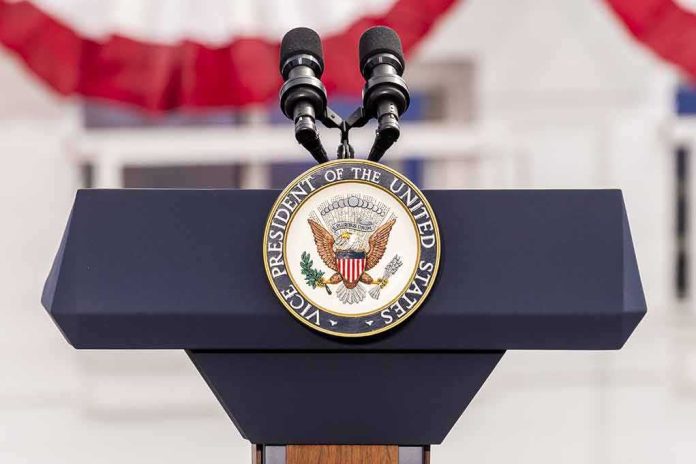
A fragile Iran deal is already running into trouble, and JD Vance’s Switzerland trip may decide whether it holds or collapses.
Quick Take
- Vance said the United States will not give Iran benefits unless Tehran keeps its promises.
- The memorandum of understanding sets a 60-day window for a longer deal.
- Talks in Switzerland were delayed, which raised new doubts about the agreement’s durability.
- The deal ties sanctions relief and oil access to later compliance, not instant trust.
Vance Pushes a Conditional Deal
Vice President JD Vance defended the Iran agreement and said Iran must follow through before it gets rewards. He said the Trump administration will not hand over benefits if Tehran misses its commitments. Reporting on the deal says the administration views the agreement as performance-based, with sanctions relief and other gains tied to later compliance. That message matters to voters who want tough bargaining, not another weak promise from Tehran.[1][5]
The public argument centers on who controls the pace of the next phase. Vance said he planned to travel to Switzerland for technical talks, but the timing depended on Iranian participation. Other reports said those talks were postponed or called off when logistical problems and unresolved issues slowed the process. That delay made the deal look less like a finished peace and more like a shaky framework that still needs real enforcement.[2][6][8]
What the Memorandum Actually Says
The official memorandum sets out a 60-day negotiation period and says both sides will work toward a final agreement. It also says the United States will begin lifting its naval blockade right away and finish that process within 30 days. The agreement says Iran will not seek nuclear weapons and that both sides will address Iran’s enriched uranium under International Atomic Energy Agency supervision. Those terms are far from a full settlement.[19]
That structure explains why the fight over the deal is so intense. Supporters say the United States gets leverage, because Iran must keep meeting conditions to keep economic relief. Critics say the deal gives Tehran too much room to delay hard choices while getting near-term benefits like oil sales and asset relief. Reports also say the most disputed issues include sanctions relief, oil exports, and the long-term future of Iran’s nuclear program.[1][4][22]
Why Switzerland Matters Now
Switzerland became the next test because the technical talks are supposed to turn broad language into enforceable rules. Reports say the sides still need to settle inspection access, uranium handling, and the pace of sanctions relief. One report said the talks would also address Lebanon and regional stability, which shows how much is still on the table. That leaves the agreement exposed if either side treats the document as a public-relations win instead of a binding path forward.[7][21]
🚨 BREAKING: JD Vance heads to Switzerland for in-person negotiations with Iran!
Vice President Vance departed for high-stakes peace talks amid ongoing Middle East tensions. Could this be a breakthrough on nuclear issues & regional stability?#AxconWorld #JDVance #IranTalks… pic.twitter.com/ia1kS56tEV— Axcon world (@Axconworld) June 21, 2026
The political stakes are high on both sides of the Atlantic. Some reports say Israeli officials and Republican lawmakers view the deal as a security risk, while Iranian officials frame their own compliance as tied to U.S. and Israeli restraint. That clash is exactly why strong language in the memo is not enough. Without clear enforcement, clear timelines, and clear proof of compliance, the agreement can slide into the same drift that has hurt past Iran diplomacy.[3][4][22]
Sources:
[1] Web – Vance heads to Switzerland for Iran peace talks
[2] Web – Iran war day 112: Vance defends Tehran ‘deal’ but Switzerland trips …
[3] Web – US releases official agreement with Iran. Read the 14-point text | CNN
[4] Web – Trump, Iran’s President sign memorandum of understanding – CNBC
[5] Web – Opening round of US-Iran talks canceled as Tehran said to demand …
[6] YouTube – Iran talks stall again as Vance cancels Switzerland negotiation trip
[7] Web – Iran war: Switzerland talks called off, Vance stays in US – DW
[8] Web – Vice President JD Vance’s planned trip to Switzerland for U.S.-Iran …
[19] Web – Vance to head to Switzerland for Iran talks
[21] Web – Iran–United States relations – Wikipedia
[22] Web – Fact Sheet: The Iran Deal, Then and Now