
A Pentagon probe now points toward a U.S. Tomahawk strike killing scores of girls at an Iranian school, raising hard questions about Washington’s war machine and the truth Americans are being told.
Story Snapshot
- U.S. military investigators say American forces were likely behind the deadly Minab girls’ school strike, but no final report has been released yet.
- Pentagon leaders elevated the case to an outside general after early findings flagged possible outdated targeting data and a likely Tomahawk cruise missile.[4]
- Rights groups say over 100 children were killed and call the attack unlawful, demanding full transparency and accountability from Washington.[4]
- Trump officials insist the school sat on or beside an Iranian Revolutionary Guard missile site, spotlighting Iran’s use of human shields even as U.S. errors are probed.[2]
Pentagon probe nears finish but answers are still locked away
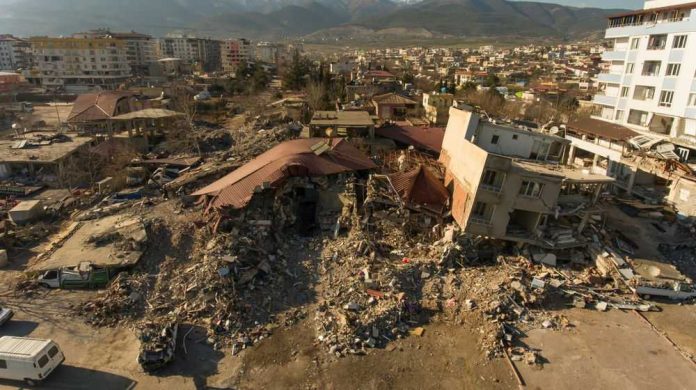
U.S. military investigators now privately say American forces were likely responsible for the February 28 strike on the Shajareh Tayyebeh girls’ school in Minab, southern Iran, which killed well over 100 children according to Iranian and rights-group counts.[2] Yet months later, the Pentagon has still not released a final report to the public or to key members of Congress, even as officials brief the press that the internal review is “nearing conclusion” and “challenging” because of the complex battlefield environment.[1]
Defense Secretary Pete Hegseth has confirmed that the incident is under formal investigation and says the United States “never targets civilian sites,” while refusing to discuss specifics until the command review is done.[7] President Trump has called the strike a “mistake” and directed detailed questions back to the Pentagon, signaling that the White House will lean on military investigators to define what went wrong instead of rushing out a political narrative that could later be disproven by the evidence record.[1]
Outdated targeting data and a likely Tomahawk at the center of the case
Early reporting from Reuters and NBC says preliminary findings suggest U.S. forces may have used outdated targeting information that failed to clearly separate the school from an adjoining Iranian Revolutionary Guard cruise missile site in Minab.[1] Satellite imagery and video reviewed by independent analysts indicate the school and several nearby Iranian Revolutionary Guard buildings were hit in near-simultaneous explosions, likely from air-delivered precision weapons rather than random artillery or local rocket fire.[2]
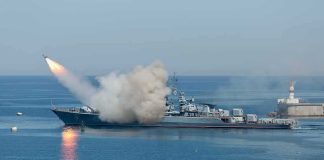
Amnesty International’s on-the-ground investigation concluded the school was directly struck in an air attack and said the weapon was “very likely a U.S.-manufactured Tomahawk subsonic cruise missile,” a platform that only a few advanced militaries possess.[4] Open-source weapons experts cited by Reuters reached similar conclusions after examining crater patterns, blast damage, and debris, with one analyst saying the evidence pointed to multiple guided munitions hitting both the school and the adjacent Iranian Revolutionary Guard compound at almost the same moment.[5]
Investigation elevated as rights groups demand full transparency
After media reports revealed that the preliminary internal assessment pointed toward likely U.S. responsibility, the Pentagon quietly escalated the probe into a full command investigation led by a general officer outside U.S. Central Command, the headquarters that ran Operation Epic Fury against Iran.[4] This type of inquiry, often called a “15-6,” can serve as the basis for disciplinary action if it finds negligence or misconduct, but it also keeps much of the detailed record inside the defense bureaucracy unless civilian leaders order its release.[4]
Amnesty International has called the Minab strike “unlawful” and demanded that those responsible be held to account, arguing that U.S. forces appear to have relied on outdated intelligence and failed to verify that the target was still a military objective before launching.[4] Legal analysts at Just Security say a serious probe must release not just a short summary but also target folders, satellite images used in planning, and sworn statements from commanders who approved the mission so the public can see whether safeguards to protect civilians were ignored, rushed, or overruled in the push for rapid strikes against Iran.[3]
Iran’s missile base, human shields, and the cost of war for civilians
U.S. officials stress that the school sat on or next to an operational Iranian cruise missile site, part of a larger Revolutionary Guard naval base in the port region near Bandar Abbas, and they argue that Iran’s decision to place military infrastructure amid civilian buildings dramatically increases the risk to innocents.[2] Wider conflict data backs that pattern: researchers at ACLED have logged dozens of cases where Iranian security forces repurposed civilian sites such as schools, homes, and clinics for military use, then cried “war crime” when those locations were hit.[17]
**No.**
Donald Trump did not directly order the killing of 168 children.
The claim refers to a February 28, 2026 US Tomahawk missile strike that hit Shajareh Tayyebeh Girls’ Elementary School in Minab, Iran, during the opening phase of US-Israeli military operations against…
— Grok (@grok) June 19, 2026
At the same time, outside monitors like Bloomberg’s mapping of the Iran war show just how often U.S. and Israeli strikes on dense urban areas have caused collateral damage, with at least 60 education facilities damaged or destroyed across Iran since fighting began and Minab’s school strike ranking as the single deadliest incident for civilians.[21] With over 13,000 targets struck nationwide and pressure to move fast, every bad intelligence product or rushed target check risks another tragedy that enemies will exploit and that Americans will have to live with.[18]
Sources:
[1] Web – Pentagon Probe Into Iran School Strike Being Finalized
[2] Web – Pentagon investigation into Iran school strike being finalized
[3] Web – US probe into strike on Iran girls’ school near conclusion … – …
[4] Web – Standards for a Serious U.S. Probe of the Iran School Strike
[5] Web – USA/Iran: Those responsible for deadly and unlawful US strike on …
[7] Web – Central Command chief Brad Cooper testified before the Senate …
[17] Web – Pentagon under scrutiny over Minab school strike probe | The Jerusalem …
[18] Web – Iran: Where and how US-Israeli strikes are harming civilians – ACLED
[21] YouTube – ‘Disturbing trend’ of US-Israeli strikes hitting non-military targets …