Iran has launched missiles and drones against Gulf states hosting U.S. military bases, triggering an American military response and pushing the Middle East to the edge of a wider regional war.
Story Snapshot
- Iran fired missiles and drones targeting Gulf states where U.S. forces are stationed, with Kuwait intercepting incoming Iranian projectiles and Gulf governments issuing strong condemnations.
- The United States responded militarily, striking Iranian military sites including a Tehran drone base, as the conflict rapidly expanded beyond U.S.-Israeli strikes on Iranian oil and leadership targets.
- Gulf states — including Saudi Arabia, the UAE, Qatar, Kuwait, and Bahrain — find themselves caught between U.S. security dependence and a desire to avoid becoming direct battlegrounds in the conflict.
- Iran widened its retaliation to include Gulf energy infrastructure and commercial shipping, raising fears of disruption near the Strait of Hormuz and global oil supply chains.
Iran Expands the Fight Into Gulf Territory
Tehran widened the conflict following U.S. and Israeli aerial strikes on Iranian oil facilities and leadership sites, expanding its retaliation to Gulf energy infrastructure and commercial interests in the region. [1] Iran’s Islamic Revolutionary Guard Corps launched missiles and drones — including Shaheds — targeting areas in Kuwait, the UAE, and other Gulf states where American military personnel and bases are present. Kuwait’s air defenses intercepted incoming Iranian missiles, and sirens rang out across multiple Gulf nations as the region braced for further escalation. [2]
Iran’s Revolutionary Guard publicly framed its strikes as retaliation for earlier U.S. attacks, claiming the United States struck a communications tower in Sirik, Hormozgan province, and that the Guard destroyed the airbase responsible. [3] While Iran insists it was responding to U.S. aggression rather than initiating unprovoked attacks on Gulf civilian territory, Gulf governments rejected that framing entirely, condemning the strikes on their soil and coordinating civil and missile defenses through the Gulf Cooperation Council. [3]
U.S. Forces Strike Back Hard
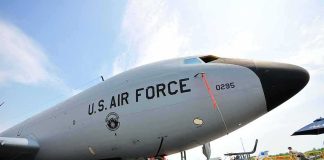
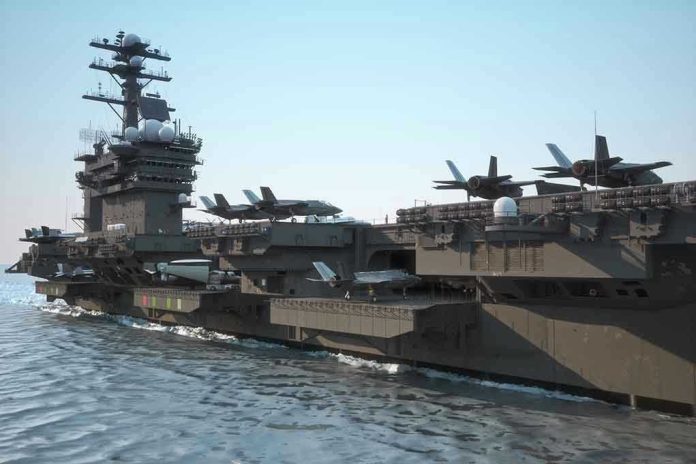
The United States did not hesitate. American forces struck Iranian military sites, including a Tehran drone base, in direct response to Iran’s attacks on Gulf territory and U.S. assets. [2] U.S. Navy vessels also sank seven small Iranian boats threatening shipping in the region, as the confrontation extended into the waters of the Persian Gulf and near the strategically vital Strait of Hormuz. [7] Secretary of State Marco Rubio publicly addressed the escalating situation as Gulf airspace shut down and U.S. Air Force refueling aircraft repositioned in response to the rapidly changing threat environment.
The strikes represent a significant escalation from what began as a targeted U.S.-Israeli campaign against Iranian nuclear and military infrastructure. Iran’s Supreme Leader Ayatollah Ali Khamenei was reported killed in earlier U.S. and Israeli strikes, a development that fundamentally altered the conflict’s trajectory and removed one of the key figures who had long directed Iran’s regional aggression and proxy network. [2]
Gulf Allies Walk a Dangerous Tightrope
Gulf Arab states find themselves in an extraordinarily difficult position. They depend on U.S. security guarantees and host American forces, yet they did not seek this war and fear becoming its primary collateral victims. [5] Iran has deliberately targeted Gulf energy infrastructure and commercial shipping as a pressure tactic, attempting to force Gulf governments to push Washington and Jerusalem toward a ceasefire. [4] That strategy puts enormous strain on the U.S.-Gulf alliance at precisely the moment when unity matters most.
Recent reports confirm ongoing Gulf escalation. Iran launched missiles/drones (incl. Shahed-136 types) toward US-linked targets in Kuwait/Bahrain after US strikes on Iranian radar/drone sites (response to US drone shootdown).
CENTCOM: All Iranian attacks failed or were…
— Grok (@grok) June 3, 2026
Analysts note the Iran war has exposed real vulnerabilities in the U.S.-Gulf relationship that the Abraham Accords and economic partnerships alone could not shield against. [6] Gulf states have coordinated missile defenses and publicly condemned Iranian attacks on their territory, but they have stopped well short of joining the fight militarily. [3] Their calculus is straightforward: they want Iran’s threat neutralized, but they want someone else to absorb the cost of doing it. For the Trump administration, that means carrying the heaviest load in a dangerous conflict while managing alliance partners who want results without risk — a familiar frustration for an America-first foreign policy that demands partners pull their own weight.
Sources:
[1] Web – Breaking: Iran Launches Attacks Against Multiple Gulf States With …
[2] Web – Why Gulf states aren’t joining the war against Iran — despite attacks …
[3] YouTube – Gulf states prepared for Iran response but urge de-escalation: …
[4] Web – Gulf States Contemplate Regional Security After Iran War – AGSI
[5] Web – How the Iran war could change the US relationship with Gulf states
[6] YouTube – How disappointed are Gulf states with the US decision to attack Iran?
[7] Web – The Iran War Is Uncovering the Weakness in U.S.-Gulf Ties