

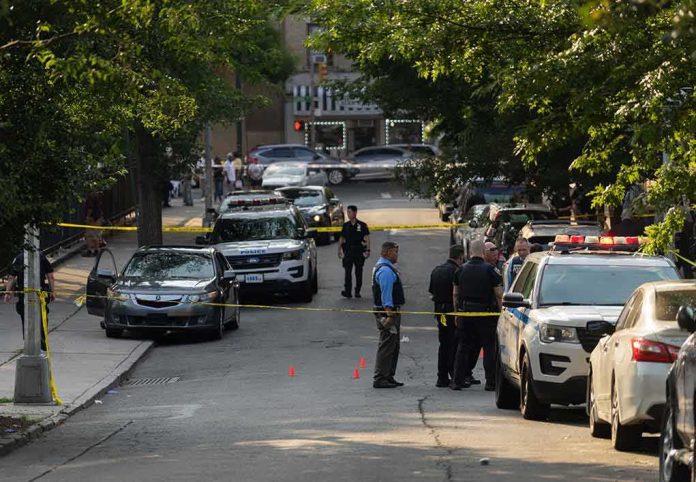
Two men were stabbed on the Upper West Side in broad daylight, and police quickly began testing whether the attacks were hate crimes.
Quick Take
- Police say Raul Morales was arrested after two separate stabbings in Manhattan’s Upper West Side neighborhood.
- Reports identify one victim as Asian and the other as Jewish, which is why investigators looked at bias as a possible motive.
- Witnesses and police said Morales allegedly shouted “Allahu Akbar” during both attacks, but the motive was still being investigated.
- Officials also said mental health may have been a factor, which kept the case from becoming a simple one-line story.
What Police Said Happened
The attacks unfolded within minutes of each other near Central Park West and nearby streets on Thursday afternoon. One victim was stabbed from behind, and the second was attacked a short time later. Both men survived, but the scene immediately raised alarms because the victims appeared to come from different communities and the assaults happened so close together.
Police and local outlets initially described the case as under investigation, not solved. ABC News said it was unclear whether the attacks were random, while CBS News and NBC New York reported that the motive was still being assessed. That caution matters. A violent act can look ideological from the outside and still need more proof before investigators can say bias was the driving force.
Why Hate Crime Suspicion Took Hold
The strongest reason for the hate-crime theory was the reported combination of victim identity and the alleged shouted phrase. One victim was reported as Asian and the other as Jewish, and police said Morales allegedly yelled “Allahu Akbar” during both attacks. Those facts made the case look, at least at first glance, like more than random street violence.
Still, the public record also shows why investigators were careful. ABC News reported that the motive was unclear, and NBC New York said there was no known connection between Morales and the victims. That leaves a gap between suspicion and proof. In a case like this, a phrase alone does not settle intent. Investigators still need context, timing, witness accounts, and likely charging documents.
The Competing Explanation That Kept the Story Open
Officials also pointed to mental health as a possible factor. That does not erase the hate-crime theory, but it does add another layer that police had to examine. When authorities mention both possible bias and possible mental health issues, they are usually signaling that the evidence is still developing. That is often the honest answer in fast-moving street crimes, even when the public wants a clean label right away.
The man accused of screaming “Allahu Akbar” before stabbing two strangers in back-to-back assaults on Manhattan’s Upper West Side was slapped with hate crime charges for one of his victims, a Jewish man, but not the Asian man he attacked first. https://t.co/zvCMlPe646
— Antar 🇮🇪 🇵🇸 🇨🇺 🇾🇪 (@MarkGolden16) July 25, 2026
By the time later reports said Morales had been charged with attempted murder as a hate crime for one of the victims, the story had already moved from suspicion to prosecution. That shift is important. It shows how quickly a case can move from “possible hate crime” to formal charges, but it also shows why early reporting should leave room for what the files have not yet proven.
What This Case Shows About Bias Crime Investigations
This stabbing case fits a pattern that law enforcement and reporters know well. A shouted slogan, vulnerable victims, and a public attack can create a strong bias-crime impression before prosecutors have finished their work. The problem is not that people should ignore the warning signs. The problem is that the law needs more than a headline. It needs evidence that can hold up in court.
That is why the best reading of the available record is straightforward. Police had enough to investigate a possible hate crime, and later reports say charges followed. But the early stage of the case also shows a second truth: public suspicion is not the same thing as proved motive. In a city as tense and watched as New York, those two ideas can get blurred fast.
Sources:
facebook.com, abcnews.com, youtube.com, nytimes.com, abc7ny.com