
When two suburban teenagers turned a San Diego mosque into a killing ground, they did not just murder three men; they gave America a microscopic look at how online extremism metastasizes like cancer in a young mind.
Story Snapshot
- Two teens attacked the Islamic Center of San Diego, killing three men before taking their own lives.
- Police found anti-Islam writings, a long manifesto, and Nazi-style symbols that point to a stew of hate ideologies.
- The shooting was livestreamed, turning real-time slaughter into shareable content.
- The case exposes how digital radicalization exploits parental blind spots, weak institutions, and cultural denial.
How A Quiet Mosque Became A Test Case For Modern Hate
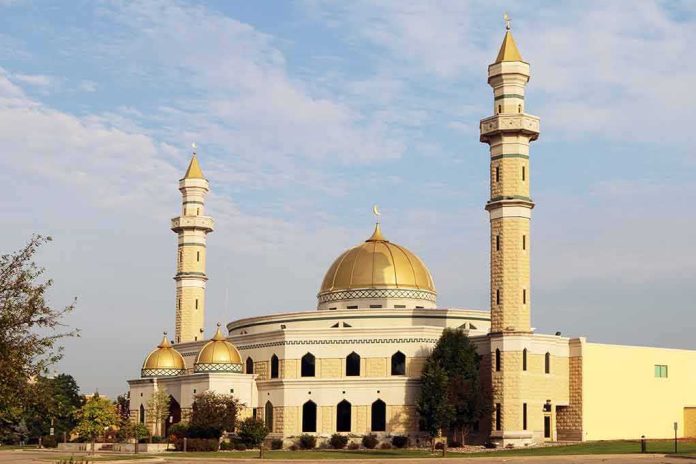
The Islamic Center of San Diego is not some fringe compound; it is the largest mosque in the city and a routine stop for field trips and interfaith visits.[2] On May 18, 2026, 17-year-old Cain Lee Clark and 18-year-old Caleb Liam Vazquez pulled up with rifles and opened fire on people whose job that day was unlocking doors, tending grounds, and teaching kids. They killed security guard Amin Abdullah, teacher Nadir Awad, and elderly caretaker Mansour “Abu Ezz” Kaziha before fleeing in a car.[2]
Police later found the attackers dead from apparent self-inflicted gunshot wounds in that vehicle.[2] Inside and on their equipment, investigators say they discovered anti-Islamic writings and other hate-filled material.[2] Federal investigators and San Diego police quickly labeled the case a likely hate crime and began digging through the teens’ homes and devices, seizing more than thirty firearms, a crossbow, tactical gear, and electronics.[2] From the first press conferences, this was framed not as random violence but as targeted, ideological slaughter.
The Manifesto, The Nazi Symbols, And The Race-War Fantasy
Law enforcement sources and later analysis describe a seventy-five-page manifesto circulating online under the title “The New Crusade: Sons of Tarrant,” a direct nod to the Christchurch mosque killer who murdered fifty-one worshippers in New Zealand.[1][2] Those writings reportedly spewed hate at Muslims, Jews, Black people, Latinos, and people who identify as lesbian, gay, bisexual, transgender, or queer, wrapped in neo-Nazi imagery and “great replacement” theory language about whites being overtaken by nonwhite immigrants.[1][2]
Analysts who reviewed the document say one teen called himself a “Christian EcoFascist,” while the other fantasized about the destruction of America’s political system and an all-out race war to collapse society.[2] One of the guns allegedly carried hate speech scrawled on it, and investigators found additional anti-Islamic writing in the car.[1][2] To anyone who grew up when school misbehavior meant a punch in the nose and detention, the idea of teenagers scribbling “Race War Now” on a pistol and treating mass murder as a brand identity is almost unrecognizable—but it is exactly where fringe online subcultures point them.[2]
Livestreamed Murder: When Extremism Becomes Performance
As the bullets flew, the attack was reportedly streamed in real time, with at least a small audience watching a Signal call relayed via Discord.[3] Viewers traded horrified messages, and some urged others to call police.[3] That tiny, terrified audience was just the start. Copies of the video later spread to gore sites and social platforms, reaching hundreds of thousands.[3] The killers knew what they were doing: this was not just murder; it was content, crafted for clicks and infamy among the darkest corners of the internet.
That dynamic matters for motive. Extremist violence today lives in a feedback loop: online hate primes an unstable or angry young man; he marinate in memes idolizing prior shooters; he plans an attack that both imitates and tries to outdo them; then the footage and manifesto are pushed back into the same ecosystem to recruit the next lonely kid. The Christchurch shooter understood this. These San Diego teens, who reportedly praised him and other mass killers, appear to have understood it too.[1][2]
What We Know, What We Do Not, And Why The Gaps Matter
The official record is still incomplete, which honest people on all sides should acknowledge. Police say they are investigating the shooting as a hate crime; federal agents confirm they are examining a manifesto and combing social media and electronics to confirm radicalization pathways.[1][2][3] However, the full text of the manifesto and suicide notes has not been publicly released. Most descriptions come from law enforcement summaries and journalists who viewed the documents rather than from primary public postings.[1][2]
There are also inconsistencies around dates, and early media reports wobbled on the teens’ ages and even the spelling of their names.[2] That sloppiness does not erase the clear facts—a mosque, three dead, two teen shooters, anti-Islam writings, and Nazi-style iconography—but it should make readers allergic to instant, emotionally convenient narratives. A conservative instinct for evidence and due process says: treat this as ideologically driven based on what we know, but keep the door open for refinement as investigators release real documents, not just excerpts and headlines.
Extremism As A Cancer: Why This Case Hits A Nerve
This shooting lands at the intersection of several uncomfortable American truths. First, extremist ideology is not confined to dusty pamphlets and secret meetings; it is woven into memes, message boards, gaming chats, and edited videos designed to feel edgy rather than explicitly evil. Second, institutions that once formed and corrected young men—churches, civic groups, demanding schools, even tough coaches—are weaker, while algorithmic feeds are relentless and amoral.
Third, when a culture dodges hard conversations about fatherlessness, male drift, and moral formation, something else steps in. In this case, that “something else” looks like white supremacist fantasy, apocalyptic eco-fascism, suicidal despair, and a thrill-seeking desire to matter for five bloody minutes. Calling that mixture “extremism” is accurate but almost too polite. Cancer is closer: cells that belong in the body start following a different script, growing without purpose until they kill the host.
From Outrage To Prevention: Hard-Nosed Steps That Respect Liberty
Many Americans fear that talking about online radicalization becomes an excuse to censor political speech. They are right to be cautious. The answer is not turning the Federal Bureau of Investigation (FBI) into a thought-police agency for teenagers who share edgy jokes. The answer is putting daylight on the pipeline without criminalizing disagreement. That means pressing for transparency from platforms when clear threats appear, not giving them a blank check to silence lawful views they dislike.
It also means expecting more from parents, schools, and local communities than a shrug and a candlelight vigil. According to officials, friends and family are now being interviewed about the suspects’ behavior and ideology before the attack.[2] That is essential—but it is after the fact. A culture serious about prevention would normalize adults asking blunt questions when a young man starts glorifying violence, hoarding weapons, or marinating in racist fantasy. Freedom requires responsibility, not censorship, and responsibility starts closest to home.
Sources:
[1] Web – San Diego mosque shooting an ‘attack on the sacred dignity of all …
[2] Web – 2026 Islamic Center of San Diego shooting – Wikipedia
[3] YouTube – Deadly shooting at Islamic Center of San Diego was streamed online