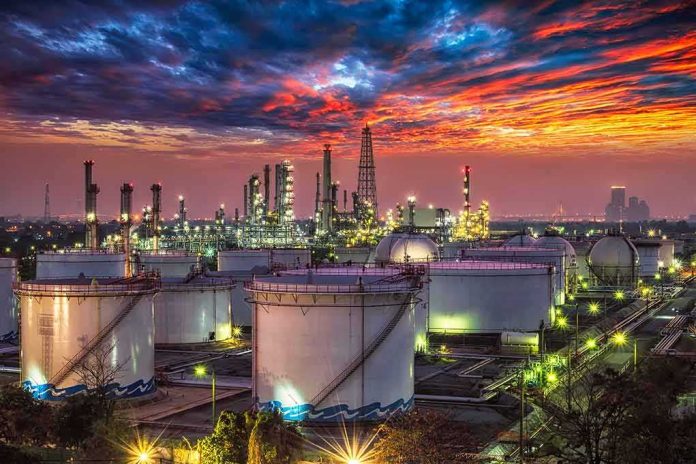
India’s refineries are running beyond their nameplate limits because the market is paying for one thing above all else: diesel. That single fact explains why utilization has sat in the 105%–108% band for months and why operators say they can keep it there—through disciplined crude selection, debottlenecked units, and a product slate tilted toward middle distillates.
The Short Version
- Indian refiners have operated around 105%–108% utilization for the past six months, driven by strong diesel demand and tight middle‑distillate supply.
- Operators indicate elevated run rates can continue into next year, underscoring this is a sustained posture, not a brief surge.
- “Over 100%” is a metric outcome rooted in how India defines capacity utilization; debottlenecking and unit optimization lift effective throughput above nameplate.
- India’s large installed base enables high runs that meet domestic demand and supply export markets when margins justify it.
India’s refineries are deliberately running hot to meet diesel’s moment
In recent market briefings, a senior executive at Mangalore Refinery and Petrochemicals Ltd. (MRPL) said India’s refineries have been operating between 105% and 108% capacity utilization over the last six months as diesel demand surged and refiners reweighted output away from jet fuel into middle distillates. The same executive indicated MRPL would maintain above‑100% operations into March, reflecting confidence in both demand and plant capability rather than a short‑term push. These disclosures, carried by mainstream business outlets, align with what seasoned observers recognize: when diesel cracks are strong and regional supply is tight, Indian refiners are structurally well placed to maximize throughput and middle‑distillate yield.
This posture is not anomalous. India’s downstream system is designed—and increasingly tuned—to flex when margins reward barrels. High utilization during periods of distillate tightness has precedent. The sector’s track record of running above nameplate at times stems from incremental capacity creep, unit debottlenecking, and high onstream factors across crude and conversion trains. The current run, however, stands out for its persistence around the 105%–108% band and for the explicit linkage to diesel’s pull and a global middle‑distillate crunch.
Why “over 100%” is a feature of the metric and the machinery
India’s official statistical system defines refinery capacity utilization as crude processed over installed capacity, expressed as a percentage. Installed capacity is a planning number, not a hard physical ceiling; refineries often extract more throughput through reliability gains, minor revamps, catalyst choices, and heat‑integration improvements. In this framework, 103% or 108% simply means crude runs exceeded that planning denominator for the period in question, not that units defied physics. The Ministry of Statistics and Programme Implementation (MOSPI) codifies this definition in its Energy Statistics series, which is why “over 100%” appears in multiple historical years as well.
On the ground, three mechanisms lift effective throughput. First, crude diet optimization—choosing blends that flow and fractionate efficiently through the atmospheric and vacuum towers—can raise crude unit feed without breaching equipment constraints. Second, debottlenecking across distillation, hydroprocessing, and FCC/hydrocracker trains incrementally pushes capacity; those improvements often postdate the nameplate figure. Third, high reliability and short turnarounds compress downtime, lifting annualized rates. When distillate margins are wide, refiners also reshape the product slate—maximizing hydrocracker severity, adjusting cut points, and deferring jet output within spec limits—to turn more of each barrel into diesel-range molecules.
A large installed base makes sustained high runs possible
The Indian refining system is big enough to matter on both sides of its border: it satisfies domestic consumption and, when economics are compelling, ships products into deficit markets abroad. Government and industry sources consistently place total installed refining capacity in the vicinity that supports these dual flows, with the Centre for High Technology maintaining plant‑by‑plant data. That scale is the foundation for why a multi‑month run above 100% is feasible—it is not a single plant hero run, but a systemwide response across state‑owned and private refineries to price signals and demand patterns.
This is also consistent with previous official commentary: in early 2025, the petroleum minister described existing refineries as running over 100% on robust demand growth, while pointing to capacity expansions in the pipeline. The policy logic is straightforward. Domestic growth in transport, agriculture, and industry has kept diesel the workhorse fuel, and incremental export opportunities appear when external shocks—disrupted Russian supply, seasonal European demand, Middle East tensions—tighten the distillate balance. High utilization is the rational response, so long as crude sourcing and maintenance windows permit it.
Diesel demand and the product slate pivot
The current run is tied explicitly to diesel’s pull. Market reports quoting MRPL’s executive describe a deliberate shift away from jet fuel and toward diesel, a common lever when passenger aviation demand is softer or when diesel cracks dominate. Operationally, this shows up in where refiners draw cut points in the distillation column and how they load hydrocrackers; running heavier gasoil into conversion units and pushing severity yields more diesel-range product. The fact that operators signaled continued above‑100% utilization into March suggests their crude supply, hydrogen availability, sulfur handling, and product offtake are aligned with this strategy—not a trivial coordination problem at these rates.
The broader market context amplifies the incentive. Middle‑distillate tightness in Asia and Europe keeps diesel margins attractive relative to gasoline and jet. Indian refineries, with flexible conversion capacity, can arbitrage those spreads while maintaining domestic supply. That is why utilization statistics and product‑balance data tend to move together during such windows, and why India frequently features as a swing supplier into regional shortfalls when its plants are not in heavy turnaround season.
Historical pattern, not a break with the past
If a reader is surprised by “108%,” the history resolves the paradox. MOSPI’s data series and sector analyses have long recorded India among the world’s highest utilization markets, with specific years already exceeding 100%. The metric definition, the industry’s habit of extracting incremental capacity from installed assets, and the discipline of short, well‑planned outages combine to make above‑nameplate operation a recurring feature rather than an outlier. Recent reporting reiterates that point and places the current six‑month episode firmly in that lineage.
The capacity base also continues to evolve. Announced expansions and brownfield projects are intended to relieve the need for sustained extreme runs, but in practice, growing domestic demand often soaks up fresh capacity as quickly as it arrives. That cyclic dance—new barrels, higher utilization, new projects—is why India remains central to the regional product balance and why spikes in diesel demand end up visible in Indian refinery statistics almost immediately.
What to watch next
Two signals will determine how long the current posture endures. First, diesel cracks: if margins ease because supply normalizes in other hubs or seasonal demand wanes, the economic case for 105%‑plus operation fades and refiners rebalance toward maintenance and product mix neutrality. Second, turnaround schedules: even the best‑run complexes must clear backlogs; planned outages will pull the average down temporarily regardless of market signals. For now, operator guidance points to continued high runs into the next fiscal window, consistent with the demand and margin backdrop that set this six‑month stretch in motion.
One caution belongs here, and only once: the 105%–108% band is sourced to named operator remarks and mainstream market coverage rather than a refinery‑wise audited time series. That said, the figure sits comfortably within India’s established utilization framework and within a policy and operational context that has repeatedly delivered over‑100% outcomes when diesel leads the market.
Sources:
zerohedge.com, finance.yahoo.com, economictimes.com, thehindubusinessline.com, spglobal.com, cht.gov.in, askfuzz.ai