
When battlefield lethality meets commercially available space data, deniability thrives; the evidence indicates Chinese-provided satellite imagery aided Iran’s targeting of a U.S. base where three American service members were killed, and minimizing that role misunderstands how modern, dual-use intelligence ecosystems convert pixels into casualties.
The Short Version
- U.S. officials linked high-resolution satellite images from Chinese entities to Iran’s strike on Muwaffaq Salti Air Base in Jordan that killed three U.S. troops, a concrete example of dual-use support having lethal effect.
- Beijing publicly denies formal military aid to Tehran, and the open-source record shows China usually favors indirect, commercially mediated, or dual-use channels over overt arms transfers.
- Claims that China pledged not to arm Iran do not address the gray-zone pathways—commercial imagery, analytics, and sanctions-evasion networks—that empower Iranian targeting without a signed arms deal.
- Treating this as a one-off episode misses a structural shift: ubiquitous commercial space services have made precision targeting accessible to adversaries, complicating attribution and policy response.
What the evidence shows about the Jordan strike and Chinese imagery
The core allegation is specific: before Iran’s July strike on Muwaffaq Salti Air Base, Tehran acquired high-resolution satellite images of the facility from Chinese entities; U.S. officials familiar with the incident called it the clearest evidence to date that Chinese support during the war had lethal consequences for U.S. forces. This is not a generalized accusation about abstract alignment—it is a targeting-relevant data transfer tied to a particular attack and outcome. Separate reporting has described how commercially sourced imagery, augmented by modern geospatial analytics and AI, can deliver sub-meter precision cues useful for battle damage assessment and follow-on strikes, even when imagery originates from ostensibly civilian constellations. The point is not that a PLA unit handed over a strike package; it’s that commercially available, high-quality overhead data—taskable, frequent, and inexpensive—can close the kill chain for an actor like Iran.
Beijing’s formal position remains that it avoids arming Tehran; that stance tracks with longer-run patterns. Yet the reported image provision fits the dual-use channel through which China has historically enabled parts of Iran’s military power: industrial inputs, navigation and materials support, and financial conduits that keep programs running despite sanctions, while steering clear of direct alliance obligations. In that sense, the Jordan episode looks less like a break with Chinese strategy and more like a predictable consequence of it.
How the dual-use pipeline works—and why it’s hard to police
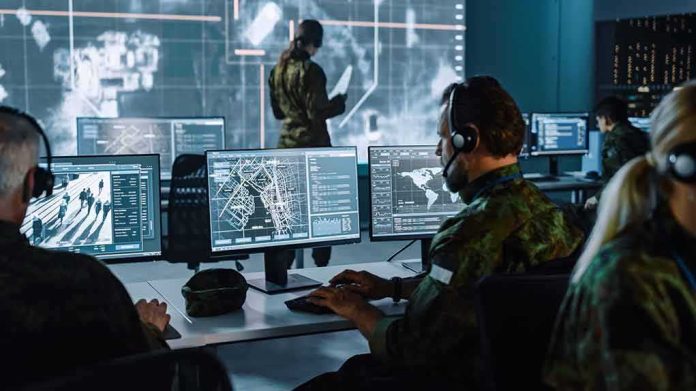
Modern targeting is a chain, not a single act. It starts with collection (imagery or signals), adds processing (AI-aided object detection, change detection, and georegistration), fuses with contextual intelligence (base layouts, air-defense footprints, sortie rhythms), and ends with a weaponeering decision. Every link can be civilian. Commercial satellites provide resolution and revisit rates that were once state secrets; analytics firms sell models that flag vehicles or construction changes; mapping and logistics data can expose traffic patterns around sensitive sites. If a sanctioned actor cannot buy finished military intelligence, it can buy the ingredients—legally or through front companies—and assemble an actionable picture.
This is why attribution is so thorny. “Chinese entities” could mean a state-owned enterprise, a nominally private firm with state guidance, a distributor reselling imagery, or a shell company abroad using Chinese platforms. Governments are reluctant to burn sources and methods by disclosing tasking logs or purchase trails. The result: credible, specific government attributions—such as the linkage described by U.S. officials in the Jordan case—carry unusual weight because the technical chain is otherwise opaque to the public. Meanwhile, the cumulative analytic record shows how Chinese-origin space capabilities and data services can enhance Iranian precision strike capacity even absent overt weapons deals.
What China-Iran “support” looks like in practice
Understanding the baseline matters. Over decades, China and Iran have built a relationship centered on energy, sanctions evasion, dual-use technology flows, and episodic defense cooperation; Beijing has generally avoided treaty-like commitments to Tehran and calibrates its moves to preserve maneuvering room with Washington and regional partners. Expert assessments and U.S. government actions reflect this pattern: Washington has sanctioned China- and Hong Kong–based entities for aiding Iran’s ballistic missile program, underscoring how support often arrives as components, materials, software, or services rather than turnkey weapon systems. Even when rumors of direct arms shipments surface, the public record frequently shows uncertainty or denial, and Chinese diplomacy presses Iran to modulate proxy actions that threaten Chinese commercial interests, such as disruptions in the Red Sea.
The imagery allegation sits squarely in this gray space. Providing or brokering access to high-resolution overheads does not look like an arms sale. But it performs the same battlefield function: it sharpens the attacker’s aim. In a world where commercial tasking can be arranged with a credit card and a cutout, the legal distinction between “military aid” and “commercial service” is irrelevant to the soldier inside the blast radius.
Competing claims and why “no weapons” assurances miss the point
Public comments have emphasized that China “won’t give Iran military equipment,” citing leadership-to-leadership assurances. Those statements address one channel—direct arms transfers—but not the broader ecosystem that enables targeting through dual-use goods and services. Beijing’s habitual denials of formal military assistance are consistent with its longstanding approach; the Financial Times-sourced allegation of a covert satellite arrangement drew an explicit Chinese rejection as well. However, these assurances do not directly rebut the specific U.S. official account tying Chinese-provided imagery to the Jordan strike. Nor do they engage the well-documented pattern in which Chinese and Hong Kong entities facilitate Iranian military programs via components, finance, and technology services that fall outside a classic “weapons sale” frame—and are precisely what U.S. sanctions have tried to disrupt.
In short, if the question is whether a signed end-user certificate exists for a shipment of missiles to Tehran, Beijing is often on safe rhetorical ground. If the question is whether Chinese-linked commercial capabilities contributed to the lethality of an Iranian operation, the answer—on the record of the Jordan strike—appears to be yes. Downplaying that distinction risks strategic blindness.
Policy implications: treating space data and analytics as part of the battlespace
Three consequences follow. First, the United States needs doctrine and tools that treat commercial space data and analytic services as regulated, sanctionable inputs to adversary targeting. That means expanding end-use screening beyond hardware to include imagery tasking, archival sales, analytic deliverables, and reseller networks—especially where firms sit within Chinese jurisdictional reach. Second, defenses must adapt to an adversary that can obtain fresh overheads on short notice. Camouflage, concealment, deception, and rapid signature management—old arts—become urgent again. Third, diplomacy with Beijing should squarely address dual-use leakage, not just overt arms sales; China’s own commercial exposure to Middle East instability has, at times, given it incentives to restrain partners, leverage that can be mobilized if the conversation targets the real channels of risk.
The underlying truth is uncomfortable but stable over time: in the commercial space era, the ability to generate militarily useful intelligence has been democratized. States like China that blend state guidance with private-sector capability can plausibly deny “arming” adversaries while still furnishing the ingredients for precision. Precision that kills. Pretending otherwise is not restraint; it is neglect.
Bottom line
The strongest public evidence ties Chinese-provided imagery to a lethal Iranian strike on U.S. forces in Jordan, consistent with a broader pattern of indirect, dual-use support that Beijing champions as non-military while it functions as exactly that in practice. In this domain, words about “no weapons” are strategically beside the point. The relevant test is whether services and data help an adversary aim. On that test, the case is made.
Sources:
mediaite.com, reuters.com, moderndiplomacy.eu, wsj.com, iranwatch.org, uscc.gov