A president cannot free a defendant the states have chosen to prosecute, and no amount of televised appeal changes that constitutional fact — which is precisely why the request for a Trump pardon in the Lindsay Clancy case became less a legal maneuver than a public plea for something the clemency system was never built to deliver.
Key Points
- Defense attorney Kevin Reddington publicly asked President Trump to pardon his client, Lindsay Clancy, after her Massachusetts murder trial ended in a mistrial.
- Presidential pardon power reaches only federal convictions; Clancy faces state charges, and DOJ guidance confirms the president cannot pardon a state offense.
- The jury deadlocked 11-1 in favor of not guilty by reason of insanity, a split that fuels the defense’s mitigation narrative around postpartum psychosis but does not amount to acquittal.
- Massachusetts Governor Maura Healey, not the president, holds whatever clemency authority might realistically apply — and she has declined to say whether she would use it.
- Reddington has also left open the possibility of a negotiated plea with the Plymouth County District Attorney, a route with actual legal traction.
What Was Actually Asked For, and of Whom
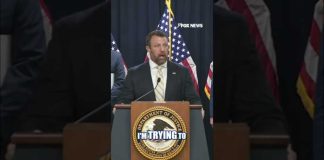
In a televised interview following the mistrial, Reddington addressed the president directly: “Mr. President, I would hope that you would consider this young lady and the person she is, what she’s been through, and consider a pardon”. It was an extraordinary thing to say on national television, not because pardons are rare — they aren’t, historically — but because the request bypassed the only officials who could conceivably grant one. Reddington paired the appeal with a request that Plymouth District Attorney Tim Cruz “revisit that issue” and find a resolution “acceptable to both sides”, a considerably more grounded ask, since a district attorney actually controls whether state charges proceed, get reduced, or get dropped.
The mitigation story behind the request centers on Clancy’s mental state at the time of the killings — a claim that she was suffering postpartum psychosis and had been adversely affected by prescribed medication, supported in commentary by texts reportedly sent by Clancy such as “Mommy, can you please come here? I am sick. Something’s wrong”. That narrative found real traction with jurors: the panel split 11-1 in favor of not guilty by reason of insanity before deadlocking. That is a meaningful data point for the defense — it suggests the insanity theory persuaded nearly the entire jury — but a hung jury is not a verdict, and the murder charges remain very much alive.
Why Federalism Makes the Pardon Request a Dead End
The American clemency system splits cleanly along the same line that divides federal and state criminal jurisdiction generally. The president’s pardon power, rooted in Article II, extends only to “offenses against the United States” — federal crimes. State crimes, including the murder charges Clancy faces in Massachusetts, fall entirely outside that authority. Department of Justice guidance states this without qualification: the president “cannot pardon a state criminal offense”. Legal scholarship treats this as one of the most settled propositions in American constitutional law, tracing it directly to federalism — the same structural logic that prevents a governor from pardoning a federal drug conviction. A White House official reiterated the point directly in response to the Clancy request, confirming that presidential pardons apply only to federal convictions.
This is not a gray area or a novel legal question awaiting resolution; it is bedrock doctrine, unchanged since the founding. Whatever authority might exist to grant Clancy clemency belongs to Massachusetts, specifically to Governor Healey, who has publicly acknowledged the limits of her own role, telling reporters “I don’t have authority” to weigh in prematurely on a case still moving through the courts. That leaves the pardon plea without any officeholder positioned to act on it as stated — a fact Reddington himself appears to understand, since reporting indicates he has acknowledged a presidential pardon “isn’t an option” for state charges and that his real goal was “to seek help from Trump” in some broader sense, rather than to obtain an actual grant of clemency.
Symbolic Appeal or Legal Misstep?
Reasonable observers can read the same set of facts two ways, and both readings have some purchase. One view holds that Reddington deployed the pardon request as a communications strategy rather than a legal filing — a way to keep Clancy’s mental-health narrative in the national conversation and to pressure the actual decision-makers, Cruz’s office and possibly Healey’s, through public sympathy rather than formal motion. Under that reading, the “impossibility” critique misses the point: nobody expected an actual pardon; the ask was theater in service of leverage. The competing view, voiced by legal commentators, is blunter — that invoking a remedy counsel knows to be unavailable risks looking like either a misunderstanding of the law or a deliberate misdirection, either of which can undercut an attorney’s credibility with the very prosecutors and judges he still needs to persuade.
Both readings share a common foundation: the underlying murder allegations are untouched by any of this. A hung jury reflects genuine disagreement among the twelve people who heard the full evidentiary record, not a collapse of the state’s case. Prosecutors retain the option to retry Clancy, and nothing in the pardon request — however it was intended — changes the evidentiary posture of that decision.
What Actually Determines the Outcome From Here
The paths that matter run through Massachusetts, not Washington. Cruz’s office can choose to retry the case, offer a negotiated plea that accounts for the mitigation evidence jurors found compelling, or decline further prosecution — each a live possibility given the near-unanimous lean toward the insanity defense. Healey’s office, while cautious about weighing in mid-litigation, remains the only executive body with theoretical clemency authority over a Massachusetts conviction, should one eventually occur. Reporting and public commentary around the case, including Trump’s own remarks describing it as a “state situation,” reinforce rather than contradict this structural reality: the federal government has no lever to pull here, however loudly the request was made, and the case’s resolution will be written entirely in state court.
President Trump declined to step into the Lindsay Clancy case after her defense attorney sought a pardon. Trump expressed sympathy for the family while confirming the state murder prosecution remains outside federal jurisdiction.
— KRYPTOCEAN.ETH (@KRYPTOCEAN_) September 13, 2026
Sources:
facebook.com, clarin.com, cbsnews.com, nytimes.com, justice.gov, abcnews.com