A viral “sound of freedom” storyline is colliding with a far more sobering reality: a fast-moving U.S.-Iran war that has already killed Americans and shaken the Middle East.
Story Snapshot
- No verifiable report confirms a literal Kurdish quote or a specific story titled “I Heard the Sound of Freedom” tied to U.S. bombers “on the way” to Iran.
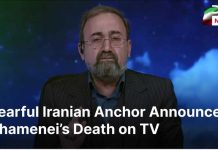
- What is verifiable is a major March 1–2 escalation, including U.S. B-1 bomber strikes and a joint U.S.-Israel operation that killed Iran’s Supreme Leader Ali Khamenei.
- Iran retaliated with large-scale drone and missile attacks across the region; four U.S. service members were reported killed.
- Analysts report Iran leaned heavily on proxy forces in Iraq, while Gulf states helped intercept incoming projectiles.
- Energy disruption risks rose immediately, with reported oil shutdowns and price pressure affecting U.S. families and allies.
What the “Sound of Freedom” Claim Gets Right—and What It Doesn’t
Researchers reviewing the phrase “I Heard the Sound of Freedom” found no verifiable original story matching that exact title or proving it was a real Kurdish quote about U.S. bombers headed for Iran. The more defensible reading is metaphor: some Kurds, especially those threatened by Iranian-backed militias, could see U.S. strikes as weakening Tehran’s reach. Still, the available reporting does not document a Kurdish-centric narrative as a confirmed event.
That matters for readers trying to separate battlefield facts from emotional messaging. The verified core is the broader 2026 Iran–U.S. crisis and its rapid escalation. Claims that go beyond that—particularly who said what, and whether bombers were “on the way” after March 2—aren’t supported in the research provided. In a moment this serious, precision beats slogans, especially when U.S. troops and Americans’ economic stability are on the line.
Verified Timeline: Strikes, Decapitation, and Immediate Retaliation
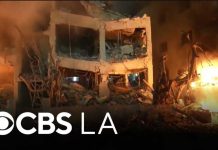
Reporting and analysis in the research describe war breaking out around Feb. 28, followed by major U.S.-Israel strikes on March 1–2 against Iranian leadership and military infrastructure. The documented targets included intelligence and IRGC-linked sites and the Natanz nuclear facility, with CENTCOM-confirmed B-1 bomber strikes cited as part of the campaign. Multiple sources in the packet report that Ali Khamenei was killed, an extraordinary escalation compared to prior confrontations.
Iran’s response was described as a broad missile-and-drone effort against U.S. and allied positions across Iraq and the Gulf, including facilities in Saudi Arabia, Kuwait, the UAE, and Bahrain. The research notes large numbers of launches and high interception rates, with Gulf partners reportedly assisting in shoot-downs. Despite defenses, four U.S. service members were reported killed—an immediate reminder that deterrence and “limited” operations can still carry lethal costs.
Proxy Warfare in Iraq: A Familiar Iranian Playbook
The research emphasizes Iran’s reliance on proxy forces, particularly Iraqi militias operating under banners such as the Islamic Resistance in Iraq and groups tied to the PMF ecosystem. Analysts cited a wave of attacks attributed to these militias and describe U.S.-Israel strikes hitting militia-linked positions in Iraq. This proxy approach is consistent with the longer pattern outlined in the materials: Tehran exerts influence and attacks indirectly to complicate attribution and pressure U.S. forces stationed in the region.
For American readers who have watched years of Washington’s ambiguous rules of engagement, the key detail is that proxy warfare turns “regional instability” into direct risk for U.S. troops and taxpayers. The research also highlights uncertainty around some militia claims, including assertions of strikes on energy infrastructure that were described as unverified. That uncertainty is exactly why relying on confirmed reporting—rather than social media narratives—is critical when judging the scale and success of attacks.
Nuclear Site Claims, Conflicting Assessments, and the Fog of War
The research notes conflicting signals about the effect on Iran’s nuclear infrastructure. One thread references the IAEA seeing no major damage, while Iran claimed Natanz was hit. This gap does not prove deception one way or the other; it underscores how early-war information is often partial, politically shaped, or technically uncertain. For policymakers, the distinction matters because nuclear-site damage claims can drive escalation, domestic legitimacy campaigns, and international involvement.
For a conservative audience concerned about constitutional government and accountable leadership, the best takeaway is straightforward: demand verifiable facts before accepting sweeping claims—especially when those claims could be used to justify mission creep, open-ended spending, or new domestic “security” powers at home. The research provides substantial detail on strikes, retaliation, and proxies, but it does not substantiate the catchy Kurdish “freedom” headline as a verified standalone story.
Sources:
https://www.iranintl.com/en/202603020780
https://www.criticalthreats.org/analysis/iran-update-evening-special-report-march-2-2026
https://www.brookings.edu/articles/after-the-strike-the-danger-of-war-in-iran/
https://understandingwar.org/research/middle-east/iran-update-evening-special-report-march-2-2026/
https://en.wikipedia.org/wiki/2026_Iran%E2%80%93United_States_crisis