Ballot petition systems are only as sound as the signatures that qualify measures for the ballot; when identity theft is used to manufacture those signatures at scale, it exploits a structural weak point that verification systems tend to catch late, if at all.
The Short Version
- Federal prosecutors allege a Skid Row scheme used stolen identities of registered voters to forge ballot-initiative petition signatures, resulting in a two-count federal indictment against three defendants.
- The core conduct charged centers on identity fraud tied to petition signatures—not vote casting—illustrating how initiative qualification can be targeted upstream of Election Day.
- Undercover video work by James O’Keefe publicized the mechanics; officials say their investigation proceeded to criminal charges based on evidence that meets prosecutorial standards.
- Petition systems everywhere face recurring fraud risks when speed, pay-per-signature incentives, and limited front-end verification intersect; most drives are lawful, but abuses reappear often enough to demand continuous controls.
What prosecutors say happened on Skid Row—and why it matters
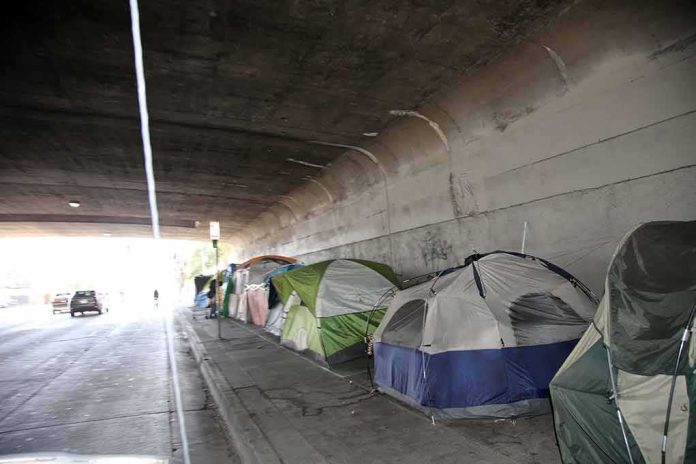
The U.S. Attorney’s Office for the Central District of California announced that a federal grand jury returned a two-count indictment charging James Brass, Courtney Price, and Jateisha (Justicia) Herron with a scheme that allegedly harvested real California voter identities from a database and distributed them to people on Los Angeles’ Skid Row, who then copied those identities onto ballot initiative petitions and signed in those voters’ names. The indictment alleges identity fraud and related offenses tied to state felonies governing petition conduct; the government is using federal identity-theft law because the alleged forgeries relied on “means of identification” belonging to real voters, a federal hook that does not require the petitions to reach the ballot or alter an election outcome to be criminal.
This is not about fraudulent ballots slipping through a tabulator. The locus is earlier in the process: the qualification stage that determines whether a proposal, recall, or nomination appears on the ballot. That gateway depends on large volumes of signatures gathered in short windows. If those sheets are padded with forged names of actual voters—especially drawn from curated lists—the harm is twofold: voters are impersonated, and the public is exposed to measures that may have been qualified under false pretenses. Prosecutors emphasize deterrence precisely because much of the verification is retrospective; by the time a sample review flags anomalies, the campaign has banked time and money.
How petition forgery works: mechanics, incentives, and weak points
Petition circulation is a volume business. Consultants and circulators are often paid by the signature, deadlines are tight, and quality control is imperfect at the curb. Those conditions create incentives for bad actors to substitute speed for validity—copying from voter rolls, reusing names, or lifting identities of actual voters to create sheets that pass a basic “facial validity” check. Election offices rarely perform handwriting forensics at scale; they rely on sampling, database checks for registration status, and visual review to weed out obviously inauthentic sheets. Academic and administrative case reviews show recurring patterns: clusters of identical handwriting, improbable signature rates by a single circulator, and sheets populated with deceased or relocated voters.
None of this means the initiative system is rotten—most drives are run lawfully. But the fraud subset is nontrivial across decades and jurisdictions. A cross-state catalog of petition-fraud cases demonstrates that forged signatures and compensated signings repeat regularly enough to keep prosecutors, secretaries of state, and campaigns vigilant. State remedies tend to be ex post—disqualifying signatures or entire candidacies after audits reveal fraud—while criminal charges target the forgers and organizers who manufactured invalid sheets. The Skid Row case fits squarely within that enforcement pattern: identity-based petition forgeries, allegedly organized to generate qualifying signatures with speed.
What the public saw on video versus what the indictment charges
Undercover footage from James O’Keefe’s team depicted petition activity on Skid Row, including cash-for-signature exchanges and the use of real voters’ names; the videos catalyzed public attention and, according to the First Assistant U.S. Attorney, were reviewed alongside other evidence as the government built a chargeable case. At the same time, local television coverage correctly noted a crucial legal distinction: the indictment’s core is identity theft linked to petition forgeries, not the mere exchange of cash, which is already prohibited under California law but is not the federal charge in this case. That distinction matters because federal identity-theft statutes attach to misuse of real persons’ data—names, addresses, and other identifiers—regardless of whether state petition-pay rules were flouted on camera.
Separately, federal prosecutors in another Los Angeles matter secured a plea by a longtime circulator who admitted paying homeless individuals to register and sign; that case demonstrates both that cash-for-registration schemes exist and that the Justice Department will prosecute them when evidence is firm. Together, these episodes map a continuum: on-the-street inducements, identity harvesting, and forged petition sheets are different violations that can co-occur, but each must be charged on its own evidentiary footing.
Verification capacity, sampling, and the limits of after-the-fact screening
Why do such schemes surface in bursts? Because signature verification is designed to manage volume, not to conduct forensic scrutiny on every line. Most jurisdictions validate through sampling, database cross-matches, and referral of suspect batches for deeper review; full handwriting analysis on tens of thousands of signatures is impractical. When prices per signature spike, as they do near deadlines or on hot-button measures, incentives for corner-cutting intensify—Michigan’s 2022 cycle is instructive, where entire circulator batches were flagged as fraudulent and candidates were knocked off the ballot after staff invalidated huge shares of their submissions. Sampling works as a backstop, but it is by definition reactive; the public pays in time, litigation, and administrative resources when fraud has to be unwound late.
The policy lesson is not to abandon initiatives but to harden the front end: better training and tracking of circulators, auditable pay structures that reduce per-signature bounties at crunch time, real-time anomaly detection on batch submissions, and swift referrals when clusters of suspect sheets appear. Criminal enforcement, when visible and sustained, changes the risk calculus for organizers who might otherwise gamble on post hoc disqualification as a tolerable cost of doing business.
A San Bernardino County man was arrested today on a federal grand jury indictment charging him and two other defendants with paying people on Skid Row in downtown Los Angeles to sign petitions using stolen identities of registered voters to qualify…
— Doodles 🇺🇸 🐕 (@DoodlesTrks) September 11, 2026
What to watch next: legal exposure up the chain and system fixes
Federal prosecutors have signaled that if evidence shows upstream coordinators or contractors knew of or directed identity-based petition forgery, exposure will not stop at street-level operatives. That is a familiar progression in election-related fraud: cases often start with obvious misconduct at the curb and move toward organizers as documents, payments, and communications are subpoenaed. For voters and campaigns, the near-term practical fix is the same regardless of politics: treat petition qualification as an integrity-sensitive stage deserving of the same auditing mindset we bring to tabulation and canvass.
Sources:
washingtontimes.com, californiaglobe.com, facebook.com, abc7.com, electionfraud.heritage.org, abcnews4.com, ebsco.com, cjr.org, cedar.buffalo.edu