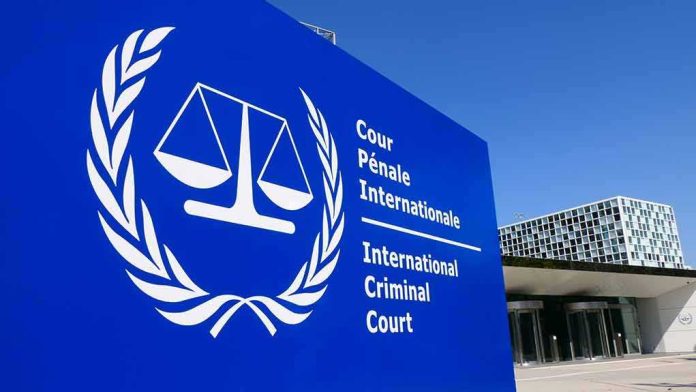
Sanctioning the International Criminal Court is not a mere policy spat; it is a structural collision between state sovereignty and universal criminal accountability, and it forces a hard question the modern order has never fully resolved: who gets to judge alleged atrocity crimes when powerful states say “not you.”
The Short Version
- The United States rejects ICC authority over U.S. nationals and close partners, and has moved to impose sanctions to deter and disable investigations it views as illegitimate.
- Washington’s case rests on non-consent, sovereignty, and complementarity, embedded in executive orders and State Department actions; it treats ICC assertions of jurisdiction as a threat to national security and foreign policy.
- The ICC and its supporters counter that territorial jurisdiction and the Court’s mandate authorize investigations where crimes occur on a State Party’s territory, and that sanctions obstruct justice.
- This confrontation reprises a decades-long pattern: great powers support international justice against adversaries but resist it when scrutiny points inward or toward allies.
What the new U.S. sanctions do, and why Washington says they are justified
The current U.S. sanctions posture treats the ICC’s attempts to investigate U.S. personnel and allied officials as unlawful extraterritorial overreach, and responds by wielding financial blocking measures and travel restrictions against targeted ICC officials and, when necessary, broader prohibitions on U.S. persons’ dealings with the Court. The White House framed the policy in explicit deterrent terms: tangible, significant consequences for “transgressions,” potentially including asset blocking and entry suspensions for ICC officials, employees, and agents. The State Department operationalized this strategy with named designations of ICC judges—an extraordinary step signaling that Washington views certain judicial acts as outside legitimate authority and injurious to core national interests.
This is not invented doctrine on the fly. The United States never ratified the Rome Statute; it has consistently maintained that U.S. nationals cannot be bound by a treaty they did not join. That baseline sits alongside a decade-spanning record that includes Executive Order 13928 in 2020, which formally declared the ICC’s assertion of jurisdiction over U.S. personnel an unusual and extraordinary threat to U.S. national security and foreign policy, authorizing sanctions against individuals who materially support such investigations. In short: the U.S. has built a legal and policy architecture to reject and resist ICC proceedings it deems ultra vires and to protect its nationals and select partners from The Hague’s reach.
The ICC’s legal theory: territorial jurisdiction and the Afghanistan precedent
The ICC rests its authority on a straightforward provision of its founding treaty: territorial jurisdiction. Under Article 12(2)(a), if the conduct at issue occurred on the territory of a State Party, the Court may act—regardless of the accused’s nationality. Afghanistan acceded to the Rome Statute in 2003; the Court’s Pre-Trial and Appeals Chambers have confirmed the Prosecutor’s authority to investigate alleged crimes on Afghan territory since May 1, 2003, including conduct by non-Party nationals. In 2024, an ICC Chamber underscored that neither the nationality of potential accused nor a bilateral Status of Forces Agreement with the United States defeats that territorial basis; alleged conduct occurring in whole or in part on State Party territory falls within the Court’s remit.
On complementarity—the principle that the ICC is a court of last resort—the Prosecutor has argued that prior U.S. proceedings did not probe the criminal responsibility of those who developed, authorized, or oversaw the alleged conduct, so domestic action did not render the situation inadmissible at the ICC’s bar. This, from The Hague’s perspective, is not a crusade against sovereignty; it is the treaty’s design: where national systems are unwilling or unable genuinely to prosecute, the Court may step in.
How we arrived here: a long, ambivalent U.S.–ICC relationship
American ambivalence toward international criminal justice predates the ICC’s first cases. Washington signed but never ratified the Rome Statute, later “unsigned,” then supported ad hoc accountability when it served broader strategic purposes while resisting jurisdiction over U.S. personnel. The first Trump administration’s 2020 designations against Prosecutor Fatou Bensouda and senior official Phakiso Mochochoko established a sanctions blueprint—asset freezes within U.S. jurisdiction and prohibitions on U.S. persons transacting with designated individuals. Contemporary measures reprise and expand that template, now squarely aimed at judges and the institution’s ability to operate through banking, contracts, and travel. Scholars tracking the arc of this conflict emphasize continuity: the sanctions regime is the sharp edge of a long-running sovereignty defense rather than a sudden departure.
Abroad, reactions have varied. Many ICC States Parties issued statements backing the Court in earlier rounds, but practical support often stops short of meaningful countermeasures; the ICC’s dependence on state cooperation for arrests and evidence leaves it vulnerable to great-power pressure, sanctions foremost among them. The institutional stakes are high because the Court’s deterrent effect and investigative capacity are only as strong as its access to money, movement, and member-state political cover—exactly what sanctions are designed to constrict.
The core dispute, weighed on the evidence
On the U.S. side, the case is specific and documented: a non-consent position anchored in treaty non-membership, formal executive authorities authorizing sanctions, and concrete State Department designations against named judges. The rationale integrates sovereignty claims with national security framing: foreign prosecutors and judges, unaccountable to U.S. voters and unconstrained by U.S. constitutional safeguards, should not decide criminal responsibility for Americans.
On the ICC’s side, the countercase is also specific and legalistic: territorial jurisdiction under Article 12, confirmed in situation-specific decisions involving Afghanistan, and a complementarity assessment that deems domestic processes insufficient for senior-level accountability. ICC leaders publicly reject the charge of illegitimacy and insist they will act impartially on the basis of law and evidence, not politics; they argue that sanctions attempt to obstruct an independent court backed by a majority of UN member states. These are not ships passing in the night; they are rival constitutional visions of international order. One prizes non-consensual reach to close impunity gaps; the other insists that democratic sovereignty and alliance commitments place bright lines around who may judge whom.
"ALL OF US MUST MAKE A CHOICE NOW BETWEEN A WORLD WHERE MIGHT IS RIGHT, OR A FUTURE BASED ON THE RULE OF LAW."
ICC President Tomoko Akane, responding to the United States sanctioning the court as an institution.
"The Court firmly rejects these sanctions. Seeking to obstruct a…
— The Compass Report 🧭 (@Compass_Report) October 9, 2026
Consequences: what sanctions can actually do
Financial sanctions and visa bans are not rhetorical flourishes; they are operational constraints. Asset blocking within U.S. jurisdiction can freeze funds and choke off payments denominated in dollars; U.S. persons—banks, vendors, insurers, cloud providers—must avoid prohibited transactions on pain of enforcement. For an institution headquartered in Europe but reliant on global financial plumbing, designation risk makes routine business—from investigator travel to IT procurement—more fragile. Even when the ICC adapts, rerouting payments through non-U.S. institutions or shifting software vendors, sanctions raise costs, add friction, and deter counterparties who fear secondary exposure.
Beyond mechanics, the measures broadcast a strategic signal to allies: support the Court when it targets adversaries if you must, but rein in investigations implicating U.S. and allied officials. For ICC States Parties dependent on U.S. security guarantees, that signal lands with weight. Conversely, for victims’ communities and human rights advocates, the signal is chilling: that power politics can nullify legal process before evidence is heard. This is the tension at the heart of international criminal justice, and it will not be resolved by clever lawyering alone.
What to watch next
Three questions will determine the equilibrium. First, do U.S. sanctions broaden to institutional, across-the-board prohibitions, or remain tethered to named officials and specific acts? The former would escalate pressure by entangling neutral service providers and financial intermediaries; the latter keeps the focus on individuals. Second, do ICC States Parties convert rhetorical support into protective countermeasures—financial backstops, alternative payment rails, diplomatic shielding for staff—or does support remain largely declaratory? Third, does complementarity evolve through credible, transparent domestic proceedings that address senior-level responsibility, thereby narrowing the ICC’s aperture? The legal arguments on both sides are set; the outcome will turn on state behavior, institutional resilience, and political costs each camp is willing to bear.
Sources:
cbsnews.com, state.gov, whitehouse.gov, icc-cpi.int, reuters.com, amnesty.org, asp.icc-cpi.int, iccforum.com, academic.oup.com