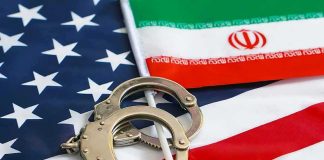
Federal investigators are now asking whether New York City’s school system let activist training cross a legal line into discrimination against Jewish students.
Quick Take
- The U.S. Department of Education opened a Title VI civil-rights investigation into the NYC Department of Education on April 23, 2026.
- The probe centers on activities tied to “NYC Educators for Palestine,” a group described as NYCDOE employees that ran seminars including “Palestine, Zionism, and Resistance.”
- NYCDOE says the group is not connected to public schools and that it is reviewing the federal notice.
- The case extends post–Oct. 7 federal scrutiny of antisemitism from universities into K-12 systems, where federal funding creates leverage.
Why the Trump Administration Triggered a Title VI Probe
The Department of Education said it initiated a Title VI investigation into New York City’s Department of Education after complaints alleged an antisemitic hostile environment affecting Jewish students. Title VI bars discrimination on the basis of race, color, or national origin by institutions receiving federal funds. The department’s focus, as described in reporting, is not a standard curriculum dispute but whether conduct connected to staff activity effectively pressured or marginalized students in a way that triggers civil-rights enforcement.
That framing matters because it puts the federal government in the role of referee between protected speech and prohibited discrimination. Conservatives who have watched school systems adopt politicized training for years will see a familiar pattern: ideologically driven programs are often defended as “education” until parents or students claim real harm. At the same time, the investigation’s outcome will hinge on facts—what was taught, who participated, whether students were targeted, and whether NYCDOE oversight existed.
What NYC and the Educator Group Are Saying
NYCDOE responded that “NYC Educators for Palestine” is not connected to public schools and said it is reviewing the federal notice. That response creates an immediate factual question at the center of the case: if the group is independent, how directly can its seminars be tied to the school system’s federally funded programs? Reporting nonetheless describes the group as made up of NYCDOE employees, which could raise issues about whether school resources, authority, or workplace roles intersected with outside activism.
The Flashpoint: “Palestine, Zionism, and Resistance” vs. Student Safety
According to coverage, the investigation references seminars on “Palestine, Zionism, and Resistance.” Critics argue that “resistance” language in the current climate can shade into justification of violence or hostility, while supporters argue that discussion of Palestinian liberation is political speech and academic inquiry. The available research does not confirm that pro-Hamas material was actually presented in NYC classrooms; it shows a federal probe based on complaints and a local denial of formal affiliation. That gap is exactly what investigators must clarify.
How Post–Oct. 7 Politics Pushed Enforcement From Campus to K-12
The probe fits a broader pattern after the Oct. 7, 2023 Hamas attack that killed about 1,200 people in Israel, which was followed by increased antisemitism concerns and large protests across U.S. institutions. Republicans on Capitol Hill documented extensive university failures to respond consistently to harassment and threats, including disputes over slogans and uneven discipline. Those higher-education fights helped normalize Title VI as a primary tool for forcing institutional accountability—now extending to K-12, where children are involved and parents expect neutrality.
What This Could Mean for Federal Funding, Local Control, and Trust
In the short term, investigations like this typically force districts into compliance work: producing records, clarifying policies, and documenting how complaints are handled. Over the long term, the larger question is whether federal enforcement becomes the default way to police ideological conflict in schools. Conservatives tend to prefer local control but also want schools to stop using their authority to push divisive activism; many liberals fear political overreach that chills discussion. Either way, repeated crises reinforce a shared public suspicion that institutions protect themselves first and families last.
Education Department: Antisemitism, Pro-Hamas Material in New York City Teachinghttps://t.co/GxEP9WoxOh
— PJ Media (@PJMedia_com) April 25, 2026
For New York City, the case also tests a basic governance principle: if employees organize outside groups tied to charged international conflicts, the district must prove students are not being pressured, singled out, or treated differently because of identity. If discrimination is found, Title VI consequences can be serious because federal dollars are involved. If discrimination is not substantiated, the episode will still intensify debate over what belongs in K-12 classrooms versus what belongs in private civic life.
Sources:
Entryism (Network Contagion Research Institute report)