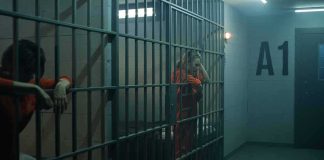
A blurry orange figure outside Jeffrey Epstein’s cell is once again exposing how federal bureaucrats twist evidence, destroy trust, and still refuse to give the American people straight answers.
Story Snapshot
- A former correction officer denies she is the “orange figure” near Epstein’s cell, highlighting gaps and contradictions in federal accounts.[2][3]
- Justice Department and Federal Bureau of Investigation reviewers could not even agree whether the orange shape was an inmate or an officer carrying linen.[2]
- Independent experts and even the New York City medical examiner’s office say the video is too blurry to identify anyone, yet officials still claimed certainty in public.[2][4]
- House Oversight members say Epstein received “special treatment,” but key surveillance, logs, and chain-of-custody records remain tightly controlled by Washington.[3]
Blurry Footage, Clear Distrust: What the “Orange Figure” Really Shows
Newly released documents show investigators watching surveillance video from the Metropolitan Correctional Center on the night Jeffrey Epstein died saw an orange-colored shape moving up a stairway toward his isolated tier at approximately 10:39 p.m. on August 9, 2019.[2] An early Federal Bureau of Investigation observation log openly described the shape as a “flash of orange” that “could possibly be an inmate” being escorted to Epstein’s locked tier.[2] That wording alone signals serious uncertainty inside the federal government.
The Department of Justice Office of Inspector General later looked at the same footage and decided the orange figure was not an inmate at all but an “unidentified corrections officer” carrying orange linen or bedding.[2] Its final report states that at roughly 10:39 p.m. an unidentified officer walked up the L-tier stairs and reappeared two minutes later, suggesting some activity near Epstein’s cell that was never clearly explained to the public.[2] Even among federal agencies, the basic question of “who is that?” produced conflicting answers.
Officer’s Denial Collides With a Broken Accountability System
During a sworn interview, the officer believed to be the last person to see Epstein alive, Tova Noel, told investigators she “never gave out linen” and insisted distributing bedding was not part of her duties on that shift.[3] Noel was assigned to the special unit where Epstein was held, began duty at 4 p.m., and said she likely saw him alive around the 10 p.m. count, just before the orange figure appears on the stairs in the surveillance record.[2][3] Her denial directly challenges the inspector general’s interpretation that a corrections officer carried linen toward Epstein’s tier.[2][3]
At the same time, Noel’s credibility has been damaged by admitted falsification of prison log entries about checking on Epstein, a fact critics seize on to cast doubt over everything she now says.[2][3] Yet the inspector general’s broader report still concluded there was serious misconduct and procedural failure but “no criminal involvement” by staff in Epstein’s death.[3] That combination leaves Americans stuck between a flawed witness, a flawed system, and a federal bureaucracy that asks for trust while hiding the clearest evidence behind redactions and closed doors.
Experts Say Video Is Too Blurry, But Washington Spun Certainty Anyway
Independent reporting shows that outside analysts and even city officials saw more ambiguity in the video than federal agencies publicly admitted. CBS News consulted video forensic experts who said the figure’s movement looked more like an inmate or someone wearing an orange prison uniform than a corrections officer, based on the appearance and gait.[2][4] Those experts also found inconsistencies between the footage and official claims and said the limited field of view made it impossible to declare that no one else used the stairs or accessed the tier during the critical window.[4]
New York City’s Office of the Chief Medical Examiner reviewed the same surveillance video only six days after Epstein’s death and concluded the footage was too blurry to identify any individuals, an assessment recorded in the released documents.[2] Despite that blunt warning, officials still moved ahead with firm public statements that no one entered Epstein’s tier that night and that the mysterious orange figure did not change the suicide narrative.[2][4] For many Americans, that looks less like careful fact-finding and more like a government desperate to close the book quickly, regardless of unresolved details.
Special Treatment, Missing Clarity, and Why Congress Must Push Harder
Members of the House Oversight Committee say Noel testified that Epstein received “special treatment,” including extra linens, a continuous positive airway pressure machine, and unusual access to medications that other inmates did not enjoy.[3] A 2023 inspector general report further documented that Epstein ended up with more linen and bedding than regulations allowed, along with a string-like material that could be used for hanging, found around his neck after death.[3] Those findings raise obvious questions about who supplied the extra materials and why routine safeguards were ignored in such a high-profile case.
For conservatives, the unresolved “orange figure” is not a conspiracy toy; it is another example of a justice system that protects its own, edits evidence, and hides behind classification when the public demands the truth. Congress now has the authority and responsibility to demand the unedited surveillance files, metadata, observation logs, and staffing records, and to require independent forensic review instead of relying on bureaucrats grading their own homework.[2][4] Until that happens, the American people are left with fuzzy video, conflicting stories, and one more reminder that big government rarely polices itself honestly.
Sources:
[2] Web – Rikers Island Correction Officer Pleads Guilty To Making False …
[3] Web – FORMER CORRECTION OFFICER CHARGED WITH FILING …
[4] Web – Hoodline: Brooklyn Correction Officer Indicted for Allegedly …