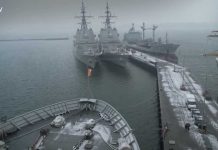

War in the Persian Gulf is turning the Strait of Hormuz into a “calorie choke point,” putting food and water on the front lines and setting up a fast-moving crisis that could destabilize Iran in weeks.
Story Snapshot
- Disruption in the Strait of Hormuz is choking off Iran’s imports of staples like wheat, corn, and soybeans that underpin daily diets and livestock feed.
- Limited stockpiles and “just-in-time” supply chains mean shortages can accelerate quickly, especially for poultry and livestock reliant on short feed buffers.
- Iran’s water system was already near a breaking point after years of drought, overuse, and mismanagement—war damage raises the risk of cascading failures.
- Food inflation is reported at triple-digit levels as panic buying and supply interruptions collide with a weakened currency and subsidy strain.
Hormuz Disruption Turns Trade Routes Into a Food Weapon
Early March 2026 strikes by the U.S. and Israel, combined with IRGC maritime threats and insurance pullbacks, have effectively constricted traffic through the Strait of Hormuz—the critical corridor Iran depends on for agricultural imports. Research summarized in recent reports describes the strait not just as an energy lane, but as a “caloric chokepoint” for a country whose basic staples are heavily import-dependent. Once insurers retreat and shippers hesitate, food deliveries slow even without a formal blockade.
Iran’s vulnerability is logistical as much as agricultural. The country reportedly needs roughly monthly wheat volumes that far exceed what typical storage can cover for long periods, meaning interruptions translate into visible scarcity quickly. Livestock and poultry producers appear especially exposed because feed buffers are measured in days and weeks rather than months. When feed can’t arrive, producers may slaughter early, causing a brief supply bump followed by longer shortages and higher prices.
Import Dependence Meets Triple-Digit Food Inflation and Subsidy Stress
Available reporting indicates Iran entered the latest escalation already suffering severe inflation, with food price pressures worsening sharply after the maritime disruption. The picture described is familiar in crisis economies: households rush stores, shelves thin out, and the local currency effectively “devalues into calories” as people prioritize essentials. For a regime that relies on subsidies and controlled pricing to keep order, abrupt price spikes can become a governance problem—especially when shortages look like system failure rather than bad luck.
Fertilizer is a second-order shock that becomes a first-order problem over time. Iran is described as diverting natural gas away from fertilizer production toward wartime needs, locking in lower yields for upcoming seasons even if shipping lanes reopen. Analysts warn this is how a short disruption becomes a longer emergency: a feed shortage hits protein quickly, while fertilizer shortfalls quietly damage the next harvest cycle. The lag effect matters because it extends hardship beyond the immediate fighting.
Iran’s Water “Day Zero” Risk Was Building Long Before the Bombs
Multiple sources describe Iran’s water crisis as a long-running national vulnerability shaped by drought, heavy agricultural consumption, and chronic mismanagement. Iran is cited as among the world’s most water-stressed countries, with a large share of the population facing extreme stress. Water use is heavily concentrated in agriculture, where inefficient practices and aquifer depletion compound the problem. By late 2025, officials were publicly warning that major urban areas could face “Day Zero” conditions without rain.
Conflict Raises the Odds of Cascading Infrastructure Failures
War doesn’t need to “destroy everything” to create a nationwide emergency; it only needs to break a few high-leverage nodes. Reporting highlights concerns about centralized systems—ports, pumping stations, and desalination facilities—where disruption can cascade into public health and order problems. A reported attack on a desalination facility and regional fears about water infrastructure underscore how quickly the conflict can spill into civilian life. Some claims, including circulating strike videos, have been described as unverified in at least one account.
The Iran War’s Next Threat Is to Food and Water – The Atlantic https://t.co/PWylywNxC2
— Kathleen Torvik (@KathleenTorvik) March 18, 2026
For Americans watching from afar, the key takeaway is that food and water stress can accelerate instability faster than conventional battlefield timelines. When a regime faces empty shelves, failing water delivery, and ballooning prices at the same time, it is forced into harsher controls, tighter rationing, and heavier propaganda—moves that often collide with public reality. Limited, verified real-time data from inside Iran remains a constraint, but the supply-chain mechanics described do not depend on speculation.
Sources:
The Strait That Starves: Iran’s 2026 Food Shock
War is pushing Iran’s water supply to the brink of collapse
Serious water crisis on horizon as Middle East’s desalination plants hit and acid rain fall
The Iran War’s Hidden Front: Food, Water, and Fertilizer
How Iran’s water bankruptcy seeped into the protest movement