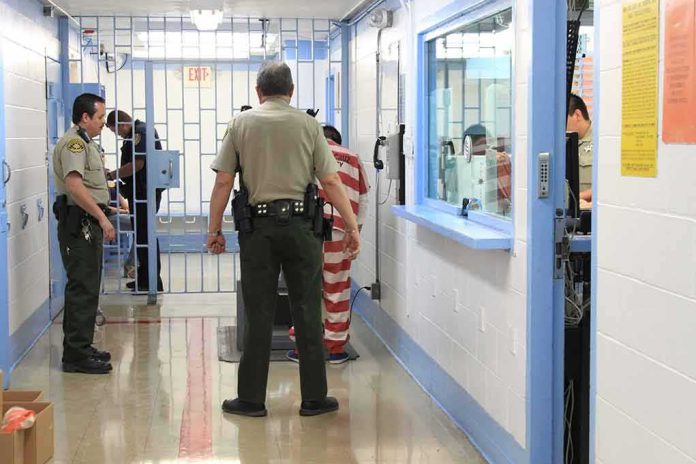
Mass detainee transfers are the bluntest instrument in federal custody management: they can neutralize acute safety failures overnight, but they also ripple through courtrooms, law offices, and families for months. Understanding when that trade-off is justified — and how to execute it without grinding the justice process — is the real work.
The Short Version
- The U.S. Marshals Service prepared to relocate roughly 400 pre-trial detainees from a privately run Georgia jail after persistent safety and security deficiencies were flagged, with a five-week timetable to complete the move.
- Officials cited physical breakdowns — malfunctioning locks, missing tools, breaches between cells — that undermine basic security; such conditions can require immediate population moves.
- Transfers of this scale strain defense access, court scheduling, and family contact; federal defenders warned of material harm to representation and increased costs.
- Transfers are a routine authority in carceral systems, but necessity, proximity, and mitigation steps determine whether they solve a problem or trade one operational crisis for another.
What triggered the transfer: when security failures cross the red line
Pre-trial detention must do two things at once: secure people and support adjudication. When either function collapses, the system rebalances fast. According to contemporaneous reporting, the U.S. Marshals Service readied a phased relocation of about 400 detainees from the Robert A. Deyton Detention Facility (RADD), a GEO Group–operated jail near Atlanta, to a site nearly 200 miles away. An internal email laid out an operational schedule — waves over five weeks, completed by October 31 — signaling this was not a contingency but an executed plan. Reported triggers were concrete, not abstract: missing tools, holes in walls between cells, and malfunctioning locks — the kind of control failures that escalate contraband risk, enable assaults, and erode staff authority in hours, not months.
These deficiencies are not mere housekeeping. Locks that do not reliably secure doors convert every movement into a calculated risk; tool loss can arm both escape and intimidation; wall breaches between cells defeat classification and separation — the basic architecture of safe housing. In a contract facility holding federal detainees across disparate cases and affiliations, such compound failures justify rapid depopulation while repairs, audits, and rekeying occur. The timeline described — weekly drawdowns until zeroed out — aligns with how the Marshals Service typically decompresses a compromised site: enough speed to stop the bleed, enough pacing to keep transport, intake, and medical screenings within capacity.
Authority and mechanics: who can move whom, and how fast
Even when the beds are in a county or private jail, the custodial obligation is federal, and the Marshals Service has broad discretion to decide where it is safely discharged. Transfer authority is embedded across correctional systems for precisely these moments; Georgia’s own rules codify discretionary transfers and emergency authorizations — a window into common administrative practice when security or safety is at stake. Emergency mechanisms exist because waiting for perfect paperwork is a luxury jails do not have when physical plant or control fails. The legalities are straightforward; the logistics are not. Chain-of-custody handoffs, property and discovery materials, medical continuity, and housing classification must be re-verified on arrival; transport teams must coordinate with courts to avoid missed hearings and with defense counsel to preserve access.
In federal operations, the Marshals knit together a patchwork of bedspace — roughly 85 percent of detainees are held via contracts with state, local, and private facilities — so sudden shifts are not aberrations but the system’s pressure valve. The functional test is not “can they move people?” but “can they move them without degrading due process?” That is where distance, docket density, and defense resources matter more than the color of the uniform at the destination.
The defense bar’s alarm: access, costs, and case continuity
Moves of 150–200 miles change the geometry of a case. Federal defenders in the Northern District of Georgia warned that the transfer would materially hinder effective representation and drive up Judiciary costs — more travel time, fewer ad hoc cellblock conferences after calendar calls, and slower response when plea talks or evidentiary issues turn urgent. These are not theoretical complaints; the literature on detainee transfers, as well as past litigation over remote placements, documents consistent headwinds for counsel access and family support when detainees are shifted far from the courthouse. Even with video visitation and phone access, the hard problems — reviewing voluminous discovery, preparing witnesses, building trust with clients wary of paper-only communication — are stubbornly analog.
Courts absorb shock differently. Some judges flex calendars to cluster in-person appearances, others lean harder on remote proceedings. Prosecutors can adapt their transport requests. But the cumulative friction shows up in continuances and in the time lawyers spend moving rather than lawyering. That is why the strongest transfers bake in mitigation: dedicated attorney visitation blocks at the receiving facility, priority access to confidential video rooms, and guaranteed same-week transport for emergent hearings.
Why private contracting sits in the crosshairs
The GEO-operated status of RADD colors public perception, because disputes over conditions in privately run detention — medical care adequacy, visitation rigidity, staffing stability — recur across jurisdictions. Academic and policy reviews have flagged higher risks for restricted family visitation and uneven service quality in for-profit facilities compared with some public jails, though comparisons are complicated by local oversight and contract variability. None of that proves causation in this instance. It does, however, explain why a security-driven transfer is quickly read through a broader skepticism: when the same company controls locks, staffing rosters, and maintenance, failures look like cost-cutting rather than bad luck. For the Marshals Service, that reputational context is not dispositive, but it is operationally relevant; public trust erodes if the agency cannot show the inspection findings and corrective timelines that precipitated action.
How to judge necessity: three questions that decide whether a move was warranted
First, were the cited failures acute and non-remediable without immediate depopulation? Lock malfunctions and inter-cell breaches typically meet that threshold; you cannot supervise your way around them for long. Second, were closer alternatives exhausted? A 200-mile relocation is defensible if intervening facilities lacked secure capacity or if distributing detainees across nearer jails would have scattered cases and worsened transport logistics. Third, were mitigation measures specified and enforced? Without hard commitments on attorney access, discovery handling, and court transport, necessity bleeds into expedience. The reported internal timetable shows planning rigor; what remains unseen — inspection reports, corrective orders, contract penalties — would answer the first two questions definitively.
It is also worth distinguishing emergency stabilization from strategic realignment. The former buys breathing room to fix the plant or exit a failing contract; the latter redraws a district’s detention map for efficiency or cost. The evidence here points to stabilization — move in waves, zero out by a date certain — rather than a permanent rebasing of detainees. That is the right instinct when security is compromised: stop the exposure, then decide whether to return, renegotiate, or replace.
What good looks like next time: a blueprint for necessary, defensible transfers
Three practices separate a tough call from a needlessly punishing one. Transparency, after action: release the inspection findings and a redacted corrective plan once the immediate risk is contained; the public will forgive speed if the rationale is documented. Proximity first: build a standing ladder of alternate beds prioritized by travel time to the courthouse and counsel density, so emergency moves default to the least disruptive options. Mitigation by design: guarantee defense access at the receiving site — named points of contact, extended visiting windows, rapid-scan discovery rooms — and codify same-day notice protocols to counsel for all transfers, with a dedicated transport docket to prevent missed appearances. These are not luxuries; they are the price of moving people who have not been convicted without undermining the cases meant to determine their fate.
Sources:
cbsnews.com, prisonlegalnews.org, georgiacourts.gov