Iran’s push to choke off the Strait of Hormuz is colliding with a new reality: the U.S. military is releasing strike footage to prove it can still protect the lifeline that keeps American energy prices from spiraling.
Quick Take
- CENTCOM released video of strikes targeting Iranian mine-laying vessels in the Strait of Hormuz, a critical global oil chokepoint.
- Reports say U.S. forces destroyed 16 Iranian mine-laying vessels on March 10 as the wider U.S.-Iran campaign intensified.
- Commercial ships faced renewed attacks in and around the strait on March 11, with fires reported and mariners missing.
- Saudi Aramco warned that prolonged disruption could have catastrophic consequences for global oil markets.
- Internal U.S. Navy assessments reportedly cautioned that escort missions in Hormuz are currently too dangerous, undercutting confident public messaging.
CENTCOM’s Strike Video Signals a Hard Line on Hormuz
U.S. Central Command released footage showing strikes on Iranian naval vessels described as mine-layers operating near the Strait of Hormuz. The message was straightforward: Washington says it will not allow Iranian forces to threaten commercial shipping in one of the world’s most important waterways. The strait carries about one-fifth of global crude oil supply, making even limited disruption a direct pressure point on energy prices and household budgets in the United States.
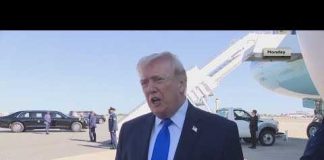
The operation highlighted in reports centers on March 10, when CENTCOM said its forces destroyed 16 Iranian mine-laying vessels near the strait. President Trump also publicly described U.S. action against inactive minelaying boats and ships, indicating further action could follow. Defense Secretary Pete Hegseth echoed the administration’s posture, framing the mission as preventing “terrorists” from holding the strait hostage and emphasizing “ruthless precision” in eliminating mine-laying capability.
How the Conflict Escalated Into a Maritime Chokepoint Fight
The mine-laying story sits inside a broader U.S.-Iran military escalation that accelerated in late February. Reports describe continuous U.S. and Israeli attacks beginning February 28, followed by Iranian missile and drone launches toward Israel and other regional targets. By early March, U.S. action reportedly included a submarine torpedo attack sinking an Iranian warship near Sri Lanka’s southern coast and a strike that hit Iran’s drone carrier Shahid Bagheri.
By March 10, CENTCOM said the U.S. had targeted more than 5,000 locations in Iran during the first 10 days of the campaign, underscoring how quickly the war expanded. At the same time, intelligence reporting indicated Iran had begun placing mines in the Strait of Hormuz, with a U.S. media report citing assessments that only a few dozen mines had been placed in recent days. That limited count, while still dangerous, shows how fast a small number of cheap tools can threaten expensive global commerce.
Commercial Ships Hit Again as Uncertainty Spreads
Strikes on mine-layers did not end the danger to civilian traffic. On March 11, maritime reporting described multiple commercial ships being targeted by unknown projectiles across the Strait of Hormuz, including the container ship OE Majesty and bulk carriers Mari Nari and Star Gwennneth. Separate reporting said a merchant vessel caught fire after an attack in the strait, with three mariners missing and the crew forced to abandon ship.
Attacks were not confined to the narrow channel. Reports also described two additional attacks inside the Persian Gulf and an attack on the port of Salalah, Oman, prompting suspension of operations and tanker rerouting to Yanbu on the Red Sea. For American consumers, this matters because shipping risk premiums and route changes can add cost long before any official “shortage” appears—another reminder that foreign conflict often shows up at home as higher fuel and goods prices.
The Gap Between Public Confidence and Operational Limits
A key tension in the current moment is the gap between confident public statements and warnings about what is practically possible on the water. Reporting cited an internal U.S. Navy assessment that escort missions in the Strait of Hormuz were too dangerous to conduct at present, even with two carrier strike groups deployed. If accurate, that assessment suggests the military can punish mine-layers and attackers, but cannot yet guarantee routine convoy-style protection for every commercial ship.
That operational reality helps explain why MAGA voters are divided. The mission—keeping a strategic waterway open—aligns with basic national interest. But the scale and momentum of the broader campaign, including thousands of targets reportedly hit, raises the fear of another open-ended conflict. For constitutional conservatives wary of endless war, the central question is whether the administration can define limits, prioritize U.S. security, and prevent mission creep while still defending freedom of navigation.
Booyah!!
WATCH: US Central Command Releases Footage of Strikes on Iranian Naval Vessels Blocking the Strait of Hormuz https://t.co/xdLnjiFIRd #gatewaypundit via @gatewaypundit
— Ares Unchained (@AresUnchained) March 28, 2026
Energy markets are already flashing warning signs. Saudi Aramco publicly warned of catastrophic consequences for the world’s oil market if the war continues to disrupt shipping in Hormuz. Iran’s Revolutionary Guard leadership also signaled it would try to block vessels tied to “aggressors,” framing commercial passage as leverage. With attacks still being reported and mine fears lingering, the immediate test is whether U.S. strikes deter more disruption—or simply shift Iran toward harder-to-attribute asymmetric tactics.
Sources:
US Central Command Releases Footage of Strikes on Iranian Naval Vessels
Iran, US, Israel: Strait of Hormuz Mine-Laying Ship, Commercial Ship Attacks, Trump
SANA international report on US-Israel attacks on Iran and Iranian response