
When a touring artist’s one-liner can summon an official White House broadside, you’re not watching a celebrity squabble; you’re seeing how modern presidencies and pop culture now share the same stage, competing for the same attention and treating dissent as part of the show.
At a Glance
- Natalie Maines, lead singer of The Chicks, contrasted President Trump unfavorably with George W. Bush during an October 2026 Manhattan show, reviving her long-running presidential dissent.
- The White House responded with a personal attack, calling Maines a “despicable nobody” with a “peanut-sized brain,” escalating a culture-and-politics loop built on provocation and amplification.
- Maines has criticized both presidents over two decades, linking her current comments to her 2003 anti-war stance that once got The Chicks pulled from country radio.
- Research shows celebrity political speech rarely carries heavy engagement costs online, helping explain why these clashes persist and spread.
What happened: a concert quip and an official counterpunch
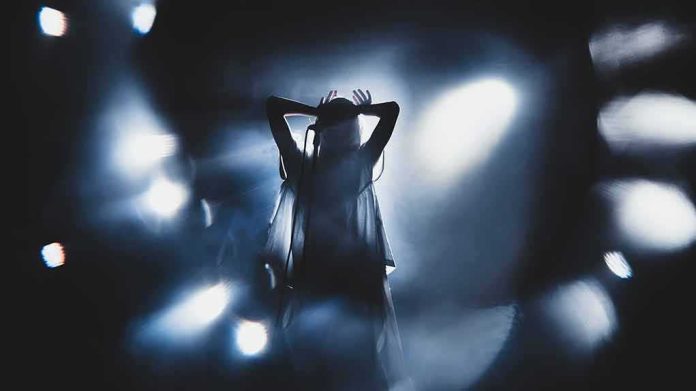
At a Beacon Theatre stop on The Chicks’ anniversary tour, Natalie Maines reportedly told the Manhattan audience that, compared with President Trump, “Now I’d give George (W.) Bush a big wet kiss,” a pointed inversion of the line that made her a lightning rod in 2003. The comment wasn’t an isolated burst; coverage tied it directly to Maines’s history of presidential critique and to recent social posts in which she attacked Trump’s character and democratic conduct. Within the same media cycle, the White House answered not with policy rebuttals but with a personal broadside, branding Maines a “despicable nobody” suffering from “Trump Derangement Syndrome” and a “peanut-sized brain.”
The exchange illustrates a familiar choreography. A celebrity packages political judgment as an arresting line; the presidency, now permanently online and war-roomed, reframes it as an attack that merits a counterattack. The show continues because both sides benefit from the reach: the artist’s audience swells beyond ticket holders, and the White House turns a critic into a foil its supporters recognize instantly.
How we got here: Maines, Bush, and the feedback loop of backlash
To understand why Maines’s line landed with force, recall the arc. In March 2003, at a London show days before the Iraq invasion, Maines told the crowd The Chicks were “ashamed that the President of the United States is from Texas.” The blowback was immediate and punishing: radio blacklists, album-smashing stunts, and years of industry chill. Over time, she distinguished between opposition to the war and the phrasing of her remark, acknowledging disrespect while standing by the critique of policy. That history matters today because it made The Chicks an avatar for the costs of musical dissent in the early aughts—and because Maines’s new comparison leverages that legacy to argue that the presidency itself has changed in kind, not just in degree.
Her recent rhetoric is more personal than policy-bound. Reports summarize her calling Trump a “deranged nut job” and posting a profanity-laced Instagram broadside accusing him of destroying democracy—language engineered for virality, not nuance. Yet the core pattern is consistent: a public artist treating the president as fair game for moral judgment, and an administration electing to answer in kind rather than elevating the frame.
Mechanics of the modern clash: why this keeps happening
These episodes persist because they operate on compatible incentives. For performers, politics offers narrative cohesion: values become part of the brand, and each tour stop or post is a chance to speak to identity as much as to art. For a presidency that communicates in perpetual campaign mode, critics are raw material—evidence of elite condescension to mobilize supporters, or simply another content beat in a fast, meme-driven cycle. Communication scholarship supports the durability of this exchange: a large-scale analysis of roughly 220,000 tweets from 83 celebrities who endorsed candidates in 2016 found that taking political positions generally imposed relatively modest engagement costs, contradicting the idea that artists inevitably pay a heavy digital price for speaking out.
The result is a two-way market for attention. A sharp, media-ready line from a stage is likely to be clipped and shared; a spiky official retort guarantees a second wave. Each side’s base reads the coverage as confirmation—of bravery confronting power, or of a smug entertainer punching down on voters. That mutual reinforcement is why the fight is so hard to de-escalate once it starts.
What the White House response tells us about the presidency as a media actor
In a more traditional communications era, the response to a musician’s jab might have been a bland, high-road sentence or silence; the sovereign posture eschewed retail feuds. The present posture is different. The official choice to personalize the criticism—“despicable nobody,” “peanut-sized brain,” “Trump Derangement Syndrome”—signals that the administration sees value in treating celebrity commentary as direct political engagement, not ambient chatter. It also treats the West Wing less as an institution and more as a participant in culture war programming, where the goal isn’t persuasion but rallying. That shift has been building across administrations, but Trump’s team has embraced it as a governing idiom and content strategy rather than an occasional tactic.
There are trade-offs. Personal insults create a sticky headline but foreclose policy conversation and risk elevating the critic. They also cement a norm: if the presidency speaks in the vernacular of clapbacks, the boundary between institutional dignity and partisan media persona all but disappears. For supporters, that’s refreshing authenticity; for opponents, it’s institutional diminishment. Either way, it defines the communicative terrain on which future disputes will play out.
The Chicks' Natalie Maines is taking on another president, and the White House is firing back.
More than 20 years after her infamous criticism of George W. Bush, Maines jokes she'd now give him a "big wet kiss" while taking aim at President Trump.
The White House responds by… pic.twitter.com/41cs9FZEtF
— Terrie (@Terrie229985) October 15, 2026
Where the real disagreement lies
Maines’s quip implies a comparative judgment—preferring Bush to Trump—but it doesn’t claim an empirical, portfolio-by-portfolio analysis. The reporting documents a rhetorical comparison anchored in character, democratic comportment, and the lived experience of a performer who once paid a career price for opposing a Republican president. The White House reply likewise avoids policy and makes a character indictment of its own. On those terms, the argument isn’t about troop levels, economic indicators, or executive orders; it’s about what kind of behavior counts as presidential and who gets to define it in public. The culture-war forum is the point, not a detour.
Implications: why this matters beyond one night at the Beacon
First, the exchange shows how little friction now exists between art and governance. A line from a stage can move the presidency to answer by name within hours, ensuring that artists who want to be heard will be—and that administrations eager to fight will fight. Second, it demonstrates why the audience for these clashes is larger than fans or voters. As the political and entertainment spheres merge into a single attention economy, each side tries to bend the other to its logic: celebrities seek moral authority, presidents seek narrative dominance. The collision is built in.
Finally, this pattern is durable because it rewards clarity and spectacle over caveat and complexity. Maines’s barb is memorable because it’s absolute; the White House’s retort is memorable for the same reason. As long as attention is the scarcest commodity in politics, we should expect more of it—artists invoking the presidency as a canvas for values, and presidents answering back as if the arena were theirs alone.
Sources:
noticias.foxnews.com, washingtontimes.com, us.headtopics.com