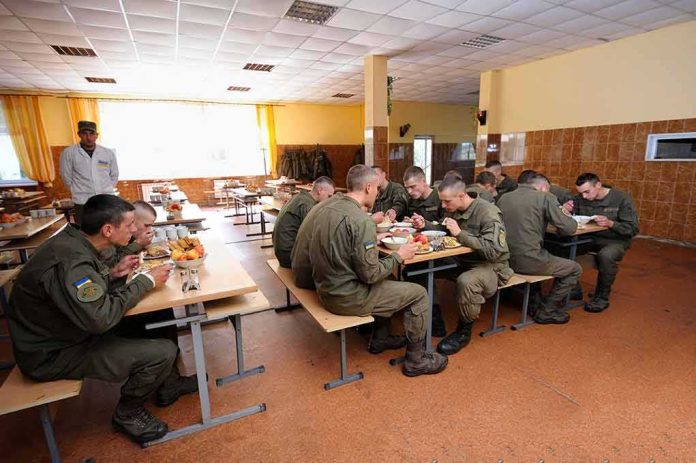
Titles in the military are not window dressing; they are shorthand for doctrine and identity. The Army’s decision to redesignate its 92G soldiers from “culinary specialists” to “tactical field feeding specialists” signals a specific, operationally minded view of sustainment in contested environments, even if the daily tasks—planning menus, ordering supplies, cooking safely at scale—look familiar.
The Short Version
- The redesignation was an official action: 92G became “tactical field feeding specialist” at a Fort Lee ceremony on October 30, 2026.
- The Army’s rationale emphasizes field logistics, contested-environment operations, and combat sustainment—not just cooking.
- Core duties remain broad and supervisory: procurement, inventory control, food safety, mobile kitchen operations, and coordination across units.
- This is an identity-and-doctrine signal aligned with large-scale combat operations; measurable performance effects remain unproven.
What Changed: The Title, the Framing, and the Emphasis
The change is explicit and formal. The Quartermaster School marked the redesignation of 92G at Fort Lee, making “tactical field feeding specialist” the official moniker for the Army’s food-service professionals. That matters because MOS titles are embedded in training pathways, manning documents, and how commanders think about capabilities. The Army cast the role in terms of operating alongside maneuver formations—understanding tactical operations, logistics, and how to keep troops fed when the air is contested, communications are degraded, and supply lines are intermittently cut. In other words, the Army wants the force to picture a field-feeding team as part of survivability, not just hospitality.
The stated logic is straightforward: if large-scale combat operations fragment rear areas and expose support nodes to surveillance and strike, then feeding soldiers becomes a tactical problem. That includes site selection for field kitchens to reduce signature, time-on-station minimization, rapid displacement drills, cold-chain protection without guaranteed power, and menu planning under volatile resupply. Framing the role as “tactical field feeding” makes those constraints the center of the job rather than an occasional field exercise footnote.
What Endures: The Work Behind the Apron Has Always Been Bigger Than a Stove
The new title may be new; the breadth of responsibility is not. Long before the redesignation, 92G billets required far more than turning out breakfast. Position descriptions from Guard units, for example, list supervisory control over garrison and field operations; coordination with food-service officers and veterinary activities; menu planning to nutritional standards; equipment accountability; sanitation and safety programs; and evaluation of contract dining facilities. That portfolio—part culinary science, part supply chain management, part compliance—shows why a simple “cook” label has never captured the work.
Seen that way, the redesignation is less a leap than a sharpening of the lens. The Army’s public statements have underscored sustainment as combat power: “We’re not simply producing food; we’re sustaining warfighters.” That doctrine-forward framing aligns with broader training for large-scale combat operations, where logistics professionals are expected to operate dispersed, move quickly, and protect their signatures. Field feeding teams have to plan, procure, and cook—but also to displace under threat and keep food safe when the cold chain is fragile.
Mechanics of “Tactical Field Feeding”: From Menu to Mobility
On the ground, a tactical field feeding specialist manages four interlocking problems. First, demand forecasting and procurement: estimating headcounts, caloric needs, and special requirements; ordering Class I supplies with realistic lead times. Second, food safety and quality assurance: maintaining cold-chain integrity, monitoring hazard analysis and critical control points (HACCP) in austere conditions, and coordinating with veterinary services to ensure wholesomeness. Third, production at scale: configuring mobile kitchen trailers, burners, and sanitation lines to feed hundreds in short cycles without compromising safety. Fourth, mobility and survivability: siting and camouflaging feeding areas, compressing setup/teardown times, minimizing electromagnetic and thermal signatures, and rehearsing rapid displacement if ISR discovers the site.
These tasks intersect with unit operations: feeding plans shift with mission timelines; convoy cycles dictate resupply; commanders trade risk between hot meals and movement speed. A well-trained field feeding team smooths those tradeoffs, sustaining tempo when weather, power, and threat complicate everything. The Army’s redesignation seeks to make that integration explicit, not incidental.
History and Pattern: Why Militaries Rename Jobs
Occupational titles in the Army have changed before—94B Food Service Specialist, 92G Culinary Specialist, and now Tactical Field Feeding Specialist—tracking shifts in doctrine and professional identity more than wholesale task overhauls. Militaries regularly use nomenclature to clarify status, align training with contemporary threats, and telegraph priorities to commanders and soldiers. The present change fits a known pattern: an era of renewed focus on great-power conflict and contested logistics prompts a field-forward sustainment identity.
Critics read this as branding inflation; practitioners recognize a signaling function. The name tells the force how to employ a capability and what to expect from it. It nudges training content and evaluation scenarios, even before formal doctrine is rewritten. That is not empty semantics; it’s how large organizations steer attention. Still, until training circulars, MOS task lists, or evaluation standards are updated and enforced, the redesignation remains primarily a guidance cue rather than a proof of transformation.
The Skeptical View: Jargon or Justified Reframing?
Public reaction has included bemusement and mockery—the new title is long, and “cook” is a deeply rooted cultural shorthand. Some coverage cast the move as a warlike makeover; other outlets noted that day-to-day duties look much the same. That critique has traction because no data yet show measurable gains in readiness, recruiting, retention, or field performance tied to the renaming. Outlets have reported that the mission set largely continues—procurement, preparation, inspection, sanitation, mobile kitchen operation—even as the Army emphasizes lethality and contested logistics.
The fair reading of the evidence is this: the redesignation is real and intentionally doctrinal, but its operational payoff is unproven. The strong evidence establishes the official act and the breadth of existing responsibilities; the weaker evidence consists of commentary about optics and continuity. Absent changes to MOS standards, training hours on mobility and survivability tasks, or after-action reviews demonstrating improved field performance, the redesignation should be viewed as an identity correction with potential—neither a hollow rebrand nor a revolution accomplished.
The @USArmy renamed its 92G culinary specialists "tactical field feeding specialists" (Oct. 30, Fort Lee) as it prepares to feed troops in large-scale combat.
Field feeding needs? Subject to ITAR/EAR & U.S. export controls. Email [email protected]
Photo: U.S. Army/DVIDS pic.twitter.com/Dlh1iXrZlz— TacticalSupplyNetwork (@TSNConnect007) November 9, 2026
What to Watch: From Words to Outcomes
For soldiers and commanders, the pragmatic questions are straightforward. Do program-of-instruction updates increase repetitions on rapid displacement, signature management, and cold-chain continuity under power loss? Do unit training plans elevate field feeding from a support annex to a rehearsed, time-sensitive task tied to mission timelines? Do after-action reviews from large-scale exercises credit field feeding teams with enabling tempo or survivability? And at the enterprise level, do recruiting and retention figures for 92G improve when the identity aligns with tactical relevance? Those are the markers that turn a title into capability.
Sources:
washingtontimes.com, army.mil, armytimes.com, theamericanwatchdog.com, lifezette.com, iowanationalguard.com