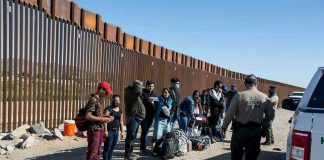
Open-air campaign stops are built for democratic contact and, in the same breath, for security failure; the Canfield Fair incident involving Dr. Amy Acton shows how quickly a single armed individual can turn a routine handshake line into a public-safety event—and how decisive on-site law enforcement is the thin hinge between scare and tragedy.
At a Glance
- Acton’s campaign says an armed individual lunged at her at the Canfield Fair, injuring multiple people; the suspect was taken into custody.
- Local Democratic officials reported the confrontation at their tent and credited a rapid law-enforcement response.
- Broadcast outlets echoed the core facts: a lunge toward Acton, multiple injuries, and a swift arrest.
- The setting—an open, crowded fairground—illustrates why outdoor political events demand layered, practiced security.
What happened at the Canfield Fair
The Acton campaign’s account is direct: while Dr. Amy Acton, the Democratic candidate for Ohio governor, visited the Canfield Fair near Youngstown, an armed individual lunged toward her, injuring multiple people before being subdued and taken into custody. In its public statement, the campaign emphasized gratitude for “swift and decisive” law-enforcement action and framed the episode plainly—political violence has no place in Ohio. That same afternoon, the Mahoning County Democratic Party chair said the individual was arrested with multiple weapons after knocking volunteers to the ground at the party’s tent; he tied the arrest to Acton’s visit and again praised the rapid response by officers.
Independent local broadcast summaries tracked closely with those statements: reporters described an armed person lunging at Acton during the fair and multiple injuries among bystanders, with law enforcement securing the suspect on scene. Those outlets noted the investigation was active and additional details would follow but left the core incident uncontested—the attempt to reach Acton, injuries in the crowd, and a quick arrest.
Why outdoor campaign stops are uniquely exposed
County fairs, parades, and farmers’ markets are deliberately porous by design; that is their civic value and their security problem. A candidate moving through dense foot traffic, surrounded by volunteers and well-wishers, creates natural choke points—entry lanes, tent openings, rope lines—where a determined person can accelerate into contact faster than a protective detail can build standoff distance. Security practitioners talk about “layering”: a visible screen (volunteers, staff), a trained inner ring (protective personnel), and law enforcement able to interdict within seconds. The Canfield Fair met the third condition—interdiction—decisively, according to the contemporaneous statements, which is why the outcome reads as a scare with injuries rather than something worse.
This is not unique to one fairground. Large regional fairs combine crowd density, multiple ingress and egress paths, and ambient noise that masks escalation cues. Mahoning County’s fairgrounds have seen prior disorder unrelated to campaigns—episodes that produced a significant law-enforcement presence, underscoring that these venues require robust, coordinated planning even before politics enters the frame.
Mechanics of the response: what “swift and decisive” usually entails
When an individual surges toward a protectee, two actions must fire in parallel: physical disruption of the assailant’s movement and immediate control of any weapon. That can be as simple as a trained volunteer redirecting momentum long enough for an officer to secure arms and waistband, or as complex as a full team executing a manual extraction of the protectee while contact officers restrain the subject. The Acton campaign’s description, buttressed by local party accounts, suggests officers reached the suspect quickly, neutralized the threat, and transitioned bystanders to medical attention—exactly the sequence agencies rehearse for crowded venues.
The follow-on steps are equally important for safety and public confidence: scene stabilization, rapid medical triage for those knocked down or struck in the fray, custody transfer, and initial evidence protection. Fair security and the sheriff’s office typically integrate communications so that a single incident commander coordinates both uniformed deputies and fair operations; in Mahoning County, the sheriff’s office maintains that role at the fairgrounds, a structure designed for precisely this type of rapid incident containment.
What we know firmly—and what prudence leaves unsaid
Based on the strongest contemporaneous accounts, three facts are stable. First, there was a directed lunge at Dr. Acton by a person described as armed. Second, multiple people were injured in the encounter—volunteers at minimum—and third, the suspect was arrested on site following swift intervention by law enforcement. Those are the bones of the episode; they are consistent across the campaign’s statement, the county party’s account, and multiple local broadcast rundowns released that day.
Campaigns often refrain from immediate precision on numbers and injury severity; that is not hedging so much as a recognition that triage counts change, and medical privacy is real. Similarly, investigators seldom release identity and motive details until they are charged out and logged; that cadence protects due process, preserves witness integrity, and ensures that the facts in the public record line up with the case file. None of that undermines the central through-line of what occurred at the fair.
How this fits a broader pattern—and how to reduce the risk
Researchers who track political violence caution against reading any single attack as predictive of a wider wave; instead, they emphasize the structural vulnerabilities of event design. Outdoor stops with minimal standoff, unassigned seating, and fluid rope lines offer speed to both supporters and would-be assailants. The countermeasures are well known: tighten approach lanes with soft barriers; train volunteers to recognize and interrupt aggressive approaches; post sworn officers at natural choke points; and rehearse extraction routes with pre-identified safe rooms or vehicles. After other high-profile attacks, security analysts have noted the paradox that even in failures, rapid interdiction can limit casualties—a sobering reminder that response time is the last variable under direct control when prevention falters.
Fairs are not going away, nor should they. They are one of the few remaining places where statewide candidates meet undecided voters in the open. The lesson from Canfield is not retreat but redesign: preserve access while hardening approaches, and insist on real-time coordination between campaign staff and the sheriff’s incident command. Local precedent for intensive fair policing—unrelated fracas responses included—means the institutional muscle memory already exists; campaigns should plug into it early rather than improvising on arrival.
Patrick Havas, 38, shoved through the crowd toward Amy Acton at the Canfield Fair Sunday. She's Ohio's Democratic candidate for governor, the former state health director.
He was holding up a cell phone. Deputies found two pistols and a set of brass knuckles on him after. All… pic.twitter.com/DzgSgrpUeN
— IredcapI (@IredcapI) September 7, 2026
The bottom line
The Canfield Fair episode is a clear case of an attempted rush at a candidate in a crowded, weapons-permissive environment, blunted by officers who arrived in seconds. The facts that matter—an armed lunge, multiple injuries, an on-site arrest—are consistent across the strongest public statements and same-day reporting. The takeaway for campaigns is practical, not theoretical: treat every open-air stop as a security operation first and a photo-op second, and build the protective layers that turn seconds into space.
Sources:
actonforgovernor.com, sheriff.mahoningcountyoh.gov, wfmj.com