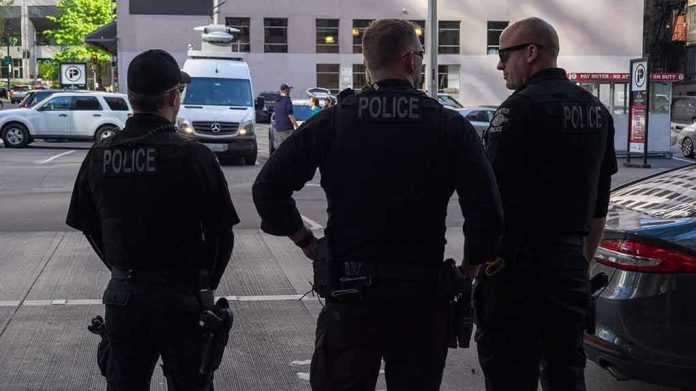
Americans are fed up with the relentless war on law enforcement, as rising anti-police hostility erodes officer morale, cripples recruitment, and endangers communities nationwide.
Story Highlights
- Anti-police sentiment, amplified by social media, fuels officer burnout, doxing, and threats to families, as testified in December 2025 congressional hearings.
- Recruitment and retention crises leave staffing gaps, weakening public safety in vulnerable low-income and minority neighborhoods.
- President Trump’s administration offers hope for restoring law and order, countering years of leftist policies that demonized police.
- Legitimate concerns about misconduct exist, but unchecked rhetoric creates service gaps harming those who need protection most.
Rising Threats to Officers and Families
Congressional testimony in December 2025 revealed escalating dangers to law enforcement, including doxing and calls for violence against officers and their families. Law enforcement representatives stated that rising hostility erodes morale, fuels burnout, and hinders recruitment and retention. Officers report deleting social media accounts to avoid threats, withdrawing from public engagement in a hostile climate. This psychological toll compounds existing mental health risks for those on the front lines. With President Trump now in office, conservatives demand renewed support for these patriots protecting American communities.
Social Media Amplifies the Assault
Social media platforms act as a force multiplier for anti-police discourse, spreading criticism of police practices at unprecedented speed. Officers view these platforms as a double-edged sword, offering transparency benefits while amplifying misinformation and negative perceptions. High-profile misconduct incidents gain viral traction, shaping public attitudes through vicarious experiences rather than direct encounters. Researchers note this shift creates a complex information environment, eroding trust in institutions. Under past administrations, such amplification went unchecked, fueling division; Trump’s leadership prioritizes common-sense accountability without abandoning law enforcement.
Impacts on Recruitment and Public Safety
Anti-police sentiment directly undermines recruitment and retention, leading to staffing shortages across agencies. Departments face resource constraints and organizational strain from increased attrition, reducing capacity to serve communities. Officers experience demoralization, job dissatisfaction, and helplessness from community backlash. Public disengagement and apathy toward reform efforts signal fatigue with police policies. Low-income and minority communities suffer most, facing both misconduct concerns and diminished services for crime victims, domestic violence cases, and mental health crises. Strong policing remains essential to conservative values of safety and order.
Consequences for Vulnerable Communities
Reduced police capacity creates service gaps, leaving citizens reluctant to report crimes or seek help due to lost trust. Vulnerable populations, including domestic violence victims and those in mental health crises, receive less support amid staffing shortfalls. Economic costs rise from recruitment, training, and potential crime increases. Social cohesion erodes as police-community relations fray, polarizing politics around reform demands. Long-term, police legitimacy declines, fostering defiance and questioning institutional authority. President Trump’s focus on law and order counters this decay, restoring protections for families nationwide.
Path Forward Under Trump
Academic analysis using motivational posturing theory identifies anti-police sentiment as diverse postures—resistance, disengagement, apathy—tied to officer conduct and institutional culture. Reform demands target interpersonal interactions and responses to social issues like domestic violence. Law enforcement perspectives warn that rhetoric inciting violence harms officers and the communities they serve. With scholarly consensus on rising sentiment’s consequences, policymakers must balance accountability and support. Trump’s administration signals a return to backing blue, prioritizing public safety over divisive agendas that weakened America.
Sources:
Taylor & Francis Online (Peer-Reviewed Journal)
Walden University Dissertation
U.S. House Homeland Security Committee