

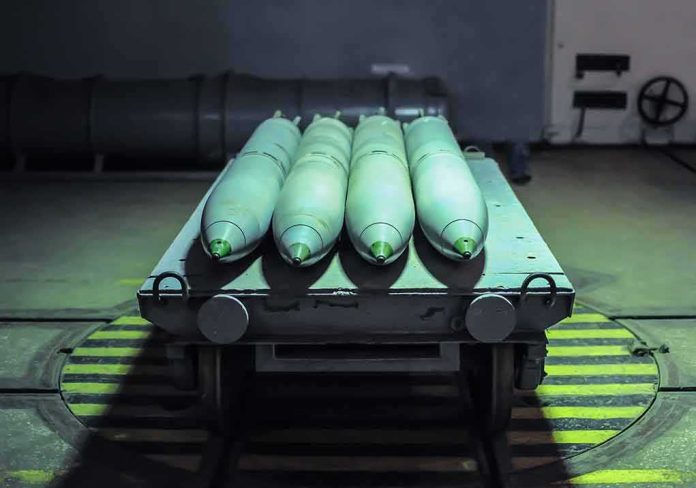
When energetic compounds age into sensitivity, the first decision is not where to put the blast mats; it is which risk you are minimizing—uncontrolled initiation from handling, or off-site exposure from treatment. The Iowa lead azide dispute is the purest form of that tradeoff, and the record shows why it is so hard to resolve by slogan or by injunction.
At a Glance
- EPA concluded recrystallized lead azide at the Iowa Army Ammunition Plant had become highly unstable, authorizing in-place intentional detonation under emergency authority.
- A defined stock—68 containers—concentrates risk management on immediate explosive sensitivity versus environmental dispersion.
- The Eighth Circuit issued an administrative stay on EPA’s emergency permit, shifting the argument to emergency legal authorities and process rather than chemistry alone.
- Opponents argue alternatives (e.g., chemical neutralization, contained systems) were not adequately vetted and warn of a potential lead-dust plume and long-tail cleanup.
What the evidence actually establishes
Start with the facts that are not seriously in dispute. Lead azide is an initiating explosive; with time and poor conditions it can recrystallize, increasing sensitivity to friction and shock. EPA issued an emergency permit in November 2026 finding that the stored inventory at the Iowa Army Ammunition Plant had degraded into a “highly unstable and dangerous situation” and posed an “imminent and substantial endangerment” of an uncontrolled explosion. The permit expressly authorized in-place treatment by intentional detonation—an extraordinary but recognized path under RCRA when movement and manipulation would plausibly elevate the chance of accidental initiation. The inventory at issue is not theoretical: 68 containers were identified in two bunkers, according to EPA’s site profile and parallel government filings, anchoring both the scale and locus of hazard.
Those documents matter because they differentiate an operational judgment from a public-relations posture. An emergency permit under hazardous-waste law forces a regulator to own a mechanism, a location, and a rationale. Here, that mechanism was controlled detonation on site; the rationale was that every alternative entailed more human contact with a crystallized primary explosive in a compromised state.
The counter-case: dispersion risk and the alternatives question
None of this resolves the second half of the risk equation: what leaves the site if you blow nearly five tons’ worth of a lead-bearing explosive. Environmental petitioners argued that detonation would generate a toxic lead-dust plume, potentially traveling far downwind depending on weather, and that EPA and the Army did not sufficiently exhaust safer alternatives before endorsing an open, in-place blast. Their filings and public statements foreground two claims: chemical neutralization could avoid a plume entirely, and the permitting record does not quantify why in-place detonation is safer in expectation than neutralization, relocation, or continued managed storage. They also point to basic toxicology—lead is a persistent neurotoxin—and to the need for enforceable post-blast monitoring and cleanup obligations if detonation proceeds.
On that terrain, the evidence is genuinely mixed. The emergency permit and government opposition brief document instability and endangerment; they do not publish a comparative, treatment-by-treatment risk analysis with accident probabilities and dispersion modeling. That gap makes the dispute less about whether danger exists than which danger dominates and how to enforce the mitigations if the operation moves forward.
Process collision: emergency powers meet an appellate stay
The legal process sharpened those questions. The Eighth Circuit issued an administrative stay of EPA’s emergency permit—procedural, not a final merits decision, but significant enough to pause the authorized path. Reporting contemporaneous with the stay indicated the Army told the court it would proceed under emergency exclusions even without an active permit, arguing that the hazard would not wait on litigation calendars. This is the point where an engineering problem meets rule-of-law optics. Proceeding outside a stayed permit deprives agencies of the most direct enforcement hooks for monitoring and remediation conditions that would otherwise travel with the authorization.
Illinois’ environmental and health agencies weighed in publicly with cross-border updates—an expected move given likely downwind trajectories from a southeastern Iowa site—underscoring that any execution error could become an interstate political event, not just a local operational one.
The mechanisms and tradeoffs, in technical terms
Why do explosives experts sometimes favor in-place detonation for degraded primaries? Because every alternative step—cracking a bung, inserting a wand, transferring wet mass, lifting a drum—creates friction, impact, and static pathways. Lead azide’s hazard is contact sensitivity; recrystallized masses can couple that sensitivity to unpredictable geometry inside a container. Controlled detonation, if properly engineered, collapses that uncertainty into a single, timed initiation with standoff and shielding. It reduces worker-proximity risk; it does not erase environmental release.
Alternatives exist on paper and in practice. Contained detonation chambers and chemical treatments are mature for many conventional munitions; their environmental profiles, with filtration and treatment trains, are generally superior to open detonation. But they require handling and, often, size reduction or exposure of the energetic to reagents—precisely the steps operators fear when crystals and voids have formed. That maturity-versus-manipulation tension is the National Academies’ throughline on OB/OD debates: safer for air sheds, riskier for technicians when the item is already compromised.
Where the record is strong, where it is thin
Three anchors in the Iowa record are strong: the regulator’s instability finding, the specificity of the stockpile, and the formal authorization for in-place detonation. Together they justify treating the hazard as acute and non-hypothetical. But opponents’ two core critiques also rest on fair ground. First, the publicly available docket does not show a comparative quantitative risk assessment that translates “too dangerous to move” into modeled, decision-grade numbers across options—probabilities of accidental initiation, expected worker exposures, plume concentration contours, and cleanup triggers tied to enforceable commitments. Second, the permit stay and potential reliance on emergency exclusions blur which post-detonation monitoring and remediation conditions are binding, an uncertainty that erodes public trust even if the Army voluntarily adheres to best practices.
A separate thread—claims about cold-weather urgency and bunker thermal lag—illustrates how quickly a technical point can outrun the shared evidence. EPA’s emergency finding stands; a retired EPA official’s skepticism about temperature-driven immediacy challenges the timeline, not the underlying instability. Without the Army’s full thermal and sensitivity data in the public record, that dispute remains unresolved at the level of numbers rather than narratives.
🎯 ARMY PUSHES AHEAD WITH IOWA EXPLOSIVES DETONATION DESPITE COURT PAUSE
📍 MIDDLETOWN, UNITED STATES
🟨 OUR ASSESSMENT: The Army's decision to invoke emergency authority changes the dispute from a technical environmental review into a test of how far agencies can go when they… pic.twitter.com/Ay7BLGy4Hj
— The Content Factory (@tcf_updates) November 23, 2026
What a defensible resolution requires
For the community, for regulators, and for future cases, the requirements are plain. If detonation proceeds, pre- and post-event commitments must be transparent and enforceable: meteorological windows; on-site suppression and capture measures; an ambient and deposition monitoring grid tied to action levels; funding and access for private-property sampling; and cleanup obligations triggered by objective thresholds. If an alternative is viable, its risks have to be made legible in the same units—expected fatalities or injuries from handling, probability distributions of accidental initiation, and time-at-risk under continued storage. Either path benefits from independent dispersion modeling, using the actual charge configuration, terrain, and particle-size distributions, compared against measured post-event data.
The Iowa case will not be the last. Aging energetic materials are a recurring legacy at ammunition plants and depots. The only durable way to choose between “blast now” and “treat carefully” is to force both sides of the ledger onto a single, quantitative page—and then bind the chosen mitigation to obligations the public can verify and a court can enforce.
Sources:
washingtontimes.com, epa.gov, hhs.iowa.gov, apnews.com, bleedingheartland.com, earthjustice.org, 6abc.com