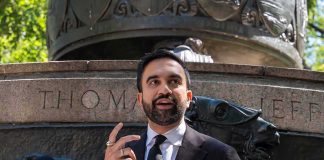


When a hospice chaplain’s personal Facebook posts about marriage triggered an internal inquiry, reduced shifts, and then termination inside three weeks, the dispute spotlighted a question employers and employees increasingly face: where the boundary lies between protected religious expression off the clock and workplace decisions tied to patient care and coworker concerns.
The Short Version
- An ordained chaplain filed a federal charge alleging he was terminated because of personal Facebook posts about marriage and sexuality.
- His account links a coworker complaint, an HR discussion, reduced PRN hours, and a separation two weeks later.
- The posts were framed as religious expression made in a personal capacity; the employer did not give a reason for termination, according to the charge.
- Title VII prohibits religious discrimination while permitting employers to address conduct that impairs operations or violates policy; outcomes turn on motive and evidence.
What the complaint says happened
According to a signed charge of discrimination filed with the Equal Employment Opportunity Commission (EEOC), Reverend Richard Blue, a hospice chaplain, was called into a discussion with his supervisor and human resources on or about June 22, 2026, after a coworker flagged posts from his personal Facebook account expressing his religious beliefs about marriage and sexuality. Blue states that, following this meeting, his as-needed (PRN) hours declined over approximately two weeks and that the employer separated his employment effective July 9, 2026. He reports no intervening complaints or performance issues and concludes that the Facebook posts were the sole cause of his termination.
Advocacy counsel summarizing the filing identifies the same sequence—coworker complaint, HR discussion, reduced scheduling, and separation—asserting that the company could not lawfully terminate him for off-duty religious expression. Coverage drawing from the filing adds that Blue says he had previously received positive evaluations and that no reason was given when he asked why he was being dismissed. In describing the June 22 meeting, the filing states that management questioned whether his beliefs compromised his ability to care for patients, which directly links religious viewpoint and job qualification in the allegation.
How the law frames religious expression, motive, and management prerogatives
Title VII of the Civil Rights Act forbids employers from discharging or otherwise disadvantaging an employee because of religion, which includes religious beliefs and expression, and it also requires reasonable accommodation of religious practice absent undue hardship on the conduct of the employer’s business. The Equal Employment Opportunity Commission’s guidance distinguishes between protected religious viewpoint and workplace conduct that creates unlawful harassment or materially impairs operations; the legal pivot is motive. If an adverse action is taken because the employer disapproves of an employee’s protected religious belief, that is disparate treatment barred by Title VII. If action is taken for a legitimate, consistently applied reason—such as policy violations, disruption, or patient-care risk—the law can permit it, provided religion is not the real reason and no reasonable accommodation would avoid undue hardship.
In 2023, the Supreme Court clarified that an employer asserting “undue hardship” must show a substantial increased cost or difficulty in relation to the business for declining a religious accommodation, raising the bar above the historically loose “more than de minimis” standard. That said, accommodation doctrine typically applies to religious practice in scheduling or job duties; allegations like Blue’s turn on causation and pretext—what actually motivated the termination—not the mechanics of accommodating a practice.
Why the alleged timeline matters
Employment disputes of this kind often rise or fall on circumstantial evidence. A tightly coupled sequence—protected expression comes to management’s attention, hours drop, termination follows days later—can support an inference of causation when unbroken by unrelated misconduct or performance problems. Blue’s charge presents precisely that chain: coworker complaint and HR discussion, fewer shifts, dismissal within about two weeks, and no intermediate issues reported. The account also states that when he asked for an explanation, none was provided, which, if corroborated, can be relevant to proving pretext—an employer’s stated reason is inconsistent, missing, or implausible.
However, Title VII analysis is ultimately evidence-driven. In similar matters, investigators examine the original posts and their context, the employer’s social media and professionalism policies, internal notes from the HR inquiry, and communications among decision-makers. They also assess comparators—how other employees who posted controversial opinions or prompted coworker complaints were treated—to determine whether religion was singled out. Blue’s filing points toward that evidentiary roadmap, identifying the HR meeting, the coworker complaint, and the termination date as anchors for the inquiry.
Social media as the new workplace front door
Blue’s allegation sits within a broader pattern: off-duty online statements now surface at work with regularity, often refracted through coworker reactions or patient-facing brand concerns. Federal agencies increasingly acknowledge that social media activity can be employment-relevant when it touches workplace conditions or relationships. While the National Labor Relations Board’s protected-concerted-activity doctrine focuses on employees banding together about work, the shared premise is that online speech is not categorically off-limits to employer attention—its employment significance depends on content, context, and the legal interest invoked.
For religious-expression disputes, the dispositive question is not whether the post was online or even contentious; it is whether the employer acted because of the employee’s religion or because of demonstrable workplace effects, and whether neutral, consistently enforced policies and reasonable accommodations were considered. The allegation here characterizes the posts as personal religious statements, not workplace conduct, and claims management tied his beliefs to patient care capability; those details, if borne out, are the crux of a Title VII theory of disparate treatment.
What investigators typically seek to resolve cases like this
EEOC investigators tend to pull on four threads. First, the content and timing of the posts: original text, publication dates, audience settings, and whether any language could be construed as targeting protected classes within the workplace or patients. Second, the employer’s records: complaint intake, HR notes, policy citations, and the internal rationale at each step from inquiry to termination. Third, decision-maker testimony: who recommended termination, why, and whether religious belief—not behavior—was a factor. Fourth, comparators: similarly situated employees who made controversial off-duty statements and how they were treated. Blue’s charge names a coworker complaint and a specific HR meeting, creating a testable chronology for each of those lines of proof.
On the complainant’s side, performance history and prior evaluations, if positive, can reinforce a pretext argument by showing a sudden, uncharacteristic shift after the posts became known. On the employer’s side, consistently enforced policies, documented concerns about patient trust or workplace disruption, and evidence of even-handed treatment across viewpoints can sustain a legitimate, nondiscriminatory rationale. The difference between the two is often found in contemporaneous documentation rather than after-the-fact framing.
A practical takeaway for faith-informed professionals and care organizations
For employees in patient-facing roles, clarity is currency. If you speak publicly about contested moral questions, assume colleagues may see it, and consider whether you can articulate how your care remains impartial and respectful to all patients; preserving this explanation in your own words can matter later. For employers, two disciplines reduce legal risk: separate religious belief from any documented policy concern in your files, and test whether a reasonable accommodation—training, reassignment of sensitive encounters, or coaching—could address the issue without substantial business hardship. Title VII expects that rigor, and in 2023 the Supreme Court emphasized it for accommodation claims as well.
Sources:
lifesitenews.com, firstliberty.org, freep.com, newsbreak.com, nlrb.gov