
Ambitious House members have long understood a simple truth about Washington: backing the right leader today buys leverage for tomorrow, and nowhere is that calculus more visible than in Ro Khanna’s current position — publicly weighing a 2028 presidential bid while lining up behind Hakeem Jeffries for Speaker.
Key Points
- Rep. Ro Khanna has confirmed in multiple interviews that he is seriously considering a 2028 presidential run, built around an economic platform he calls “America’s Next New Deal.”
- Khanna has thrown his support behind Hakeem Jeffries’s speakership bid even as he keeps his own national ambitions in play.
- Allies outside his formal campaign apparatus launched a draft committee encouraging him to run, though Khanna says he has not made a final decision.
- His positioning reflects a recognizable pattern in House politics: members trade support for a leadership figure for policy consideration and national visibility, without committing to either outcome.
- Khanna has paired his presidential deliberation with an aggressive legislative and oversight agenda, including calls to reverse Medicaid and SNAP cuts and impeach Defense Secretary Pete Hegseth.
What Khanna Has Actually Said He’s Weighing
Asked directly on MS NOW’s The Weeknight whether he was considering a 2028 presidential campaign, Khanna gave an unambiguous answer: “Yes, I’m thinking about it.” That was not a one-off aside. NPR reported months earlier that Khanna said he was “thinking seriously” about a run, and subsequent coverage described him as still undecided, with a decision expected after the holidays. The consistency across these interviews matters — it distinguishes a considered, ongoing deliberation from a stray comment blown out of proportion by reporters hungry for 2028 content.
Khanna has also attached a specific rationale to the speculation rather than leaving it as pure ambition. He has framed a potential campaign around what he calls “economic patriotism,” built on the idea that the country needs, in his words, “a new deal for our time.” He points to his own Silicon Valley district, which he says holds roughly $25 trillion — about a third of the nation’s wealth — as evidence that prosperity has concentrated without reaching the factory towns and working-class communities his platform claims to target. That specificity, whatever one thinks of its political durability, separates Khanna’s framing from vaguer trial-balloon rhetoric common among members testing national appetite.
The Jeffries Calculation and the Speakership Backdrop
Reporting from the party’s Denver gathering places Khanna’s support for Jeffries’s speakership squarely alongside his presidential deliberation, describing him as backing Jeffries while simultaneously weighing a 2028 run. That dual posture is not contradictory; it is standard legislative math. A member who wants committee assignments honored, floor time protected, and a voice in the party’s legislative priorities has every incentive to back the incumbent Speaker publicly, even while cultivating a national profile that could eventually put him in competition with that same leadership class for the party’s biggest prize.
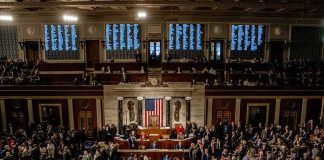
The House Speaker’s job has always functioned as more than a parliamentary gavel — the Congressional Research Service describes the office as simultaneously a House officer, the de facto head of the majority party, and the chief architect of the legislative agenda. That triple role is precisely why rank-and-file support for a Speaker candidate carries real value even absent a signed agreement: a Speaker who owes members goodwill can reward them with committee seats, bill scheduling, and campaign support, all currency more immediately useful to a sitting House member than an unannounced presidential campaign four years out.
Supporter Enthusiasm Outpacing the Candidate
Khanna’s allies have moved faster than Khanna himself. NBC News reported that a group not directly run by Khanna launched a formal draft committee in his name, with Khanna responding that he was “honored” by the encouragement but stopping short of declaring. That distinction — enthusiastic supporters building infrastructure for a campaign that does not yet exist — is a familiar feature of early presidential positioning. Draft committees generate media attention, donor lists, and organizational muscle that a candidate can inherit instantly if he decides to run, but they cannot manufacture a decision the candidate himself has not made. Khanna has been explicit that the choice remains his, pending deliberation after the holidays.
He has also acknowledged, without evident anxiety, that he would be entering a crowded field. In his own public remarks he has named potential rivals including Jon Ossoff, Alexandria Ocasio-Cortez, and Gavin Newsom, framing his own appeal around generational change rather than claiming he is the only credible option. That kind of candor about the competitive landscape is itself informative: it suggests a calculated, rather than impulsive, approach to the decision.
A Legislative Agenda Running in Parallel
Khanna has not treated the presidential question as his only project. In the same stretch of interviews, he has pushed an aggressive near-term agenda — reversing Medicaid and SNAP cuts, raising the federal minimum wage above its current $7.25 floor, and pursuing accountability for Defense Secretary Pete Hegseth over military strikes and handling of sensitive communications. He has tied that oversight push to kitchen-table economics, arguing that an unauthorized conflict abroad has pushed gas and food prices higher at home. Whatever the ultimate merit of those specific claims, the pattern is clear: Khanna is building a national profile on substantive policy fights, not simply through cable-news availability.
Why This Pattern Recurs in Congress
Khanna’s position — support the Speaker, keep presidential options open — echoes a long institutional history. Party leaders have historically earned or lost support based on tangible payoffs to members, a dynamic researchers have traced back at least to Speaker Newt Gingrich’s threats to strip committee gavels from uncooperative Republicans in the 1990s. More recently, presidential figures have openly intervened in speakership fights — Donald Trump’s endorsement of Jim Jordan during the 2023 vacancy is one vivid example — underscoring how tightly the Speaker’s chair and presidential politics intertwine. Khanna’s maneuvering fits comfortably within that tradition: a member preserves flexibility, banks goodwill with leadership, and keeps a national option alive, all without forcing an early, irreversible choice.
What to Watch Next
The concrete marker ahead is simple and verifiable: Khanna has said he will decide after the holidays. Until then, the draft committee, the “economic patriotism” messaging, and his public support for Jeffries will continue functioning as parallel tracks rather than a single, settled strategy. Whether that translates into a formal campaign launch, a Federal Election Commission filing, or a quiet decision to back another Democrat will be the real test of whether this season of positioning was preparation — or simply leverage.
Sources:
youtube.com, ms.now, npr.org, politico.com, washingtonexaminer.com, congress.gov, govinfo.gov