
When a pope participates in a routine act of citizenship, the ordinary mechanics of election administration meet the extraordinary symbolism of the papacy — and the result clarifies both what “voting by mail” actually entails and how civic acts by global religious figures are understood.
At a Glance
- The Holy See confirmed Pope Leo XIV submitted a mail-in ballot in Illinois for the midterm elections.
- Local election officials reported a mail-ballot request under the pope’s civil name, Robert Francis Prevost, tied to a Will County registration.
- The Vatican framed the vote as consistent with Leo’s longstanding practice of exercising his rights as a U.S. citizen.
- Mail voting is a multi-step process; request and submission are distinct from acceptance and tabulation under Illinois procedures.
What happened: a papal vote, documented through two independent channels
The Holy See Press Office stated that Pope Leo XIV “has submitted his mail-in ballot in Chicago,” explicitly characterizing the action as part of a long-standing pattern of civic participation by a U.S. citizen who votes when eligible. That confirmation aligns with reporting from Illinois election officials, who said the pope’s civil identity — Robert Francis Prevost — appeared on the county list of voters who requested a vote-by-mail ballot for the midterms; the registration was reported at a New Lenox address in Will County, and the request dated to early October. Together, those two elements establish both the administrative paper trail of a mail ballot and the Vatican’s on-record confirmation of the submission.
The ballot in question was for the statewide Illinois midterm election, encompassing high-profile contests such as governor and U.S. Senate as well as county races. The Vatican also underscored that Leo has exercised his voting rights whenever eligible — a framing that places the act within a personal practice rather than as a one-off departure from precedent. While coverage has described the vote as a papal first in a U.S. election, the core, uncontested facts here are narrower and concrete: a requested Illinois mail ballot under the pope’s civil name and a Vatican statement confirming he returned it.
How mail voting actually works: stages, checks, and outcomes
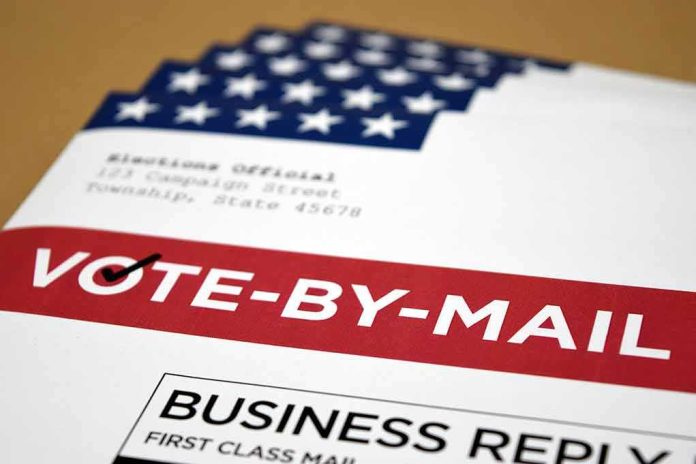
Mail voting is not a single event but a sequence: registration, ballot request and issuance, voter completion and return, and finally acceptance and tabulation. Each step has its own record. A request proves that election officials issued a ballot; a submission means the voter returned it. Election offices then verify voter identity — typically with signature matching against the registration record — and determine whether the ballot is accepted for counting during canvass. The distinction matters. Rejection can occur for late arrival, missing signatures, or signature mismatches, among other reasons; in large national cycles, tens of thousands of mail ballots can be rejected across jurisdictions for purely procedural issues.
In recent election cycles, research has shown that overall fraud in mail voting is exceedingly rare, while rejection patterns hinge on administrative details and voter compliance with instructions rather than on malfeasance. For readers accustomed to “did they vote or not” binaries, splitting these stages helps interpret what various public records can — and cannot — demonstrate at a given moment. In Illinois, as elsewhere, ballot secrecy protects the content of any individual’s vote; election records can show that a ballot was requested, sent, returned, and accepted, but not which candidates were chosen.
Why this moment is unusual: civic routine meets global symbolism
Popes have always carried outsized symbolic weight, but civic participation is ultimately a personal legal right tethered to citizenship, not office. Leo’s biography bridges those spheres: an American-born pontiff who retains the civil status that grants him voting rights in U.S. elections. The Holy See framed his ballot as continuity — a citizen exercising a franchise he has long used — rather than a novel foray into politics. That framing is sensible. Voting, particularly by mail, is among the least performative of civic acts; it happens in private, on standardized forms, inside an administrative pipeline designed to treat all voters identically.
The public naturally looks for meaning in a pope’s actions. Yet the design of the process thwarts over-interpretation: the vote is secret; the ballot is processed by clerks who handle thousands of identical envelopes; and nothing about the papacy alters the statutory steps applied to his envelope. In other words, the act carries symbolism only because of who the voter is; the election system processes it as it would any other citizen’s ballot.
Illinois mechanics: what “submitted” and “accepted” mean in practice
Illinois counties follow a documented chain from issuance to acceptance. After a request is recorded, the clerk sends the ballot package. Voters complete the ballot, seal the return envelope, and sign the affidavit; upon return, officials compare the signature with the voter’s record and resolve any discrepancies through curing procedures where available. Only after these checks does a ballot shift status from “returned” to “accepted,” at which point it becomes eligible for tabulation. The Will County confirmation of a request under Robert Francis Prevost places the first step in that chain; the Vatican’s statement that the pope “submitted” his ballot situates the act between return and acceptance. That is exactly how most mail ballots appear in public discussion: as snapshots of a multi-stage workflow.
This makes the language precise but unremarkable in election-administration terms. It also explains why broad claims about “voting” often compress multiple administrative facts; experts, by contrast, keep the verbs straight because each verb maps to a discrete status in the system. Research into mail-ballot performance, including national studies and administrative reviews, consistently shows that the system’s safeguards hinge on these status changes — not on celebrity or office.
Pope Leo XIV has cast a mail-in ballot in Illinois for the November midterm elections, continuing his practice of voting in U.S. elections while living abroad. He may be the first pope to vote in a national election, according to Vatican experts.
Pope Leo has varied in his…
— Faytuks Network (@FaytuksNetwork) October 30, 2026
What this does — and does not — signal
The signal here is civic, not partisan. The Vatican’s statement confirms participation and situates it within a history of eligibility-based voting; it does not disclose selections or campaign preferences, and ballot secrecy ensures it never will. For Catholics and observers of church-state boundaries, the lesson is procedural: even for the pope, voting operates inside a neutral, rules-bound system. For election administrators and civic educators, the episode is a teachable case in the grammar of mail voting — request, submission, acceptance — and why precision about those stages keeps public discourse tethered to how elections actually run.
Sources:
pbs.org, osvnews.com, ncronline.org, brookings.edu, evans.uw.edu