
The fight over who may enter an olive grove in the West Bank is not a sideshow to the conflict; it is the conflict in miniature—where security protocols, access rules, and political symbolism collide on terrain that families depend on and states regulate.
At a Glance
- Israeli authorities say detentions near Beitar Illit stemmed from an uncoordinated harvest adjacent to an Israeli community—coordination is required and exists to manage security and public order.
- Participants, including U.S. congressional candidate Brad Lander, dispute that any coordination was needed and frame the action as protecting Palestinian farmers from settler violence.
- The core factual clash turns on documents not publicly released: the relevant coordination map, the governing order, and any prior notice to organizers.
- Beyond this incident, harvest-season confrontations recur annually amid documented spikes in settler violence and contested access regimes.
What Israeli authorities say happened, and why it matters
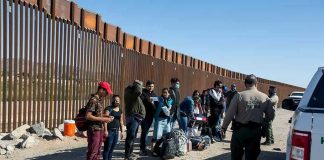
Israeli security bodies—IDF units, Border Police, and Judea and Samaria District Police—detained a large group of activists assisting Palestinian farmers during olive harvest near Beitar Illit. Their contemporaneous justification was procedural and security-based: the harvest, they said, took place near an Israeli community without required prior coordination, posing a security risk and warranting detentions for processing and removal from the area. The stated rule is specific: in certain West Bank areas, harvesting requires an advance request to relevant authorities at the start of the season; coordination is the mechanism used to clear access windows and arrange protection where needed. Authorities later emphasized that dozens were questioned and released with conditions prohibiting their return to the site—an enforcement outcome that underscores this was not treated as a warning-only encounter.
This administrative account carries weight for two reasons. First, it was consistent across agencies and outlets: the IDF cited lack of coordination and security risk; Israel Police described the processing; the Foreign Ministry asserted the delegation had been told coordination was required; and a military official pinpointed the grove’s proximity to Beitar Illit and said the plot did not appear on coordination maps. Second, it reflects a broader, longstanding system the Israeli security apparatus uses to deconflict civilian access with force-protection needs in friction areas. Whether one views that system as necessary risk management or as a tool of restriction, it is a real regime with regularized procedures.
What the participants argue—and the evidence they say is missing
Brad Lander, a New York congressional candidate, says the delegation entered the grove at the invitation of Palestinian families, crossed no checkpoint, and was never told coordination was necessary; he maintains they were simply picking olives and that detentions served to undermine Palestinians’ ability to reach their land. He also asserts that settlement security personnel summoned the military and that he alone was released with a warning because of his public profile while dozens of rabbis and other volunteers remained detained—an account that, if accurate, raises equal-treatment questions even within the enforcement framework.
His framing is embedded in a protective-mission narrative: volunteers, including American and Israeli rabbis, joined a “Protect the Harvest” effort aimed at deterring or documenting settler violence against farmers. That is not an abstract claim. U.N.–linked reporting has chronicled harvest-season spikes in settler incidents that injure civilians and destroy trees; such patterns help explain why activists organize accompaniment missions in the first place. The delegation’s claim, then, is not that no security environment exists, but that the coordination regime and its enforcement can function as a barrier to rightful access rather than a shield that enables it.
The unresolved core: documents and operational facts that would settle the dispute
This clash turns on verifiable artifacts that were not made public in contemporaneous reporting. The Israeli case rests on two pillars that are concrete yet unproduced: 1) the applicable coordination map covering the Beitar Illit area, including whether this grove was mapped for coordinated access; and 2) the legal instrument used on the day—whether a closed military zone order, an operational directive, or another basis—authorizing detention rather than mere dispersal. The Foreign Ministry’s claim that organizers were warned in advance similarly hinges on releasable correspondence; Lander’s denial invites a document check that would confirm or falsify the point. Without these materials—map layers, plot coordinates, request logs, and the governing order—outside observers are left to infer legality from process language rather than from the actual instruments that govern it.
There is a second gap: the operational risk that triggered detention. Israeli statements describe an “uncoordinated harvest near an Israeli community” as a security risk, but they do not identify a specific threat stream, confrontation, or incident at the scene. That may reflect prudent secrecy around intelligence. It may also reflect a prophylactic approach in which the absence of coordination alone is the risk predicate. Either way, transparency about the threshold—what elevates an uncoordinated farm activity to detain-and-transport rather than warn-and-escort—would clarify the rule of engagement in ways that reduce future flashpoints.
How this fits the recurring harvest-season pattern
To treat this as an isolated misunderstanding is to miss the structure that reproduces it. Olive harvest unfolds on fragmented terrain—private plots interlaced with settlements, bypass roads, and military zones—where Palestinian access often depends on windows coordinated with the IDF’s Civil Administration. When that system functions, farmers harvest under escort or on scheduled days; when it fails or is disputed, stand-offs occur and enforcement actions follow. Meanwhile, violence by Israeli settlers during harvest has been repeatedly documented by U.N. monitors: hundreds of incidents in recent seasons have produced casualties and large-scale damage to trees, heightening demand for accompaniment and making any administrative restriction feel, to farmers and activists, like yet another gate to their land.
This cyclical dynamic explains the polarized narratives. Security forces present coordination as force protection for nearby communities and for the farmers themselves. Activists and many Palestinians experience the same gatekeeping as denial of access dressed in bureaucratic form. Both can be true in different places or at different times; what determines legitimacy is whether the regime predictably enables the rightful harvest or predictably blocks it.
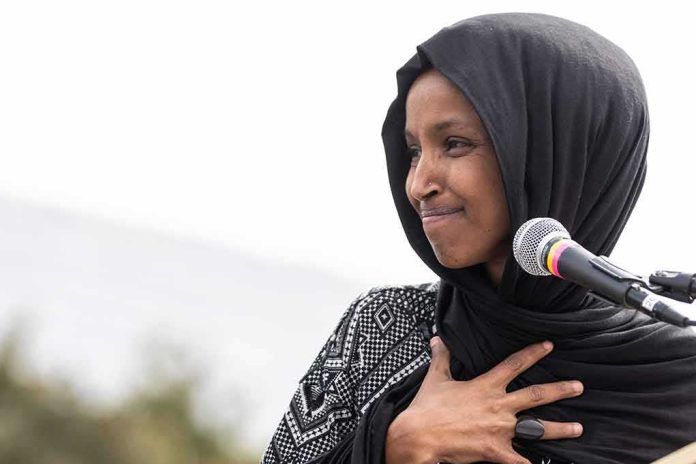
US Congresswoman Ilhan Omar has urged Israel to release all detainees after volunteers, including Democratic congressional candidate Brad Lander, were detained while helping Palestinian farmers harvest olives in the occupied West Bank.
🔴 LIVE updates: https://t.co/Hfb9lPMc2x pic.twitter.com/L3bxsROabo
— Al Jazeera English (@AJEnglish) October 23, 2026
What would lower the temperature and raise the legitimacy
Three reforms would reduce conflict while preserving necessary security:
First, publish the governing layer-cake: an up-to-date, machine-readable coordination map with parcel-level coverage; the seasonal application procedure and deadlines; and the legal instruments invoked to restrict access when coordination fails. If a plot is absent from coordination maps—or included with conditions—both farmers and volunteers should know that ex ante, not at the edge of a field. Second, adopt a graduated response protocol for nonviolent, uncoordinated harvests: warn and remove as a default; detain and transport only on defined triggers tied to articulable risk. That standard should be public and auditable. Third, insulate enforcement from the perception of status-based exceptions. If Lander was released upon recognition of his candidacy while others faced conditions, the rule signals politics, not policy; release criteria should be uniform and documented.
How to read similar incidents going forward
When the next harvest-season confrontation arises—as it will—ask four questions before taking sides. Is there a published order or map proving a coordination requirement on that parcel? Was prior notice given to the farmers or organizers, with dates and recipients? What specific operational factor—beyond non-coordination—justified detention over dispersal? And were outcomes uniform across participants regardless of nationality or prominence? Incidents that answer these questions with documents tend to de-escalate; those that do not, spiral into narrative war.
Sources:
twitchy.com, nbcnews.com, apnews.com, cbsnews.com, abcnews.com, npr.org, nbcnewyork.com, jewishpress.com, israel.com, upi.com, thehill.com, thenationalnews.com, unocha.org