

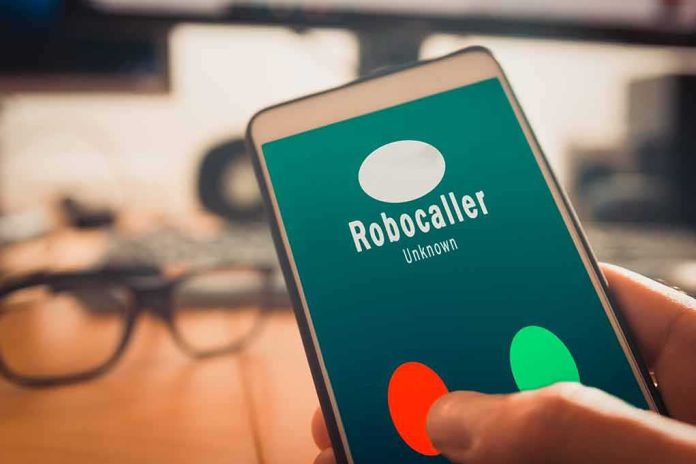
The single most unsettling fact about the modern virtual-kidnapping scam is not that criminals lie about abducting your child — con artists have done that for decades — it’s that they no longer need to guess what your child sounds like. They can clone her voice, in distress, from a few seconds of audio she posted publicly herself.
Key Points
- Virtual kidnapping is an old extortion script — traced by the FBI to networks operating out of Mexican prisons since at least the early 2010s — now supercharged by AI voice cloning.
- Jennifer DeStefano’s 2023 testimony to the U.S. Senate Judiciary Committee remains the clearest documented case of a cloned-voice kidnapping hoax aimed at extorting a parent.
- Modern cloning tools need as little as three seconds of audio — often pulled from social media — to generate a voice match researchers rate as 85 percent accurate.
- Imposter scams, the category the FTC uses to track this fraud, cost Americans nearly $3 billion in a single recent year.
- No national statistics isolate how often AI specifically drives virtual-kidnapping calls — the FBI tracks the broader scheme, not the technology inside it.
What Jennifer DeStefano Heard on the Phone
On January 20, 2023, in Scottsdale, Arizona, Jennifer DeStefano answered a call from an unknown number and heard what she was certain was her 15-year-old daughter’s voice, crying and pleading for help. A man took over the line, claimed he had kidnapped the girl, and demanded a ransom that started at $1 million before settling near $50,000. DeStefano has testified that the voice was indistinguishable from her daughter’s — “To me, it was my daughter,” she told lawmakers — and that she kept the caller talking while bystanders reached her husband, who confirmed within minutes that the daughter was safe and had no idea the call had happened. No kidnapping occurred. No money changed hands. But the fear, by every account she has given, was real and physiological, not performed.
DeStefano later told Congress and multiple outlets that the voice had almost certainly been built from audio lifted off her daughter’s own social media — ski trip videos, the kind of ordinary clips families post without a second thought. That detail is the pivot point of this entire threat: the raw material scammers need isn’t stolen from a vault, it’s donated freely, publicly, by the people being targeted.
An Old Con, Newly Weaponized
Virtual kidnapping did not begin with generative AI. The FBI has documented the scheme since at least 2013, when agents in Los Angeles traced a wave of ransom calls to networks operating from inside Mexican prisons. The case that became known internally as Operation Hotel Tango eventually identified more than 80 victims across several states and losses exceeding $87,000, built entirely on spoofed caller ID, scripted panic, and guesswork about family details — no cloned audio involved. The bureau has said publicly, more than once, that it keeps no national tally of virtual kidnappings because so many go unreported by embarrassed or relieved victims who never file a complaint once they realize no one was actually taken.
What’s changed is the quality of the impersonation, not the architecture of the con. The script — urgency, isolation, a demand for silence, a payment method that can’t be clawed back — is identical to what it was a decade ago. The difference is that a scammer no longer has to bluff convincingly about a voice they’ve never heard. They can manufacture it.
How the Cloning Actually Works
The technical bar for voice cloning has collapsed faster than most consumer-protection frameworks can track. McAfee’s cybersecurity researchers found that as little as three seconds of audio is enough to produce a clone rated 85 percent accurate to the real voice, with accuracy climbing further when scammers feed the model additional clips. Security researchers tracking the newest tools put the volume of these attempts at over a thousand AI-assisted scam calls a day hitting major retailers and call centers alone. The source material is almost always something the victim or their family posted voluntarily: a birthday video, a TikTok, a voicemail greeting, a podcast appearance. The FTC’s own consumer guidance names exactly this pathway — a short clip posted online, fed into an off-the-shelf voice-cloning program, is all the toolkit a scammer needs.
Once the clone exists, the call follows the virtual-kidnapping playbook that’s worked for criminal networks for years: manufacture panic, demand secrecy, insist on an untraceable payment — wire transfer, gift cards, cryptocurrency — and keep the victim on the phone so they have no time to verify anything independently. The FTC’s broader imposter-scam category, which includes but isn’t limited to kidnapping hoaxes, accounted for nearly $3 billion in reported losses in a recent year, the single largest fraud category the agency tracks.
What the Evidence Does and Doesn’t Establish
It is fair, and important, to be precise about scope. The documented record — DeStefano’s Senate testimony, FBI advisories, FTC consumer alerts — firmly establishes that AI-cloned-voice kidnapping hoaxes are real, operationally demonstrated, and capable of inducing victims to attempt large wire transfers. What the record does not yet offer is a reliable national figure for how many virtual-kidnapping calls specifically use AI cloning versus old-fashioned vocal bluffing and lucky guesses. The FBI tracks the scheme broadly and has said directly it does not break out the technology used in each case. That gap in measurement is not a reason for doubt about the mechanism — the mechanism is confirmed by federal agencies and a sworn congressional witness alike — it simply means the “how common” question remains open even as the “is this real” question is settled.
What Actually Works as a Defense
Every credible source converges on the same countermeasure, because it’s the one thing AI cannot fabricate from public data: a private, unrecorded piece of shared family knowledge. The FBI’s recommended defense is a simple family code word, established in advance and never posted anywhere online, combined with an ironclad habit of hanging up and calling the family member back on a known number before acting on anything. Security questions that rely on biographical facts fail, because those facts are often public. Hearing the “right” voice fail, because the voice itself can be forged. The one thing that still holds is a private signal, agreed upon off any recorded platform, that a scammer’s model was never trained to produce.
Sources:
youtube.com, judiciary.senate.gov, courthousenews.com, ftc.gov, kelly.senate.gov, stories.wf.com, kiro7.com, fbi.gov, businessinsider.com, trendlife.com
OLD SCAM, NEW TECH: Navy veteran mom wires $5,400 after scammers clone her daughter's voice and stage a fake kidnapping.
The caller used what authorities believe was an AI-generated copy of her 37-year-old daughter's voice, complete with crying and panic attacks the mother had… pic.twitter.com/b23f32SnPN
— Fox News US (@FoxUSNews) October 7, 2026